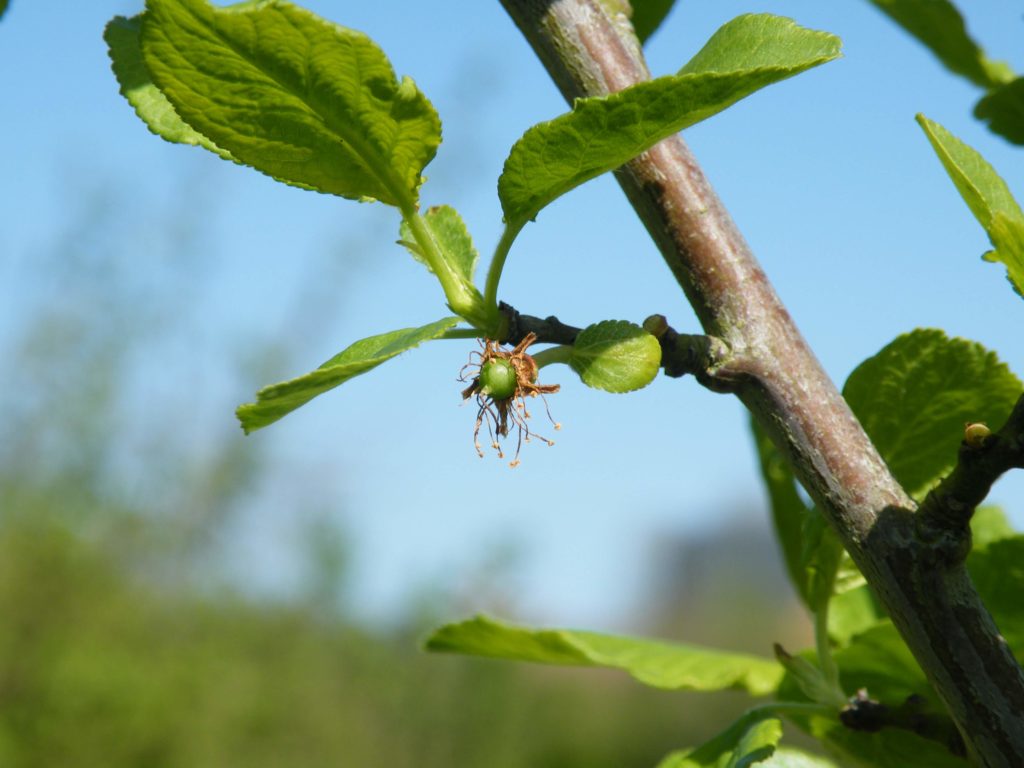
After last year’s drought and the almost total lack of blossom or fruit from the orchard (3 medlars, 3 damsons total), it’s delightful to see plenty of flowers and fruit setting. First off, the new plum and damsons all seem to have fruit set, though the Shropshire Prune damson is looking more prolific than the Fairleigh damson.
Plum tree (Rivers Early Prolific)Wee fruit on the plum tree, maybe 2mm acrossDamson tree (Shropshire prune)Even smaller fruit on the Shropshire prune, but definitely set
We didn’t photograph the old plum tree or the Fairleigh damson, but both have had some flowers and look like setting some fruit.
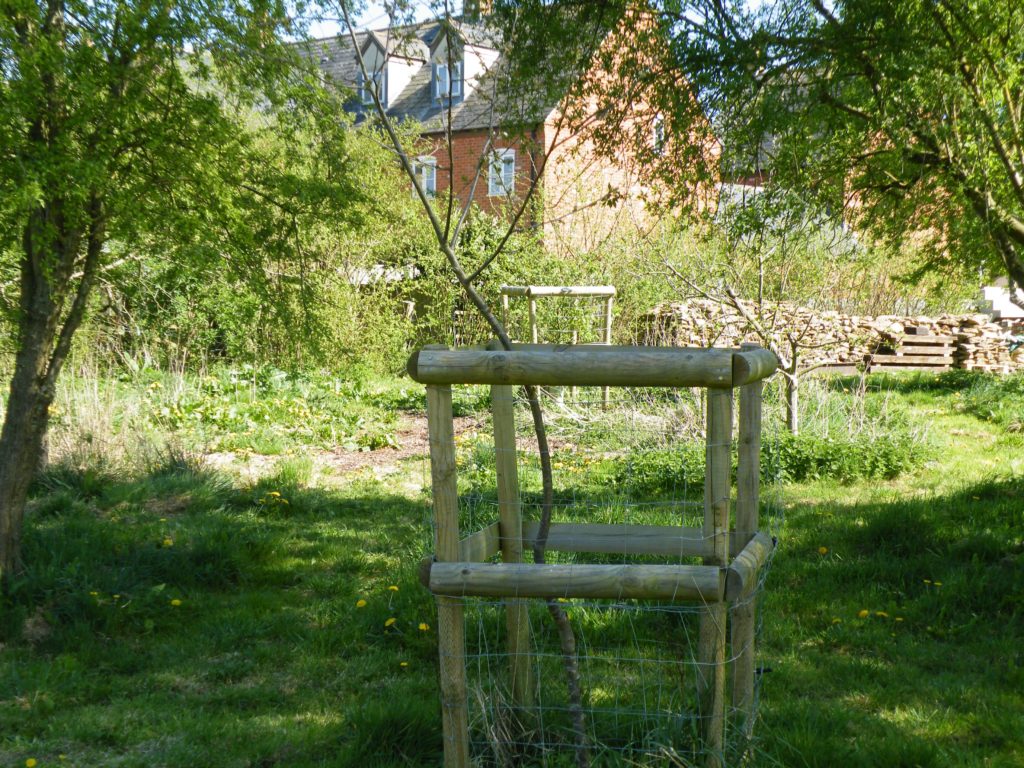
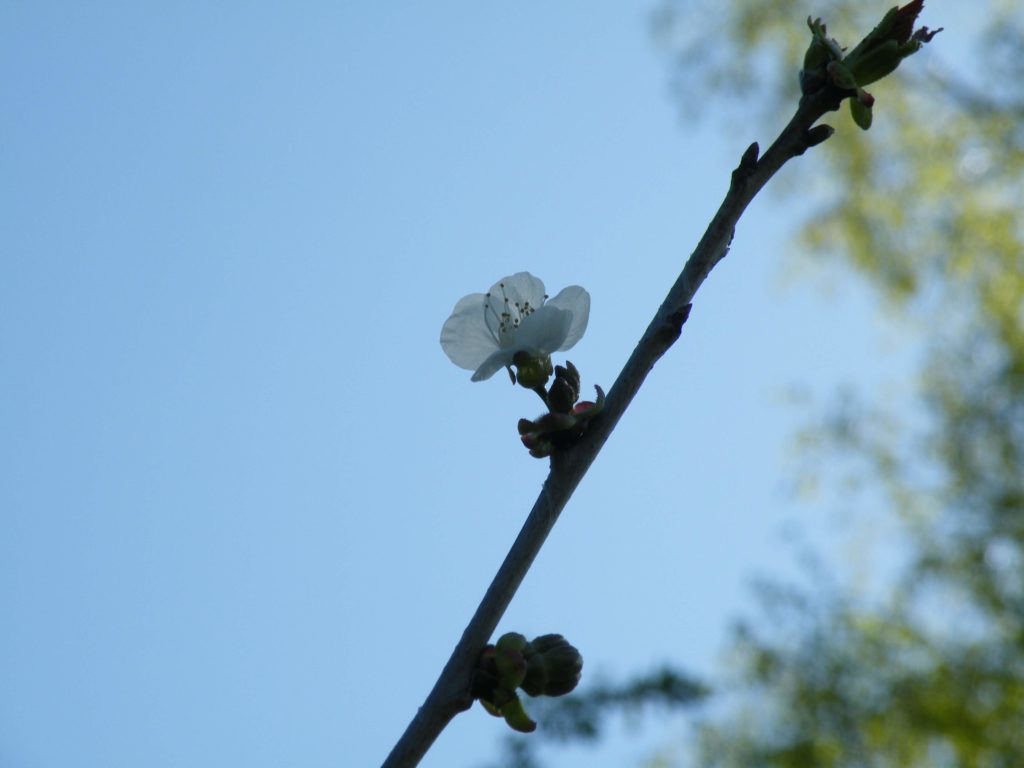
The cherry tree was planted by the previous owners and bore a label saying it was bought at Morrisons. It’s never done very well as the ground is too damp and there’s not enough light, but it’s survived so gets to stay and do its thing.
Cherry tree, planted by the previous ownersCherry blossom
Our medlar looks lively and has flower buds.
Medlar (Nottingham)Medlar flower bud, honest
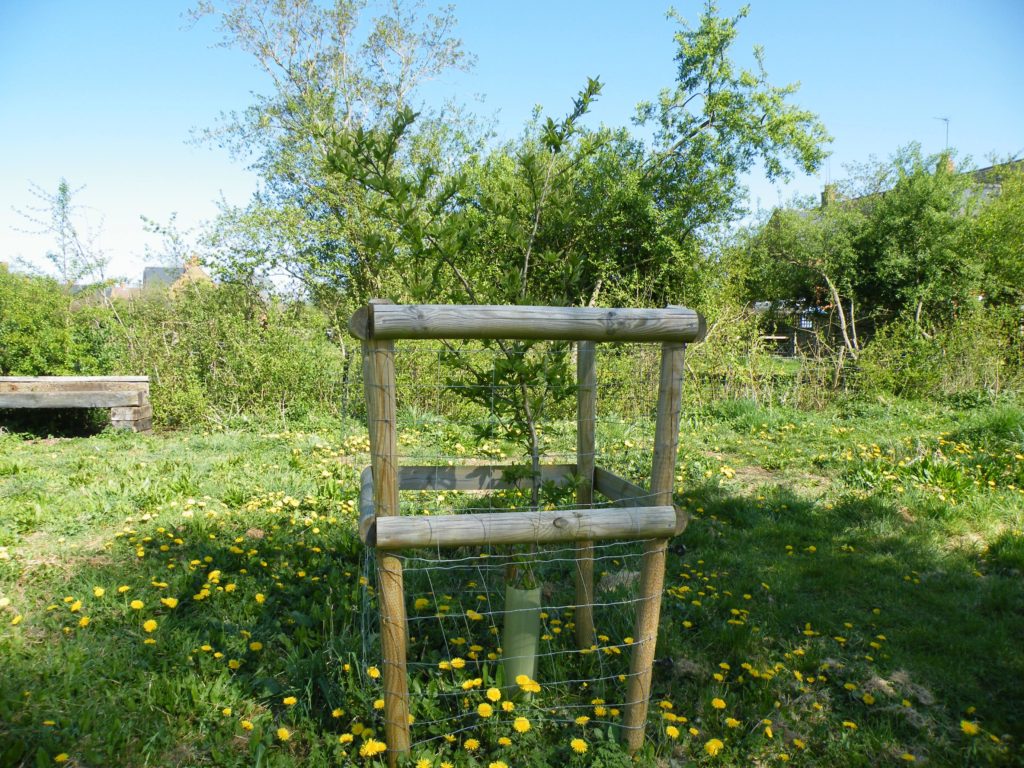
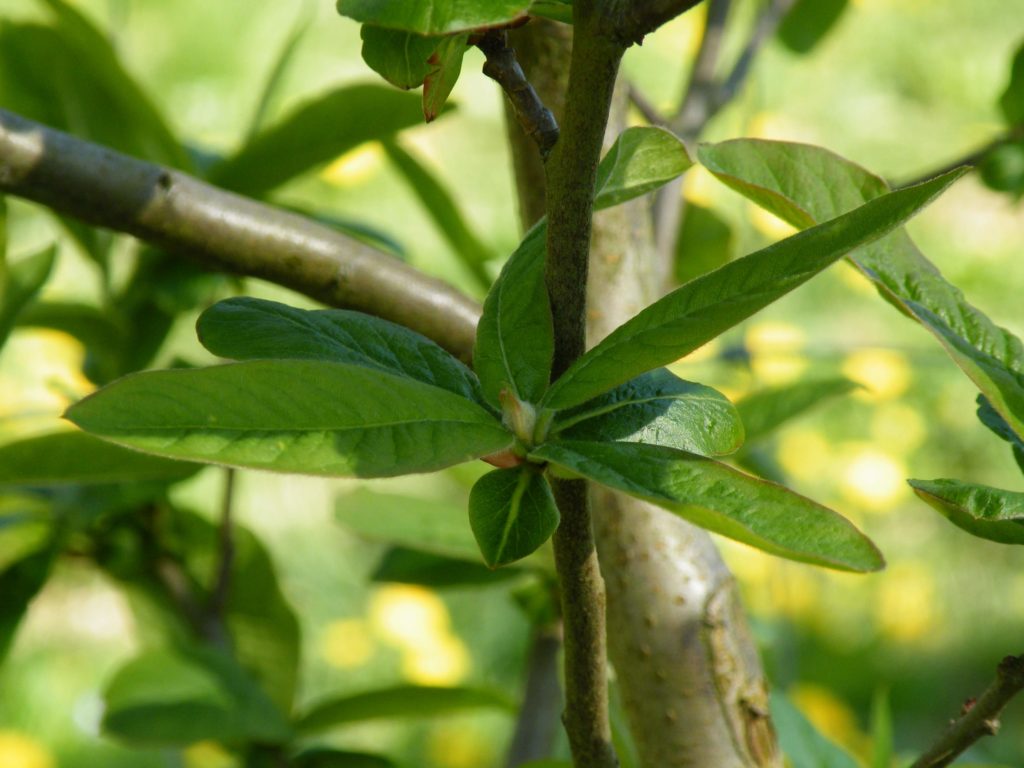
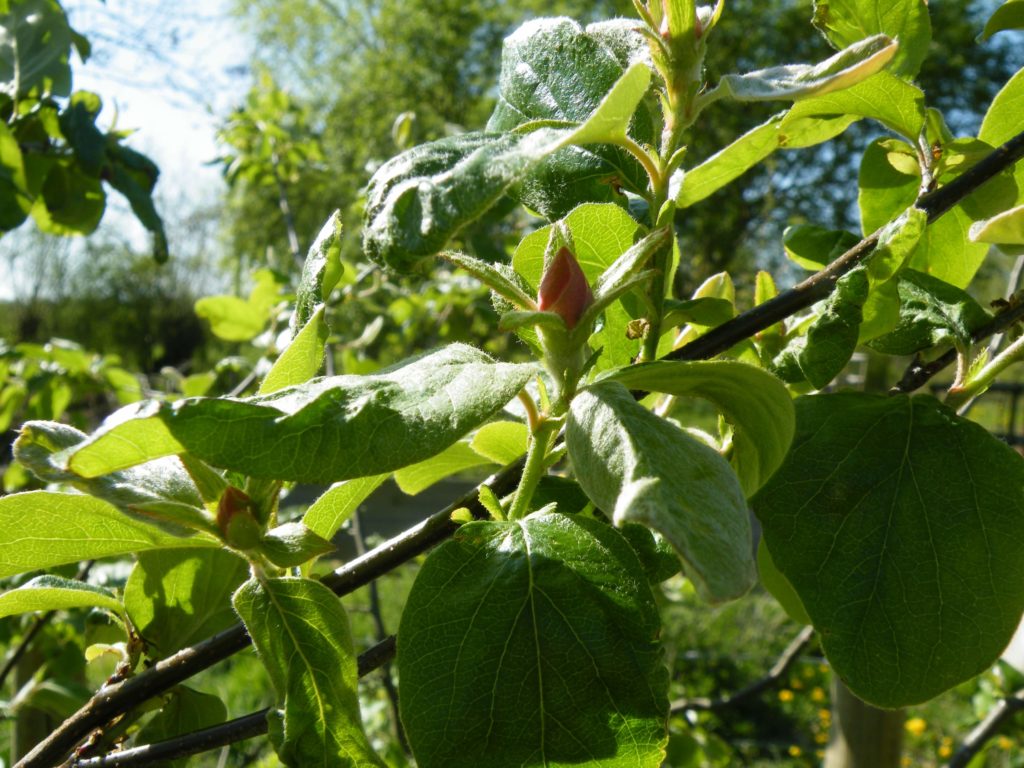
Likewise the quince:
Quince tree (Portugal)Quince buds
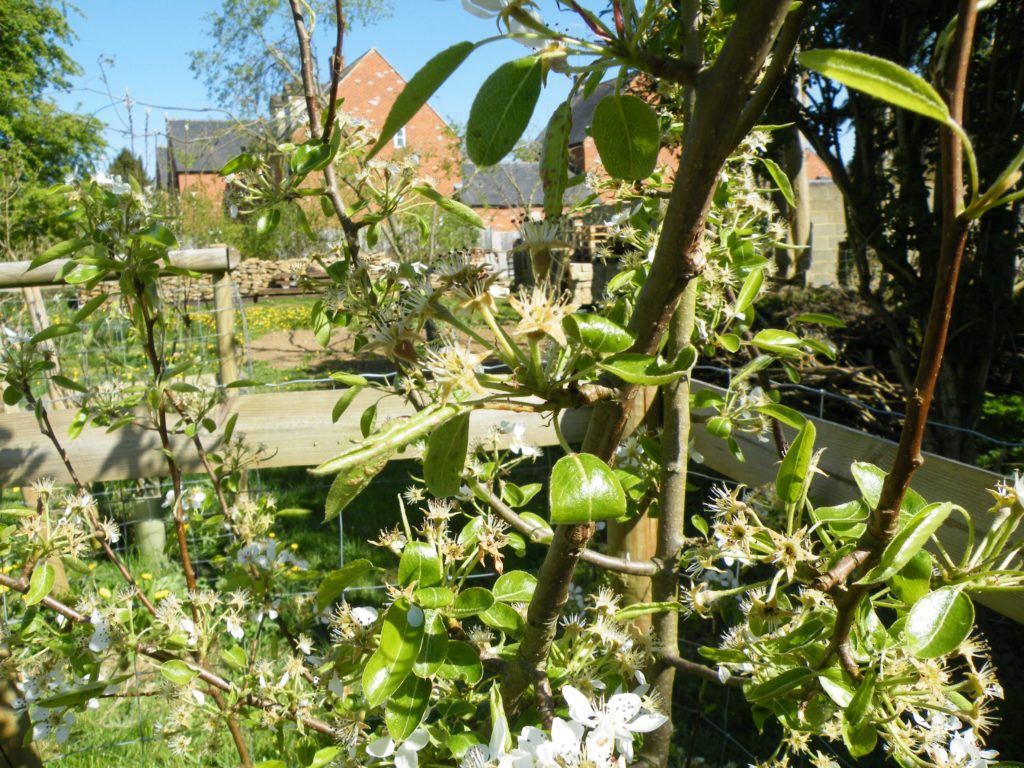
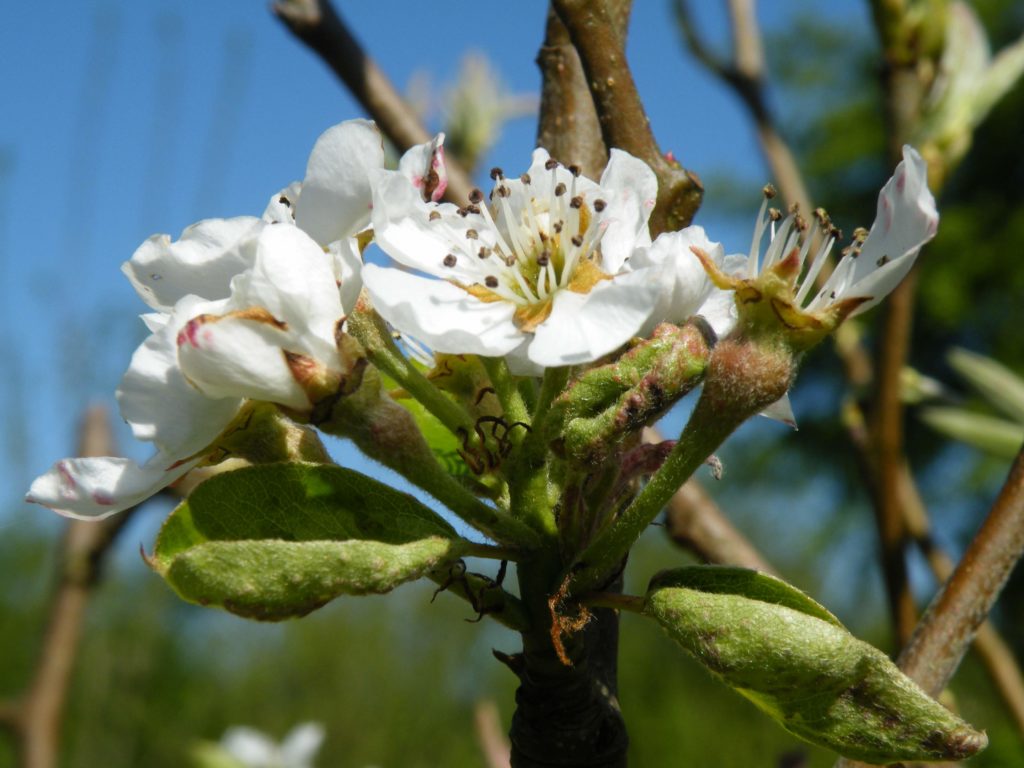
Moving on to the pears, both look to have set plenty of fruit, the Louise Bonne of Jersey more, but given I don’t remember the Uvedale’s St Germain flowering at all before, I’m happy enough.
Pear tree (Louise Bonne of Jersey)Pear fruit (Louis Bonne)Pear tree (Uvedale’s St Germain)Pear fruit (Uvedale’s St Germain) – fewer but larger!
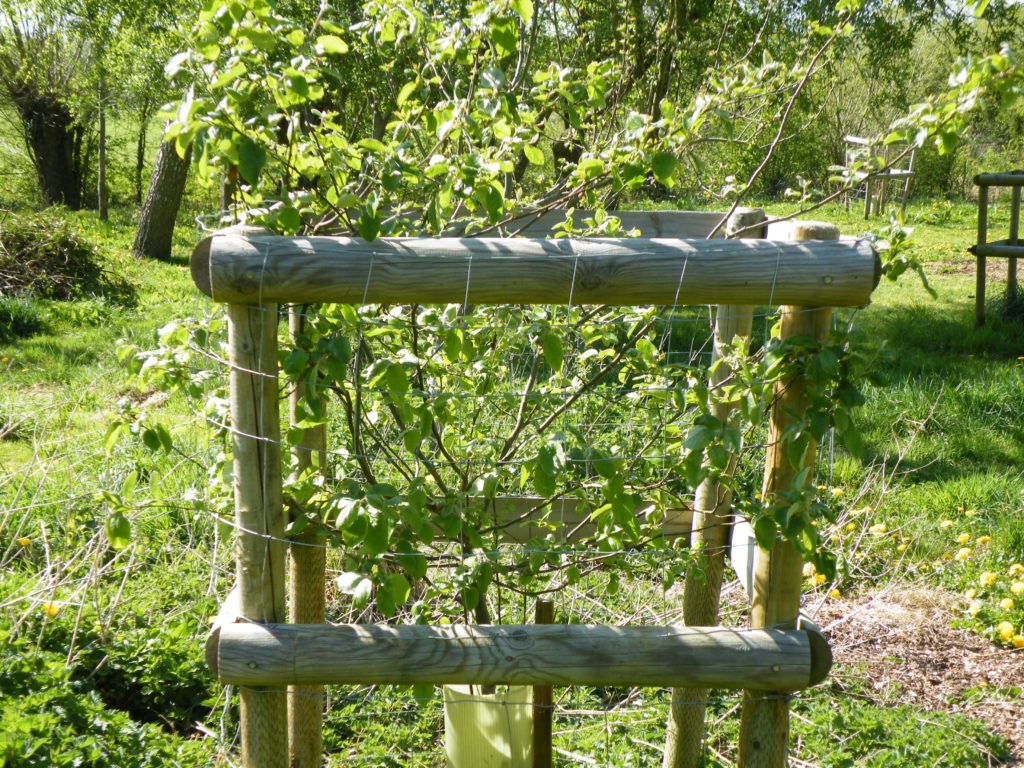
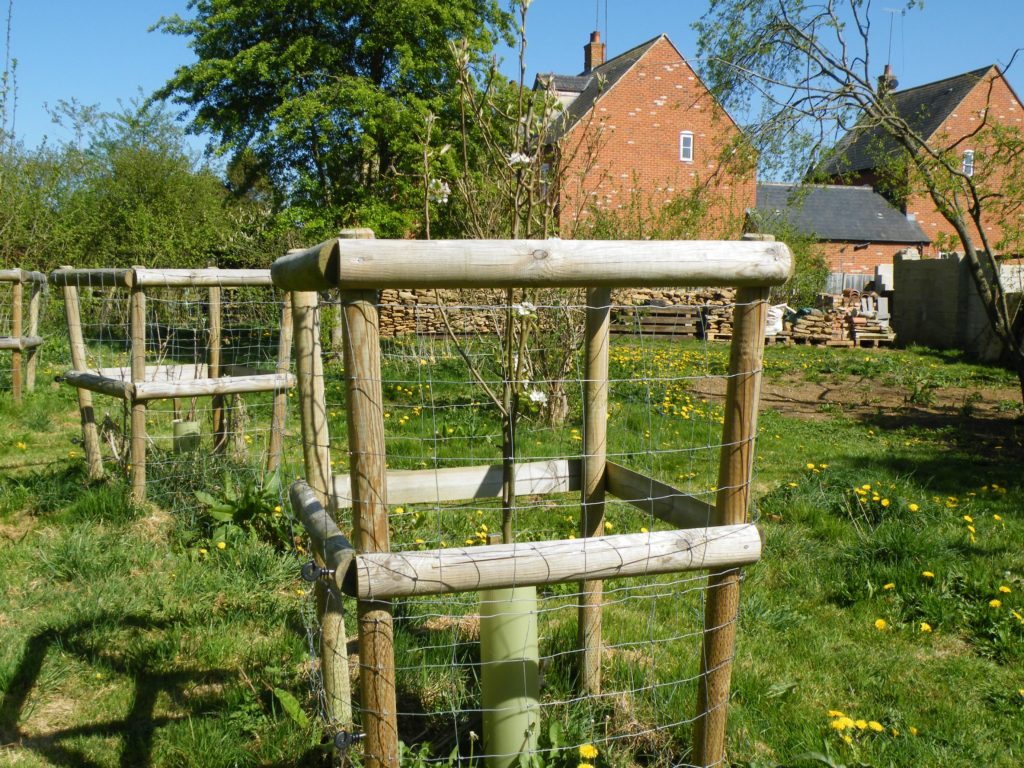
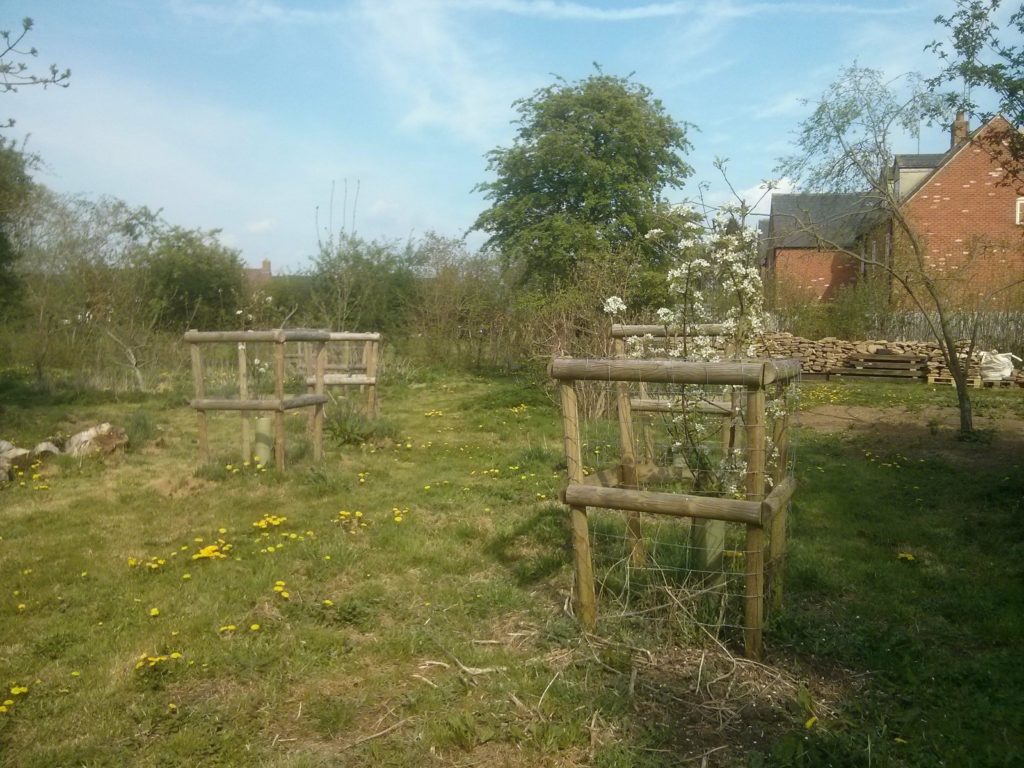
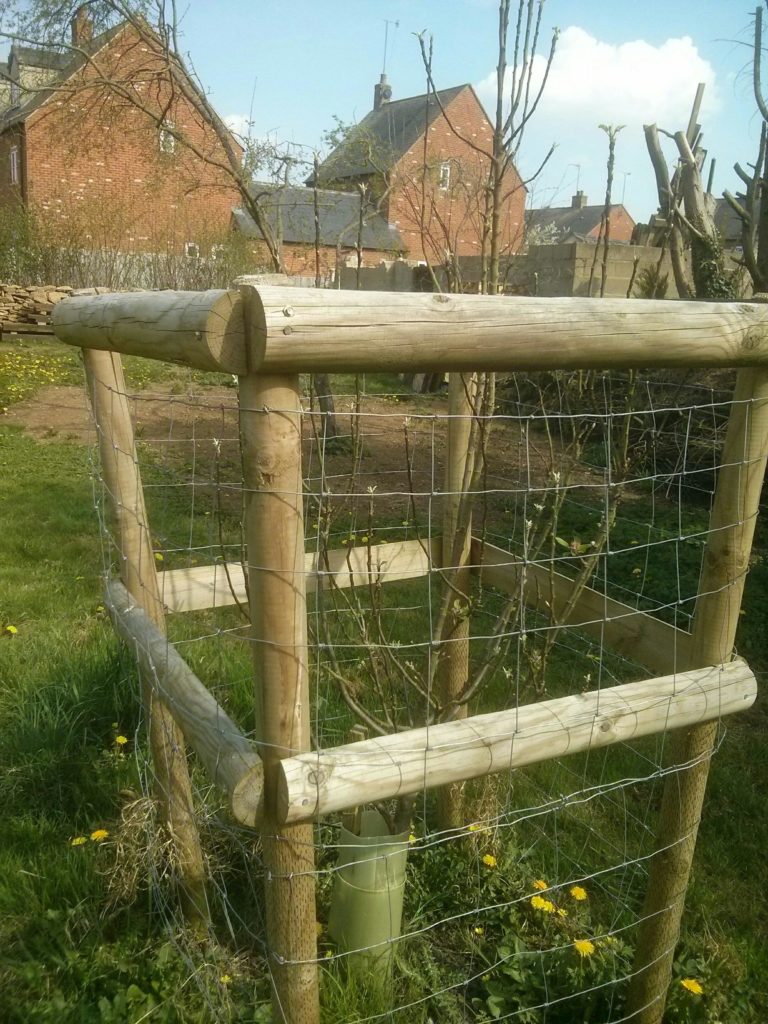
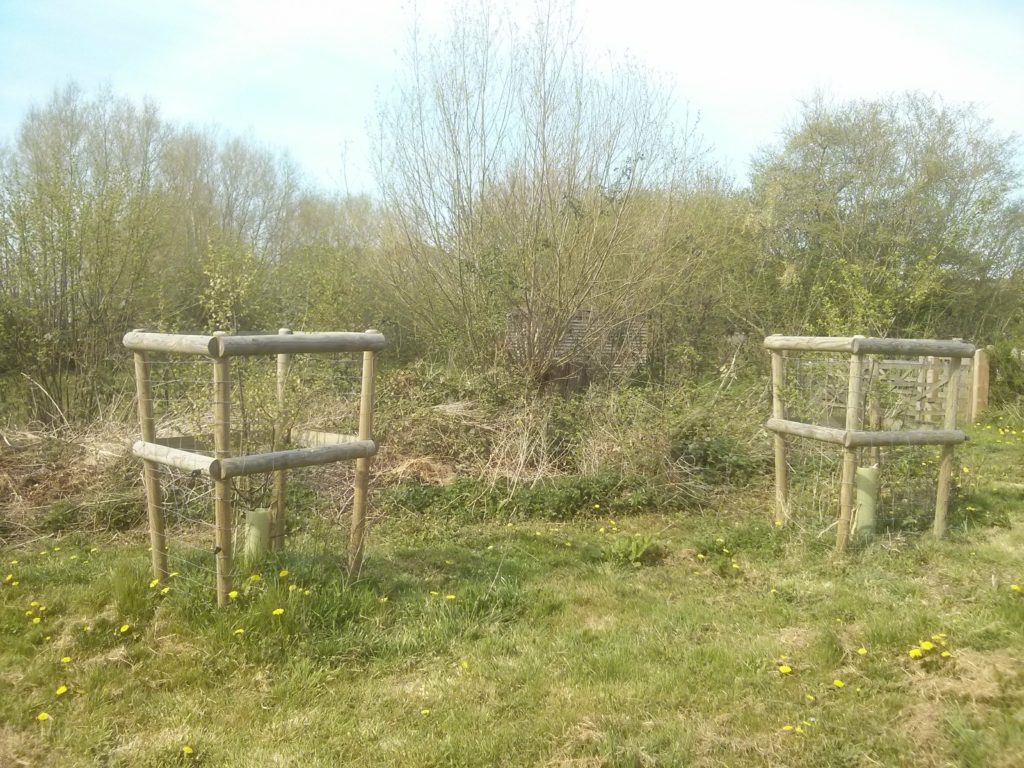
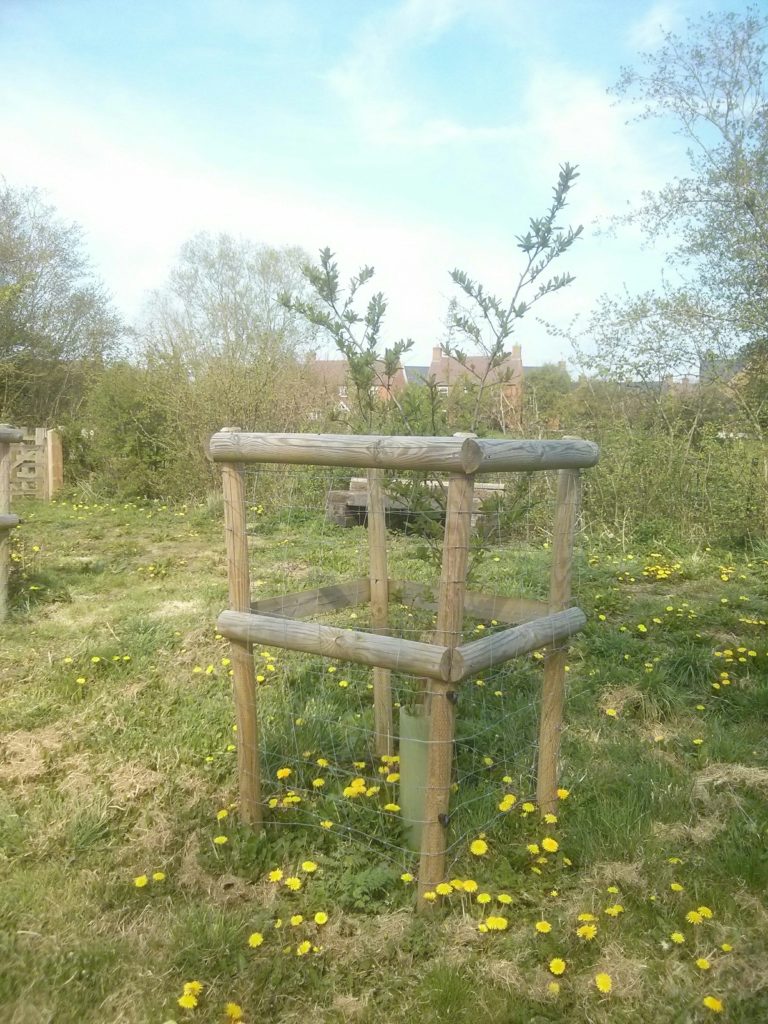
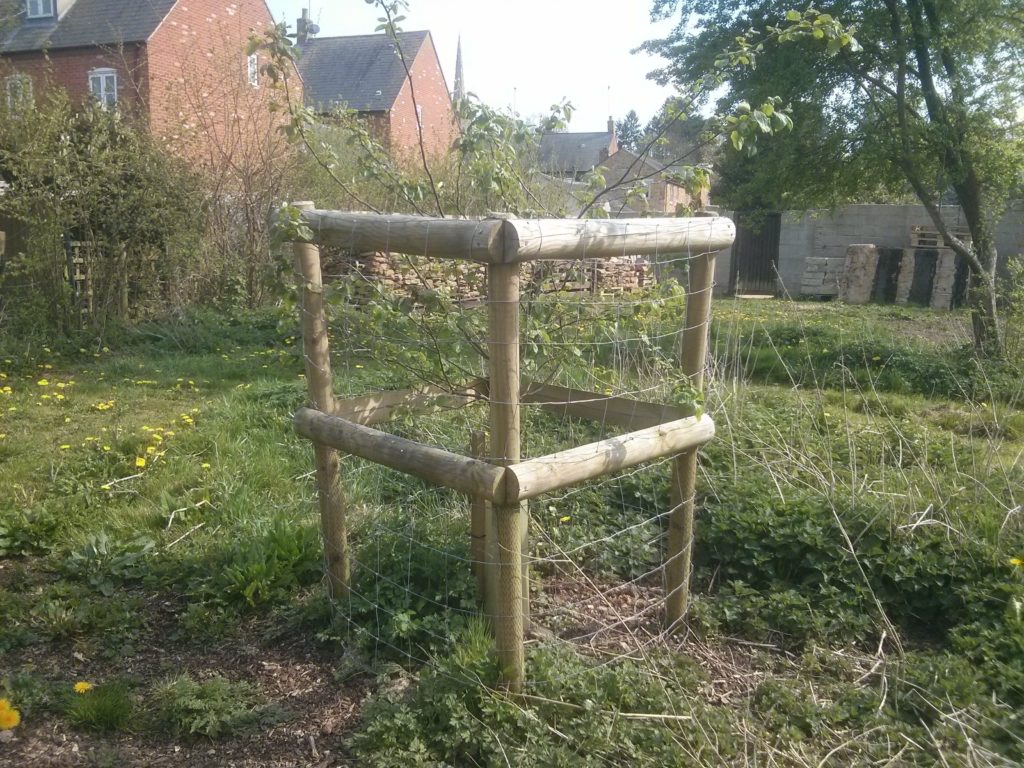
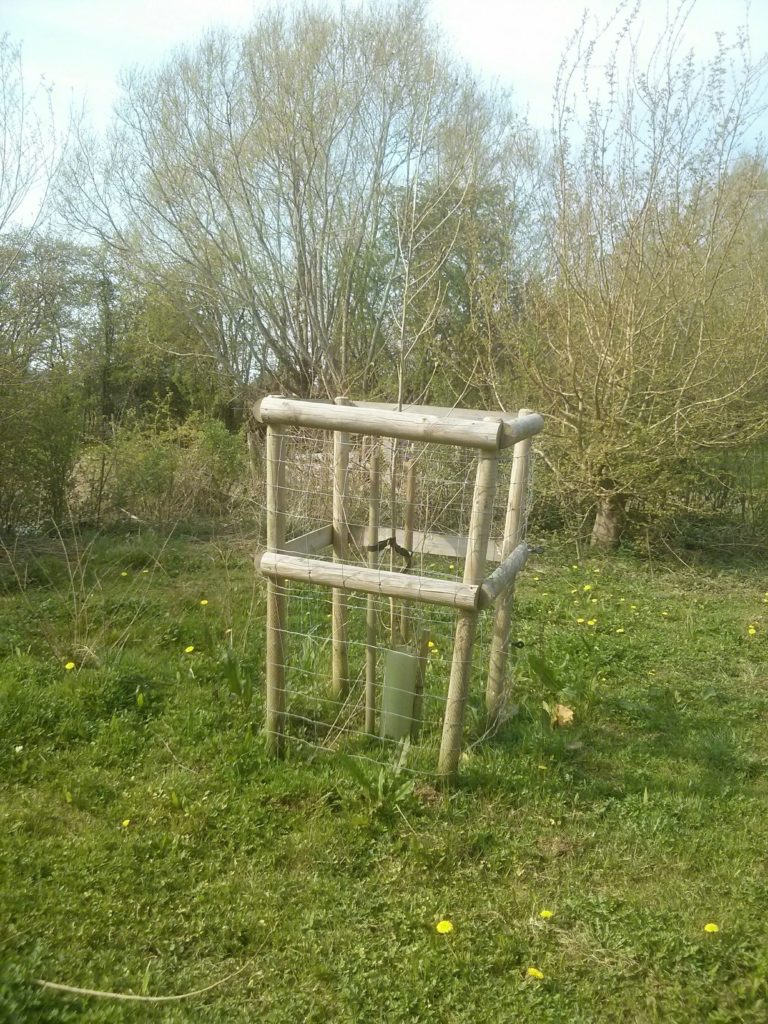
It is the 11th day of April, 920 AD, and the trees in the orchard are doing well. They have been in the ground almost two years now, having been planted in May of 918, and have survived two years of drought and an attack by cows (after which we built the protective cages). The fruit harvest of 919 comprised six damsons and three medlars – we hope for better this year after a very wet winter and some good spring sunshine.
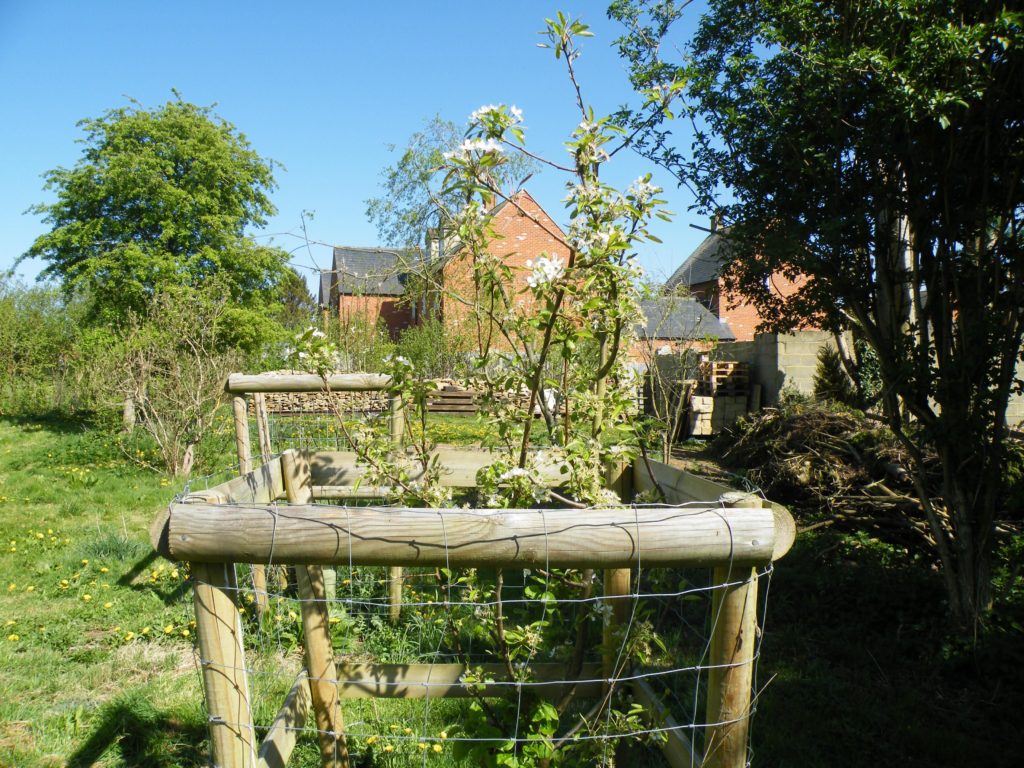
The two pear trees are both in flower. The Uvedale is a Warden pear and I haven’t seen it flower before, so to see clusters of white blossom is very exciting, and it’s great to see that the two pear trees are in bloom together so the Louise Bonne should be able to pollinate the Uvedale as intended. What is a Warden pear like you ask? Well I don’t really know either but I hope to find out this year.
Pear Uvedale’s St Germain (left) and Louise Bonne of Jersey (right) flowering
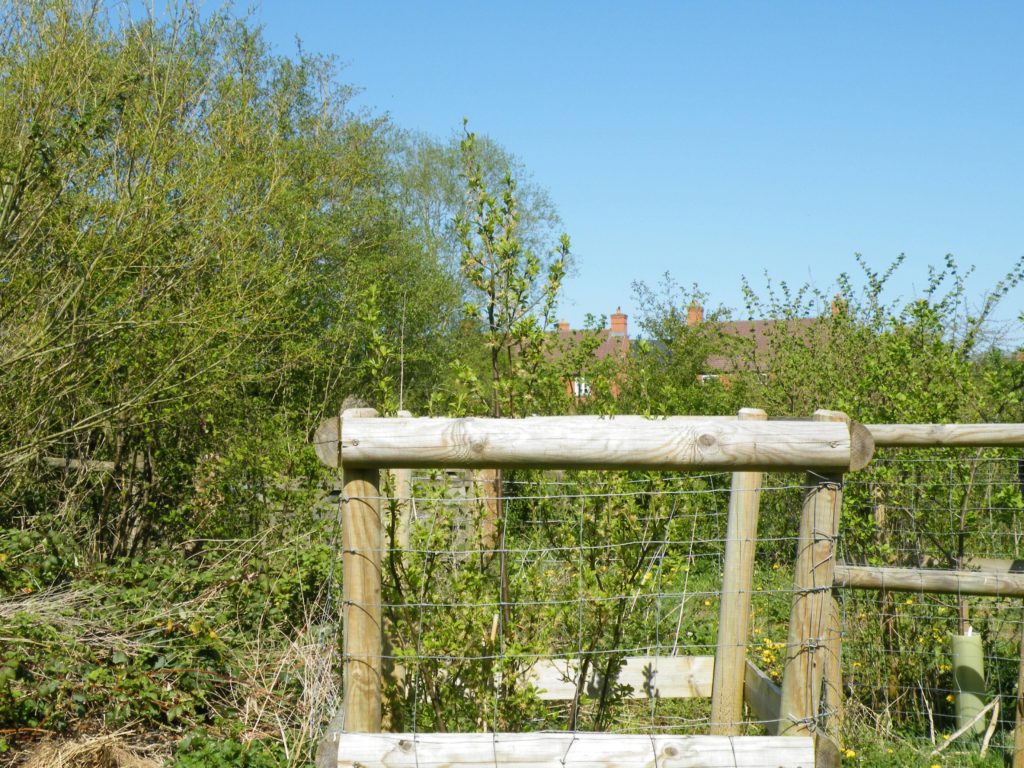
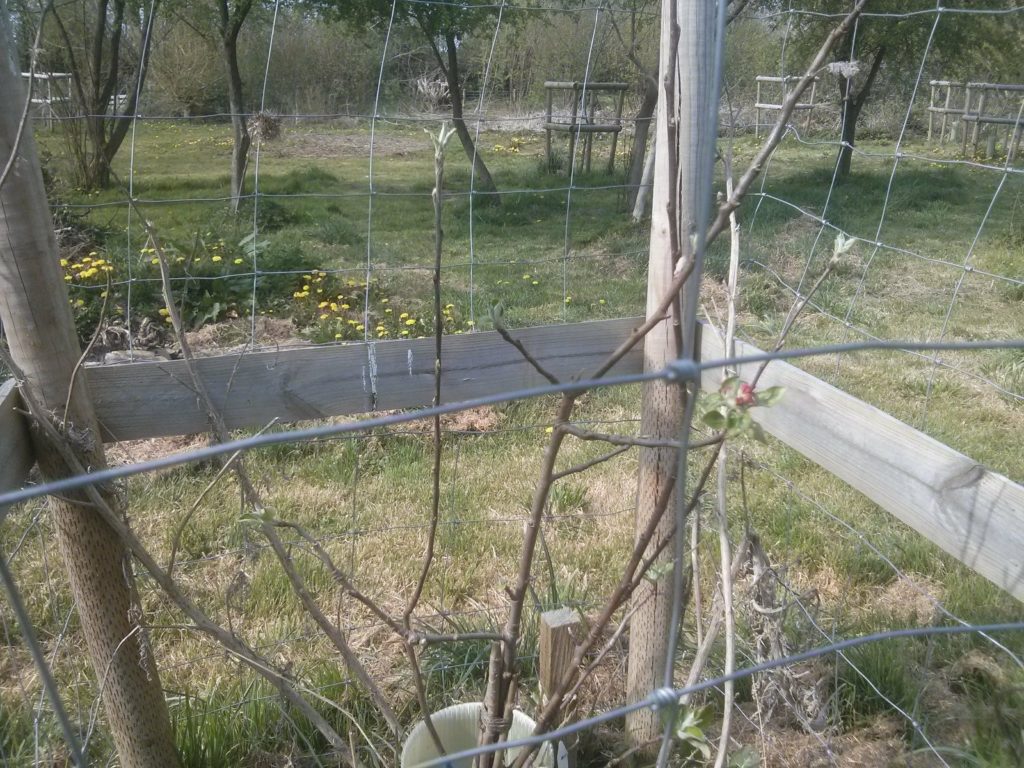
The two new apple trees are in bud. The Hambeldon Deux Ans was brutally munched by cows in 918 and has been splinted up, and is growing! I hope that this year it will grow taller than its protector again. It has one visible cluster of blossom, which is one more than last year.
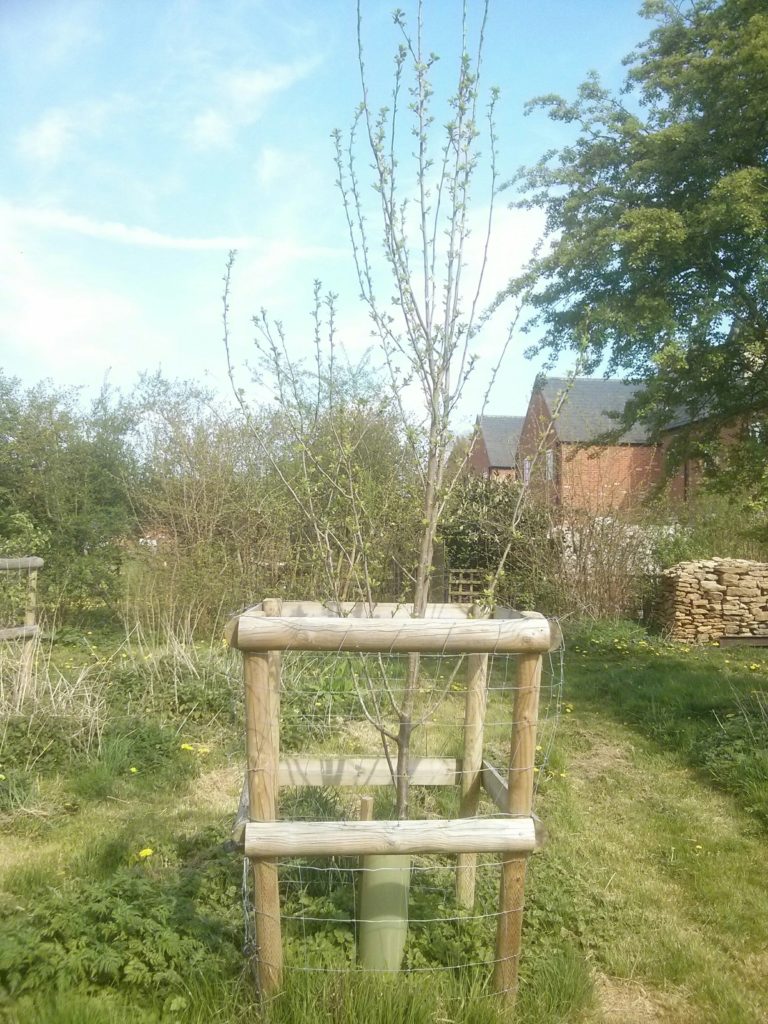
The Wyken Pippin is in good shape and looks like it’ll have a fair amount of blossom.
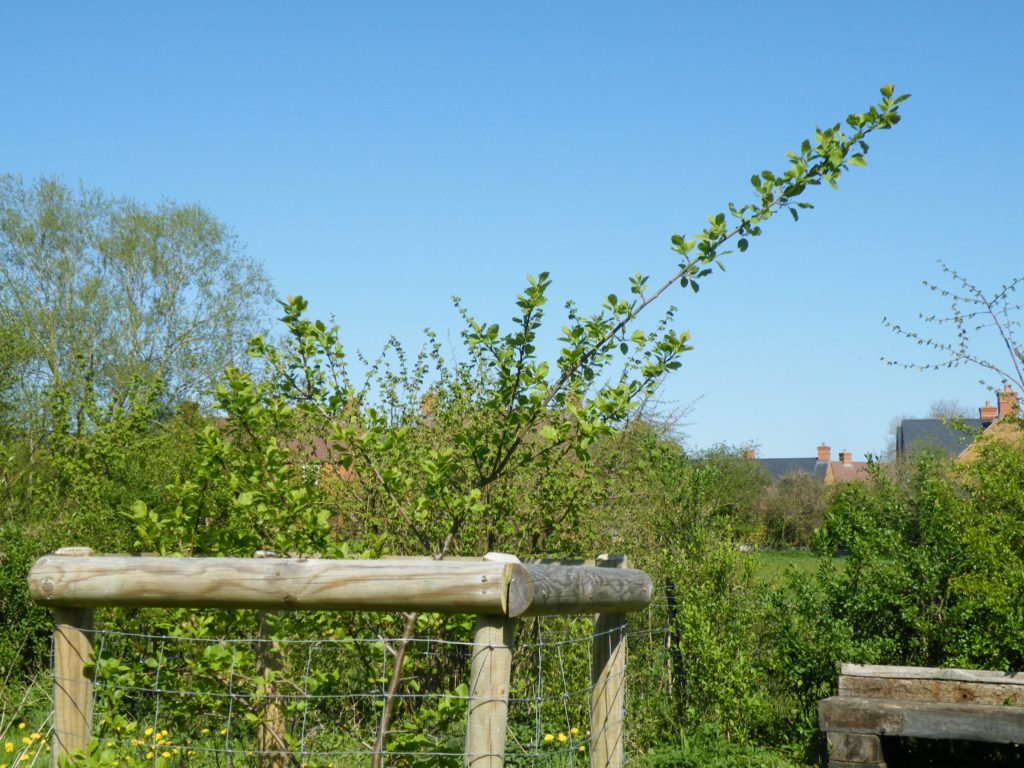
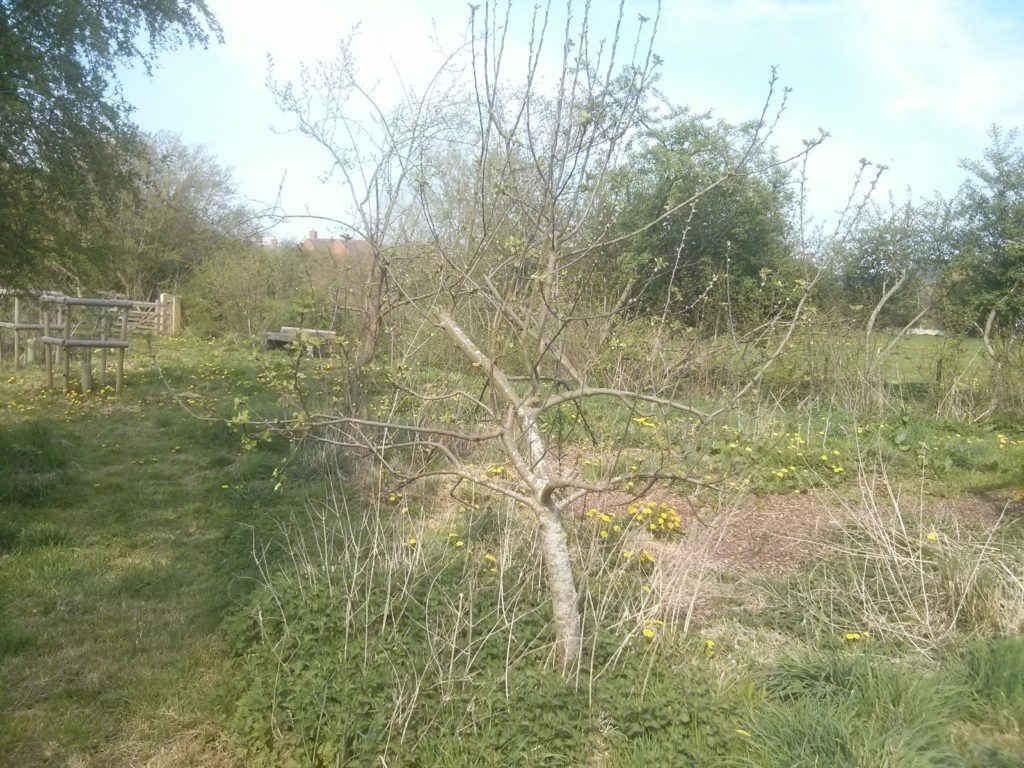
The old apple tree that was here already, is a much better shape now that it’s been pruned back for a couple of years – it had one long branch like a bridge trying to escape the leilandii (now wonderfully truncated) and reach the light.
Apple Wyken PippinApple Hambledon Deux AnsOld apple tree, unidentified
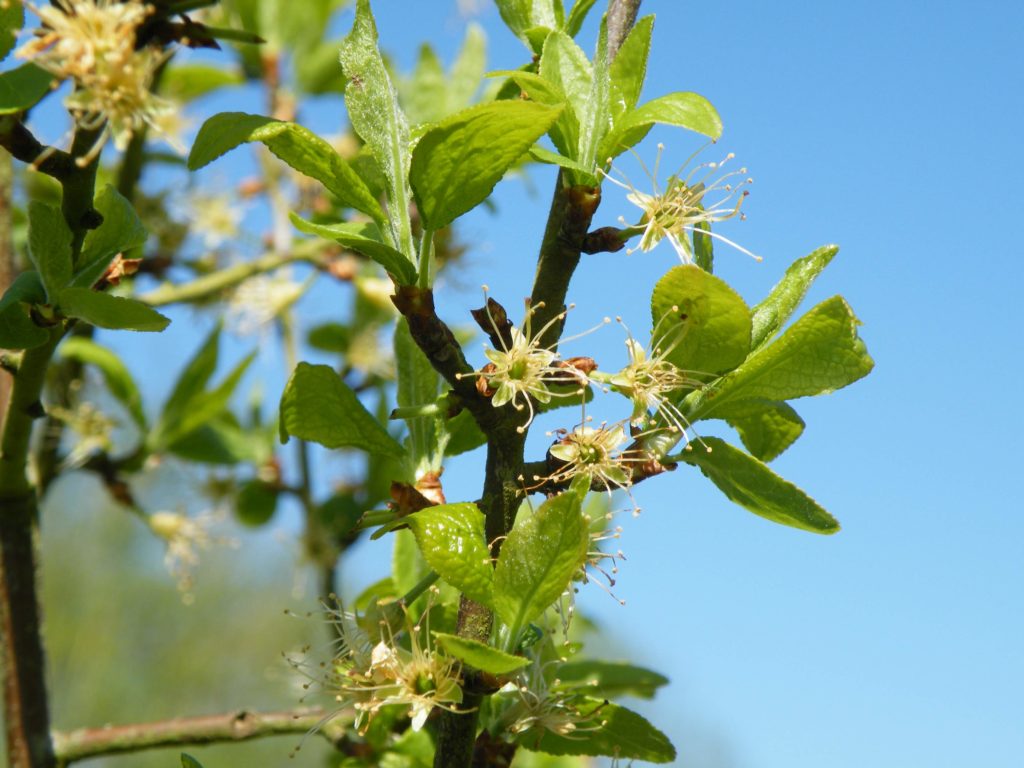
The damsons and plums have all flowered well and are nearly over, with what I hope are proto-fruits forming. The old, established plum tree is looking a bit better than last year – it gave a bumper harvest in 918 but was almost defunct in 919 with no fruit at all.
Damson FairleighDamson Shropshire Prune and plum Rivers Early Prolific
The quince and medlar have plenty of leaves but no flowers – I hope they’ll get round to it later!
Medlar NottinghamQuince Portugal
Last but not least is the white poplar we put in down where the land floods, to add back some height and because it’s a lovely native tree. It’s budding well.
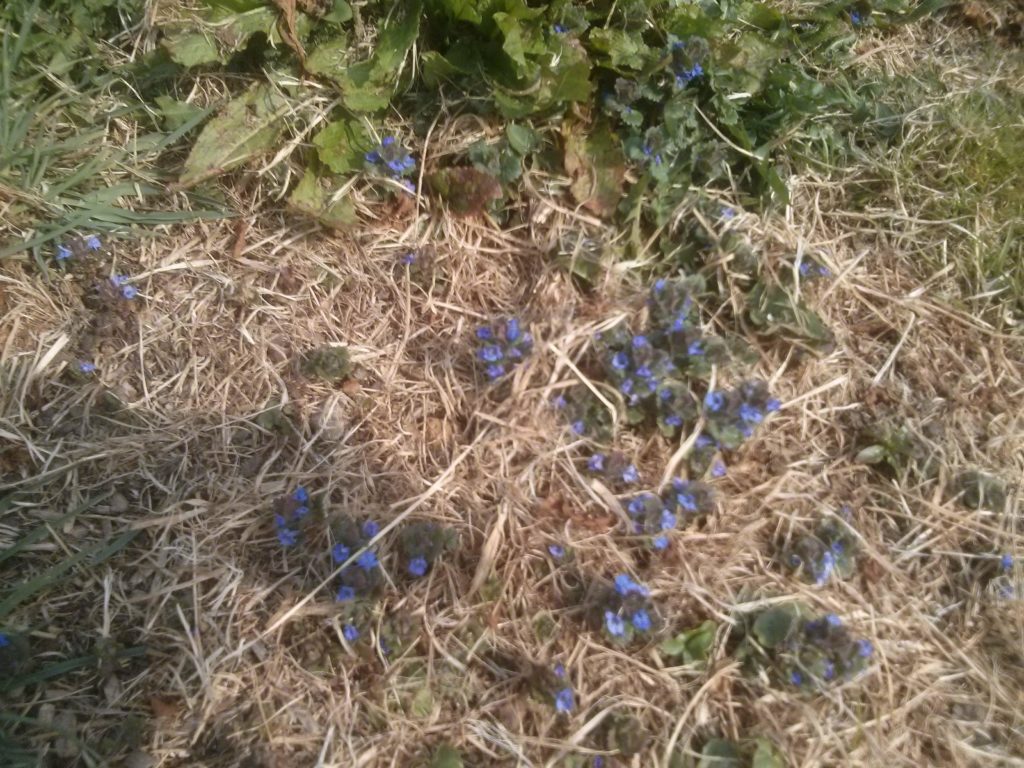
Lots of this blue wildflower – but what is it?
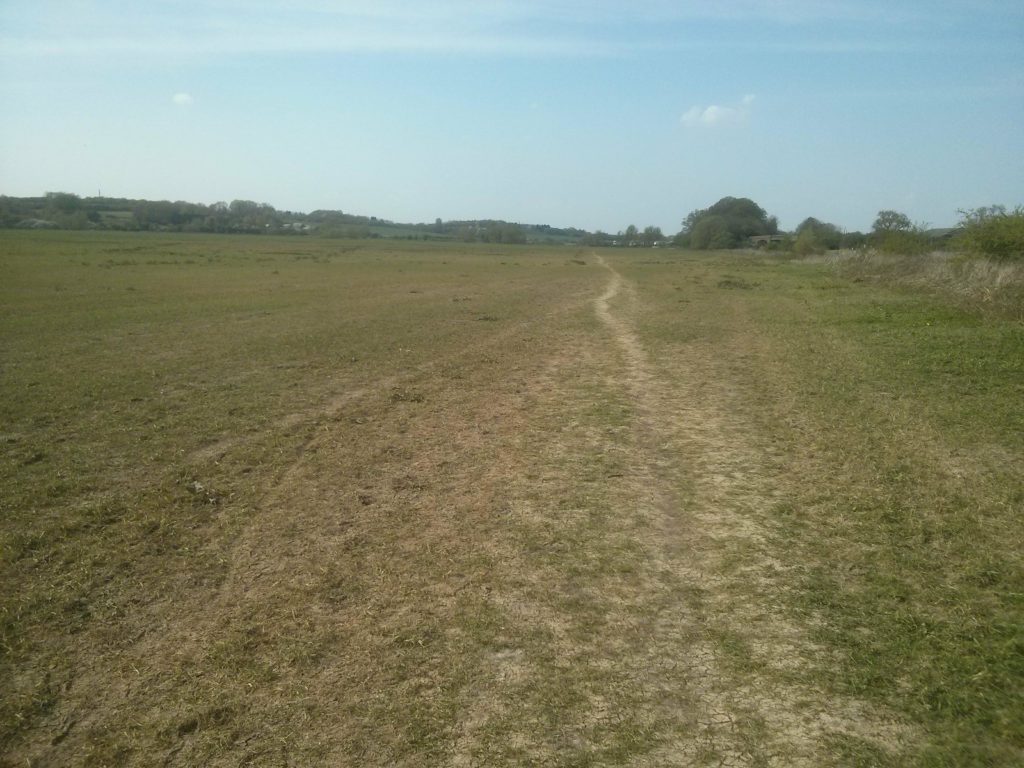
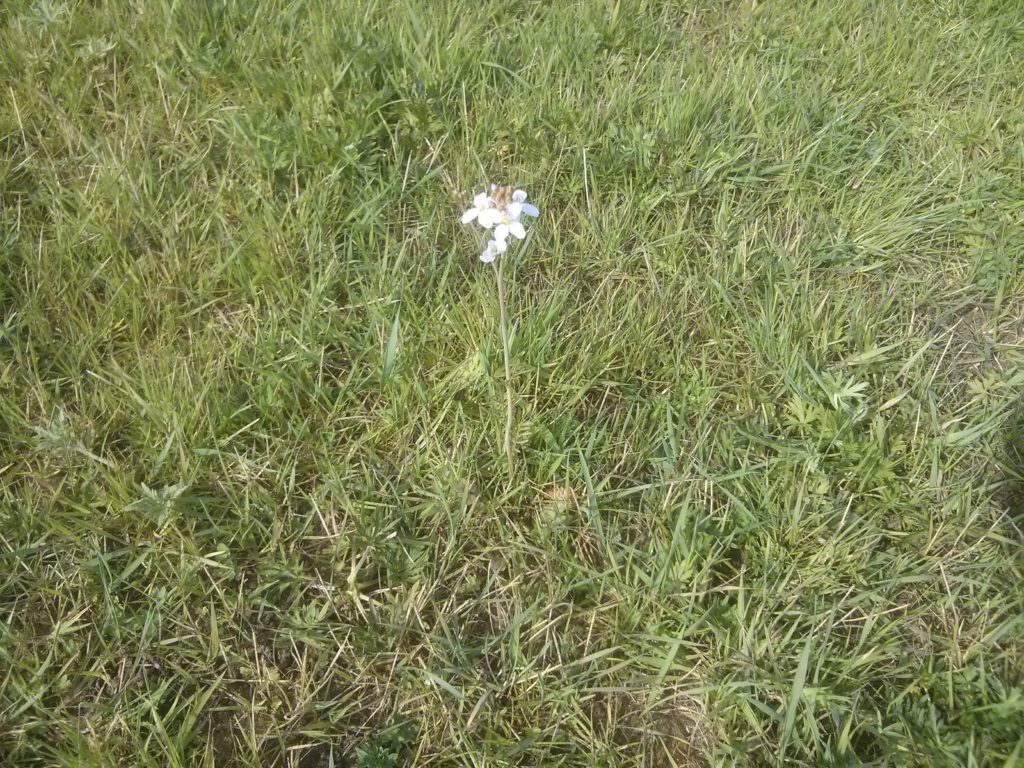
I walked over the meadow which after 6 months of being half a metre underwater as often as not, is still thin on grass, covered in silt and smells like the Essex coast. But I saw one cuckoo flower plant!
Cherwell flood plain, drying out at lastA long cuckoo flower
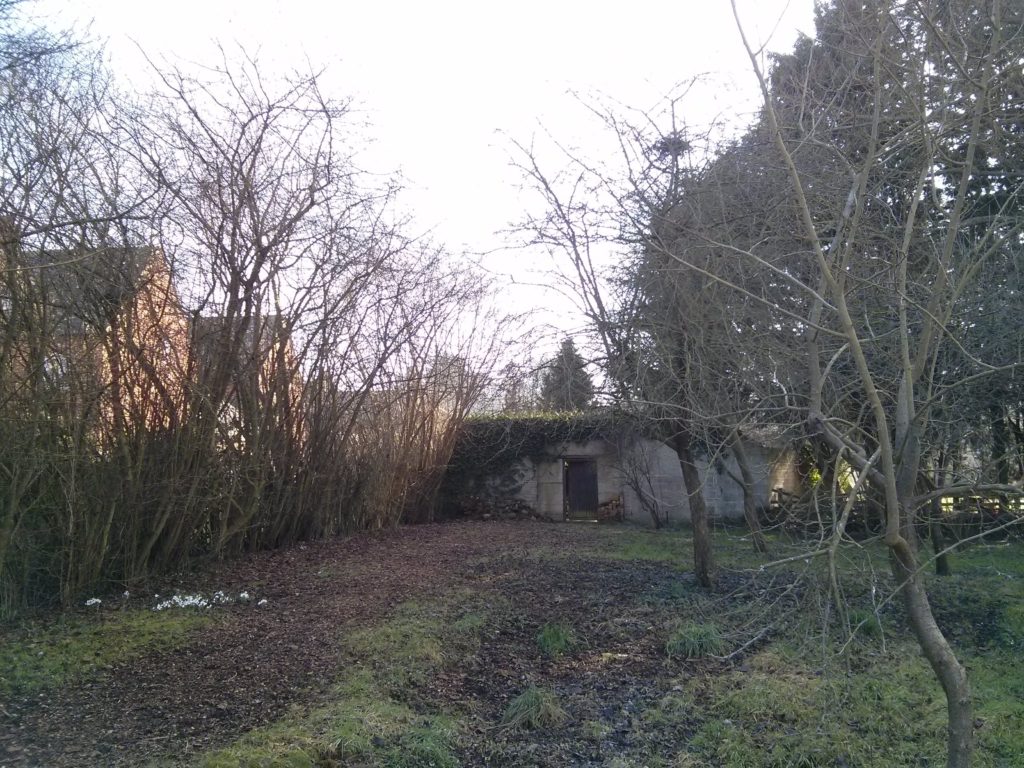
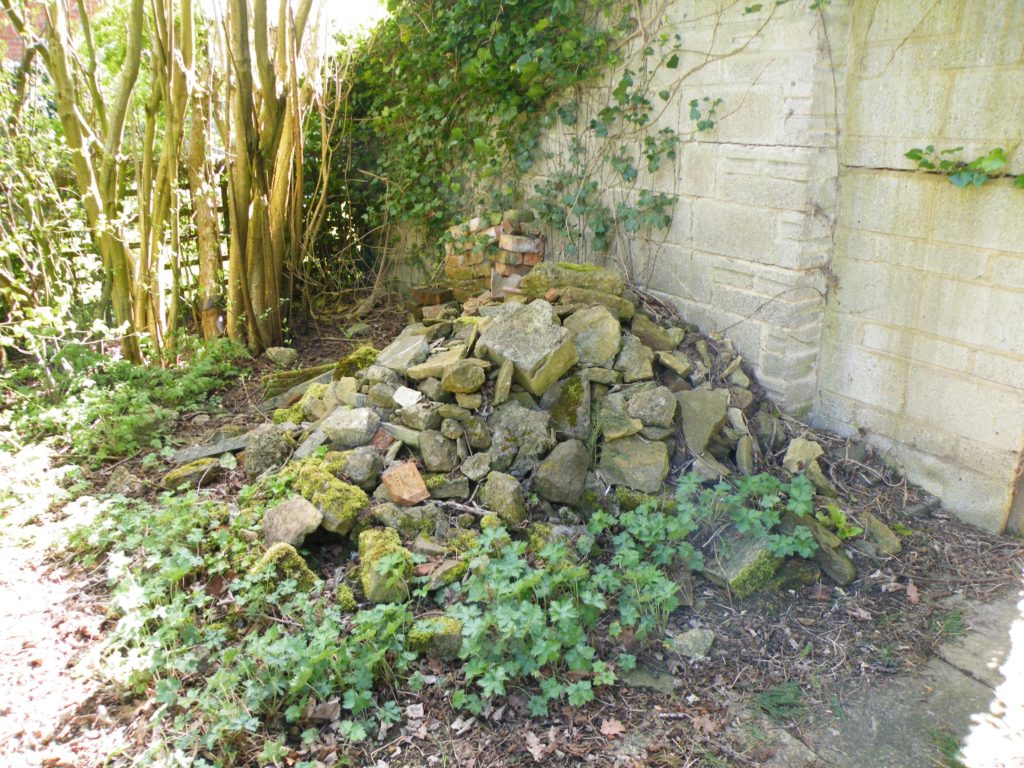
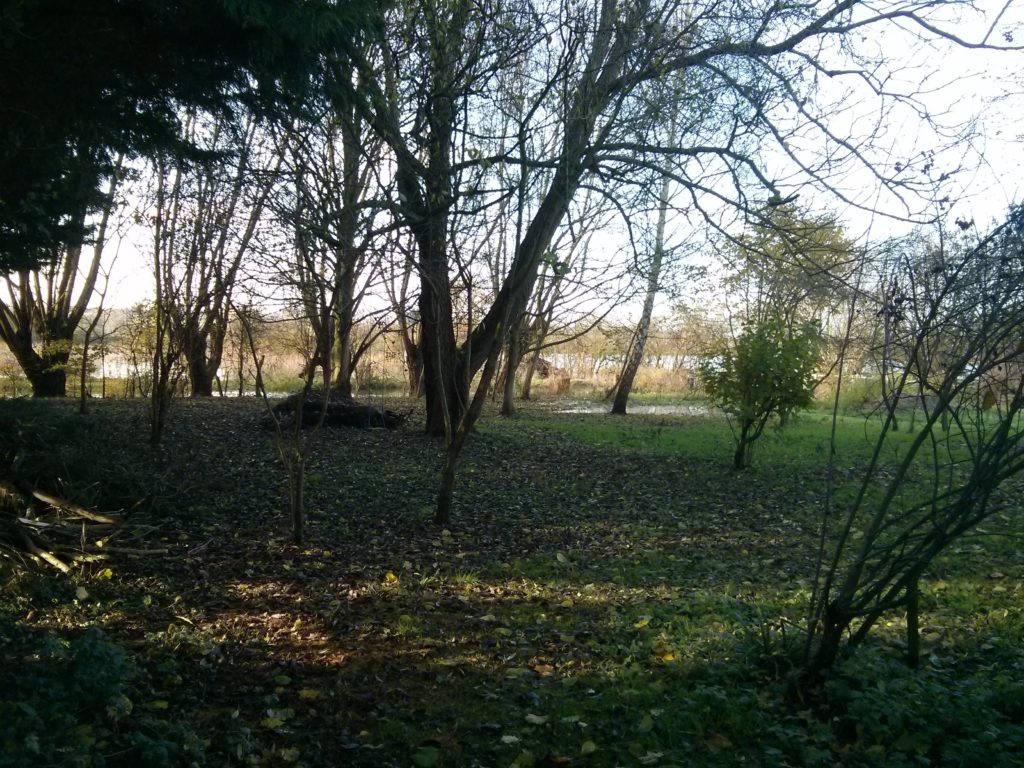
Continuing to describe Rumwoldstow as we first took possession, in 2016 (or 916 AD if you are following the history of Rumwoldstow), let me show you some pictures of what is now the young orchard. This is a squareish bit of land to the north of the walled garden which had been planted with a mix of native trees but had been gradually overshadowed by a very tall leilandii hedge to the south, willow to the west and a mixed hedge to the right. The north side had been devastated by the council as part of a plan to build a flood defence along that line, which never actually happened (lots of local politics there!). So we were left with this dark site, partly occupied by a very large willow and a huge sycamore, all the remaining trees leaning desperately northwards trying to get to the light, and then a barren area covered in piles of woodchip. Plus a mound of burned wreckage where the previous owner had burned a lot of inappropriate possessions in what seemed to be a fit of pique – including mattresses, electrical items, entire filing cabinets, cupboards full of clothes…
So here are a bunch of photos to give an idea of how it looked then! First, not quite a 360 degree panorama but this view from the north west shows the mix of blasted heath and deep shadow that we started with. The brook separates the orchard site from Lake Meadow which runs down to the Cherwell (if you ignore the railway line).
Looking south to the north wall of the gardenRubbly jubbly!looking west during the February 2017 flooding, you can see the pile of burned goods and the water creeping into the area. And how dark it is!