First the bad bit. With the extreme heat and lack of rain this year, the apple trees have produced very little fruit and most of those have critters living in them. Completely different from last year’s bounty. I predict I’ll be out of apples by midwinter (last year was so good that I still had apples in store in May, though by then they’d reached end of storage life).
Now the good bit. Two of the pippins that I grew from seed have produced their first fruit and are eatable! As in, actually nice to eat, not “could eat them in an emergency”. These trees are in pots and have perhaps benefited from being on the north side of the house (slightly less full sun) and fairly regular watering.
Both pippins were grown from seeds taken from apples that were given to me late in 2025 and were described as “Cox-like”. They came from the orchard at Kittyfield farm near Galashiels. The two trees look fairly similar in growth / leaf type but the apples are quite different.
Tree A: four apples. One fell off, one I picked today. Both these were quite blemished but I cut off the good bits and they were tasty, reasonably sweet, definitely nice to eat. Two larger apples (maybe 6cm long?) remain on the tree. They are slightly elongated in shape.
Tree A: germinated seed in 2021 from an apple grown in 2002 at Kittyfield farm near Galashiels and described as “Cox-like”. The apples are hiding round the back but there are three good ‘uns!Tree A: three apples still on the tree. The bottom one is smaller and blemished, that’s the one I picked today.Apple from tree A, suffering from what I think is “bitter pit”, a disorder due to stress and not a diseaseApple from Tree A. Quite a lot of blemishes but the eatable portions of apple were good.
Tree B: six apples. One fell off, the others have disintegrated on the tree, alas. I ate some of the fallen one, and again it was tasty. These were smaller apples, maybe 4cm for the biggest, and more flattened, similar in shape to a russet, but still bigger than a crab. They are not unlike the Wyken Pippin apples in appearance, and that produced really tiny apples its first year or two, so I hope this tree will grow larger / better apples in the future.
Tree B: same origin (Cox-like from Kittyfield) but the apples have gone bad on the tree, alas.Tree B: fallen apples
Both are worth planting out if we can find a space!
Last year, two other trees produced their first fruits but they were small, sour crab apples. One has been planted in the hedge and the other should also be found a place out in the hedge.
Crab A (first fruited in 2025), grown from a Cripps Red (France) that germinated in May 2021. I think this was an apple that I bought and the seeds were germinating in the apple, so I planted them.Last year this tree had several apples, this year only one. It’s a perfect miniature apple but very small and last year they were sour crabs, not worth eating raw.The other tree that produced crab apples in 2025 and it was planted out early summer 2026 in the hedge. It’s put on a fair bit of growth and I hope it will carve itself out a space between the hazel, dogwood etc. We really ought to hack the surrounding hedge trees back while it gets established…Pretty crab apples on the orchard tree. This grew from a Gala bought September 2020 at the Co-op in Kings Sutton, germinated in spring 2021
Five years into the Quest for the Pippin of St Rumwold, and I have:
82 (approx) mystery pippins in pots, various sizes and conditions
2 crab apples
two eaters!
I count this as a win. My original guestimate was at least five years to get any results, and we have two valid candidates for the Pippin of St Rumwold. The plan is to plant out the two eaters and the remaining crab, which will free up a bit of space on the patio. I also need to weed and pot up most of the remainder, and hope that we’ll see some more fruiting next year.
I will begin with my riddle, then proceed to spoilers and discussion!
Confront me, and you will be as Frithuswithe's bane,
Disarmed and defeated like that unwise thane.
But I'm your daily guest, jolly and round.
Under my gaze, warmth and light abound.
Yet, in a girl's life came one strange hour,
My blessings dimmed though I was not lower.
The shadow's eye revealed a wonder
And a fool's glance confirmed - I was grown slender,
My body curved like a farmer's sickle,
Twin to my sister so pale and fickle.
A prayer restored me, full and ample,
And soon my sister spread her starry mantle.
So riddle me this, by Saint Peter's shoon:
When did the sun become the moon?
This riddle has two possible answers:
29th October 878 CE
17th June 912 CE
So what happened on those days, and why did I compose this riddle? You may know that there was a total eclipse of the sun on the 12th of August 2026, with totality visible in Iceland and parts of Europe. Here in Rumwoldstow (just south of Banbury, UK), we saw around 92% occlusion of the sun’s disc, which prompted me to wonder what people in Early Medieval England would have known about eclipses.
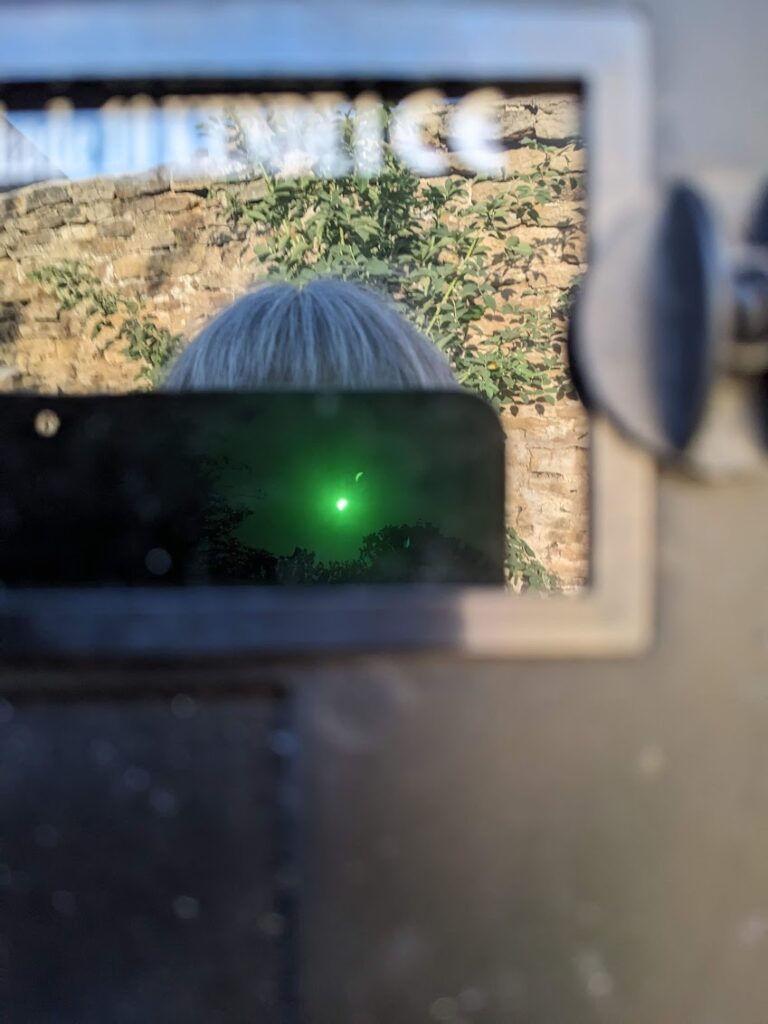
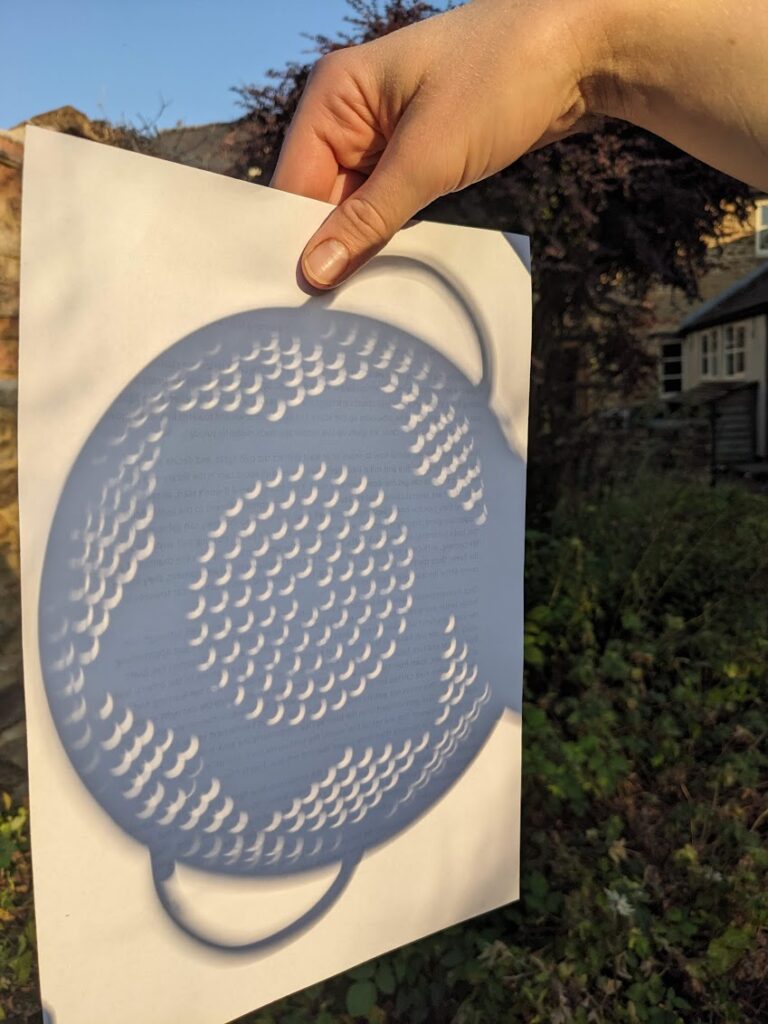
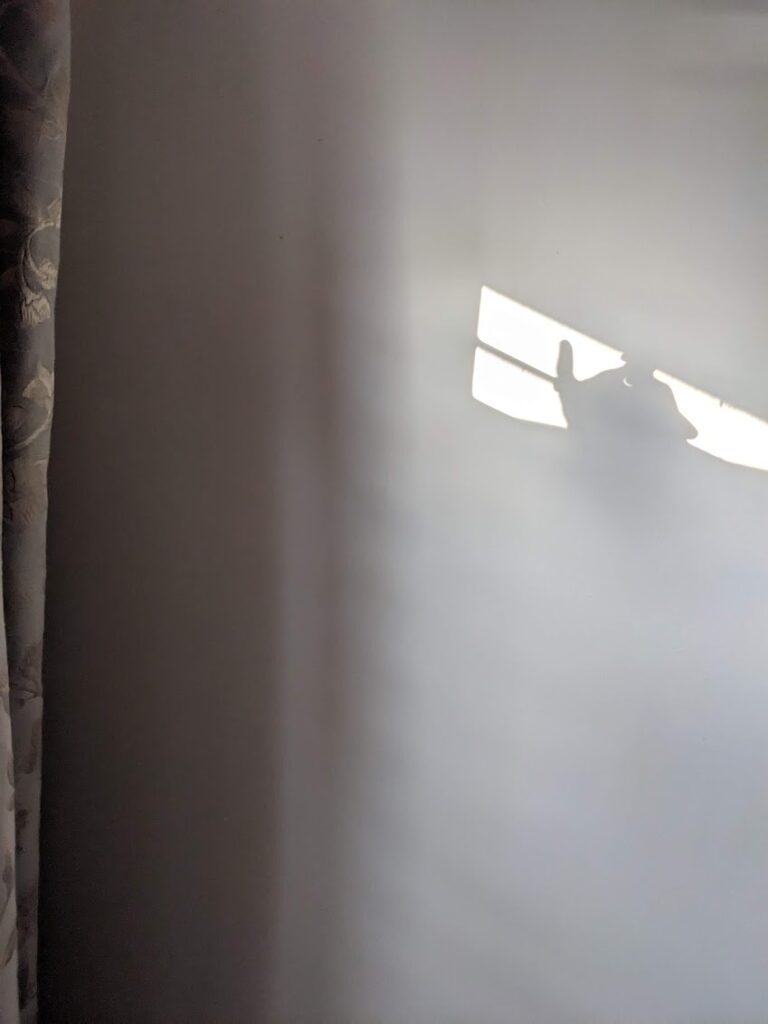
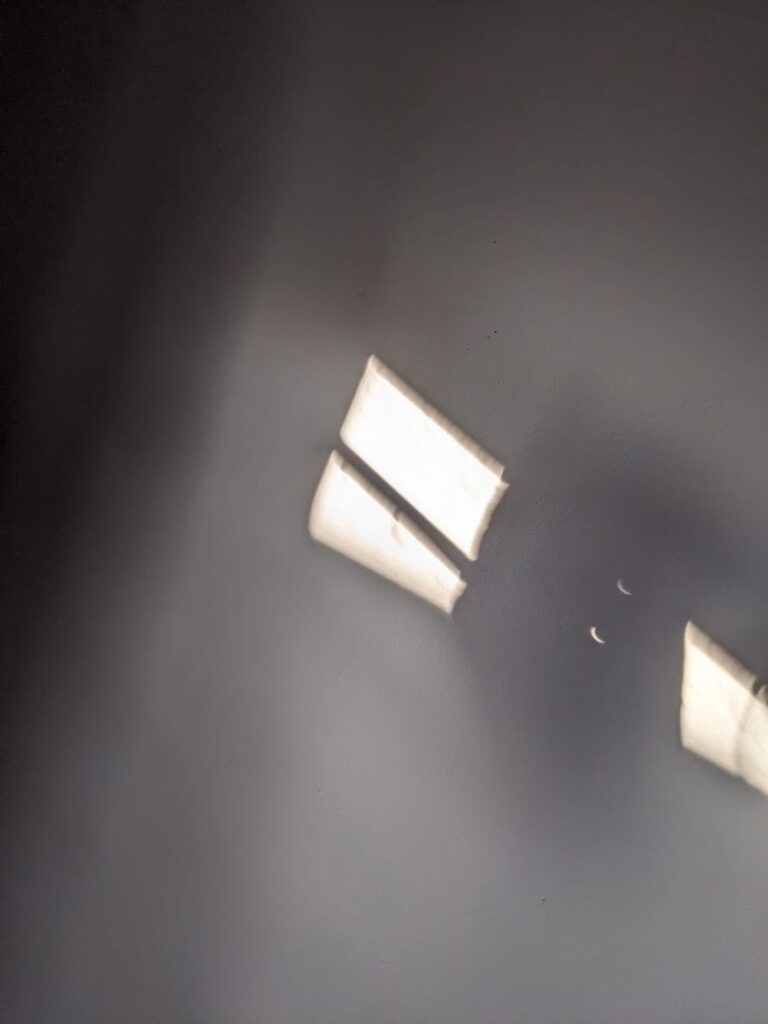
At the time of maximum occlusion, it was very obvious to us that the sun was dimmed but not why. We could see crescent shapes in shadows – e.g. from a colander, or by making a tiny “eye” with your fingers. A friend of mine said she glanced at the sun and had a crescent afterimage for some minutes (do NOT try this for yourself). A welding mask showed a clear crescent.
But would our nuns have noticed, or known what was happening? The Anglo-Saxon Chronicle records the dates of various total solar eclipses and at least one that was total in Continental Europe but not England. However I’ve found no evidence that anyone in the UK would have been able to predict an eclipse. And when we experienced a 45% eclipse in 2025, we wouldn’t have known it was happening if we hadn’t been prepared with viewing equipment at the right time.
Our methods for viewing the 2026 eclipse:
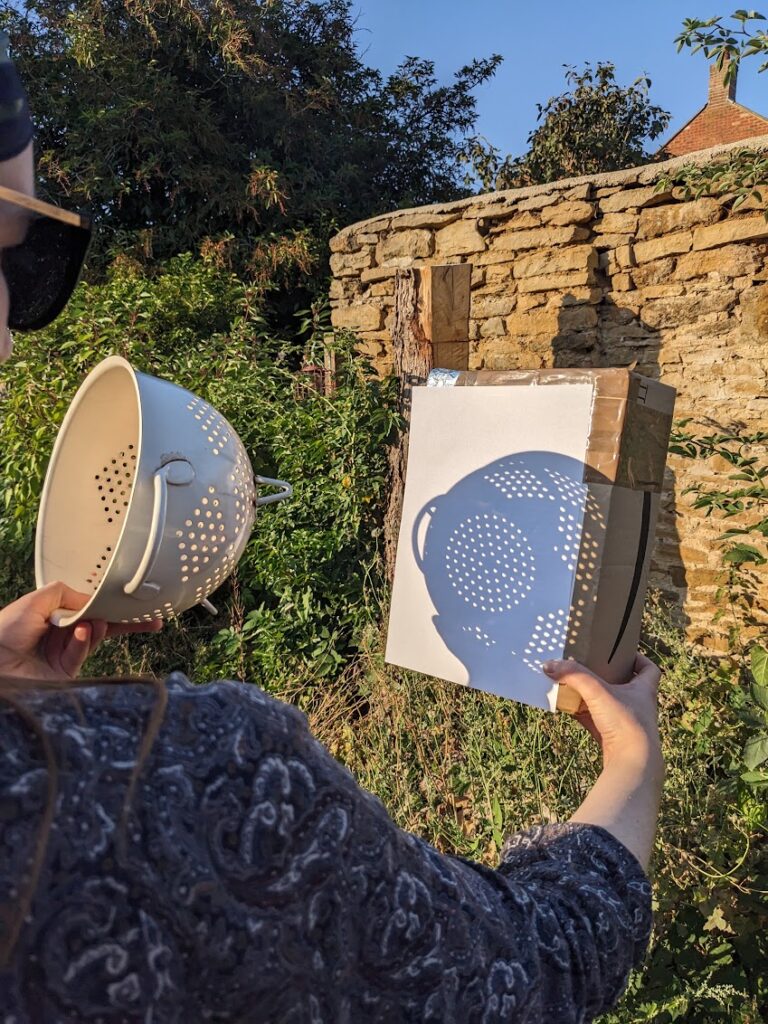
Camera obscura – made in a cardboard box. Worked, but underwhelming.
Welding mask – gave the best view, but didn’t get a good photo
Phone camera – didn’t work. Sun still too bright.
Colander – most fun! Clear projection of solar crescent instead of disc.
“Shadow puppet” – use your fingers to make a tiny hole in your shadow and look at the shadow on a wall or sheet of paper. Also very good fun! Clear projection of solar crescent.
Looking at the sun – accidental glance, no really don’t do this, but a person in the past might well have done this, wondering why the sun was shedding so little light. Did not try it myself, but apparently you get a crescent afterimage.
Reflection in a bowl of water – tried this last year, didn’t get much out of it.
The view from behind a welding mask. Not sure this is safe to look for long so we kept it to short glances. The double image may be a reflection of a reflection (sun reflected off phone screen, then back of welding mask) and does show a crescent above the main overly-bright image.
Did Anglo-Saxon women have colanders?
This was the prettiest image we got!
Shadow puppetry in the study – a tiny hole gives a crescent imageTwo tiny holes!
The colander and shadow methods use the principle of the pinhole camera, where light passing through a small hole projects an inverted image of a scene.
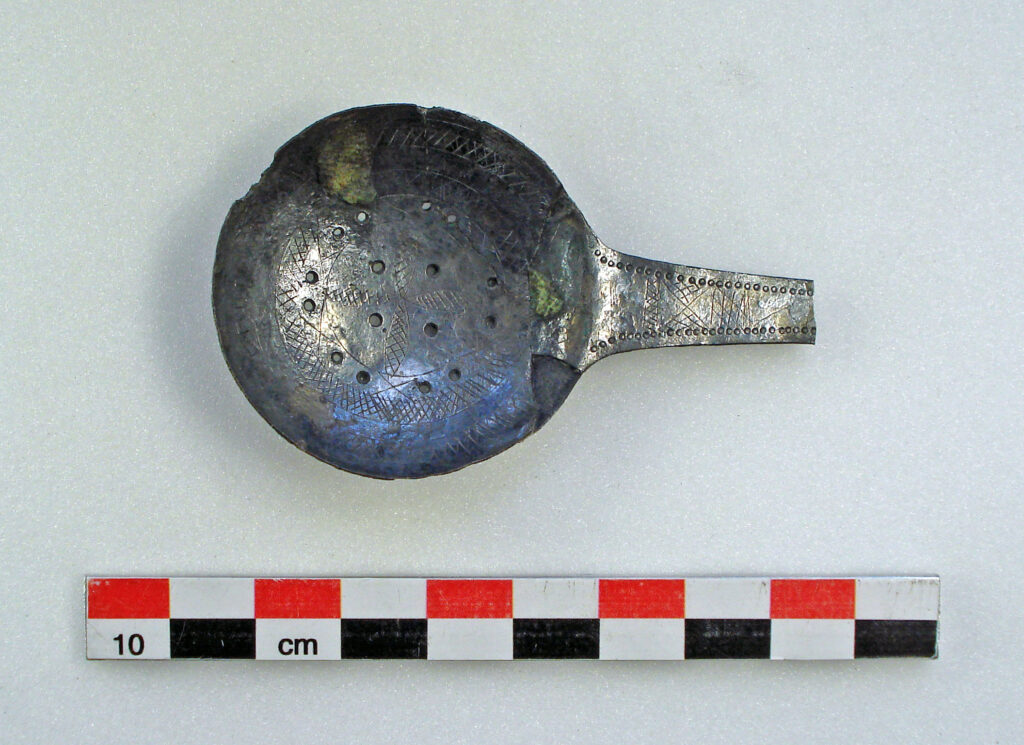
What might an early medieval woman have used to see the eclipse? Curiously, the Kentish spoons with holes in would likely have been perfect eclipse viewers!
I’m not saying that these weird objects were made for viewing eclipses, but I think they would have worked extremely well! Early Anglo Saxon sieve spoon, there are loads of these, purpose unknown, possibly Roman survivals?
The answers to the riddle explaned
Let us imagine an old woman in the Rumwoldstow monastery, born in perhaps 867 CE. She could have witnessed a total solar eclipse which was visible in central England in October of 878 (noting that the Anglo Saxon year started in September so the eclipse they recorded against 879 must be that of October 878 CE). This eclipse was total at Worcester, Abingdon, Peterborough and Canterbury, and almost total at Winchester, the attribution of the report:
A.D. 879. This year went the army from Chippenham to Cirencester, and sat there a year. The same year assembled a band of pirates, and sat at Fulham by the Thames. The same year also the sun was eclipsed one hour of the day.
There was a later partial eclipse visible from Coventry, so presumably also visible at Rumwoldstow, on 17th June, 912 CE, magnitude 0.813, peaking at 19:06 (just after 7pm). So I’ve based my riddle on this event, assuming that the abbess, Cyneswithe, had seen an eclipse before, and happened to be outdoors on a sunny evening in June (near midsummer, so sunset after 8pm) when this took place. She perhaps glanced at the dimmed sun, and maybe played with shadows to see the crescent of the partially obscured sun! Yes, this is a bit of a stretch. It was a long drive, I had to do something with my brain, so I composed my riddle based on what she could possibly have seen.
The sun becomes the moon when the moon’s disc hides enough of the sun that you see only a crescent. And it passes in a few minutes – the time taken to speak a prayer or two.
Frithuswithe’s bane is Alfgar, prince of Leicester, who made a nuisance of himself to her in Oxford and was struck blind for his trouble.
I took the reference to St Peter’s Shoes from the old song “Martin Said to his Man”:
I saw the man in the moon
Sliding down Saint Peter's shoon
This last is likely anachronistic, I haven’t researched it in detail the age of the song or references to Peter’s shoes, but the reference was too apt for me to miss (and I was struggling for rhymes). Forgive me – it’s a long way to Devon!
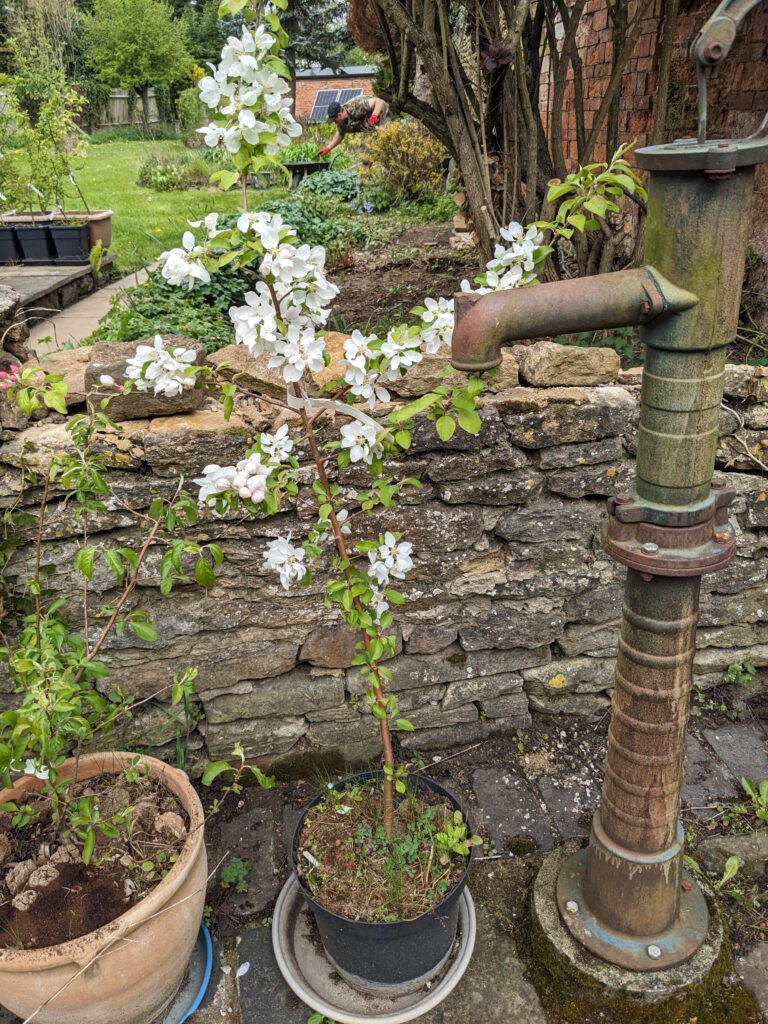
It seems like spring starts earlier every year, it’s the middle of April and the fruit trees are flowering. Damsons, plums and pears have all flowered and are now showing set fruit. The quince is coming into flower. A couple of the apple pippins are flowering; so far only four of the eighty-odd pippins are at that point.
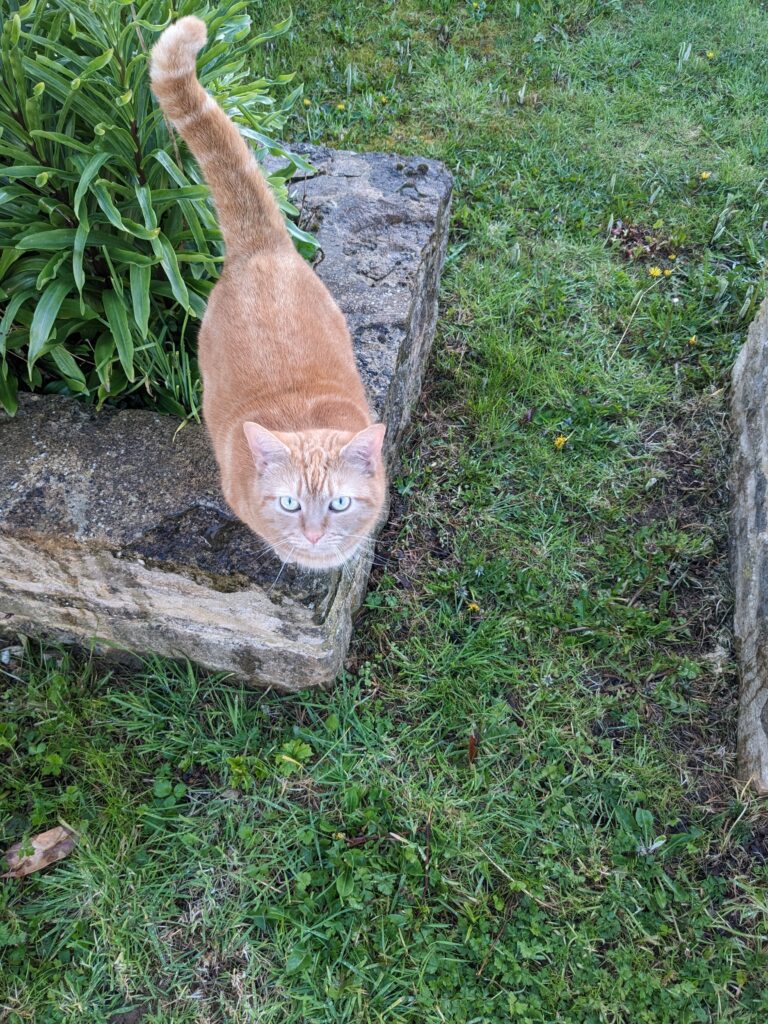
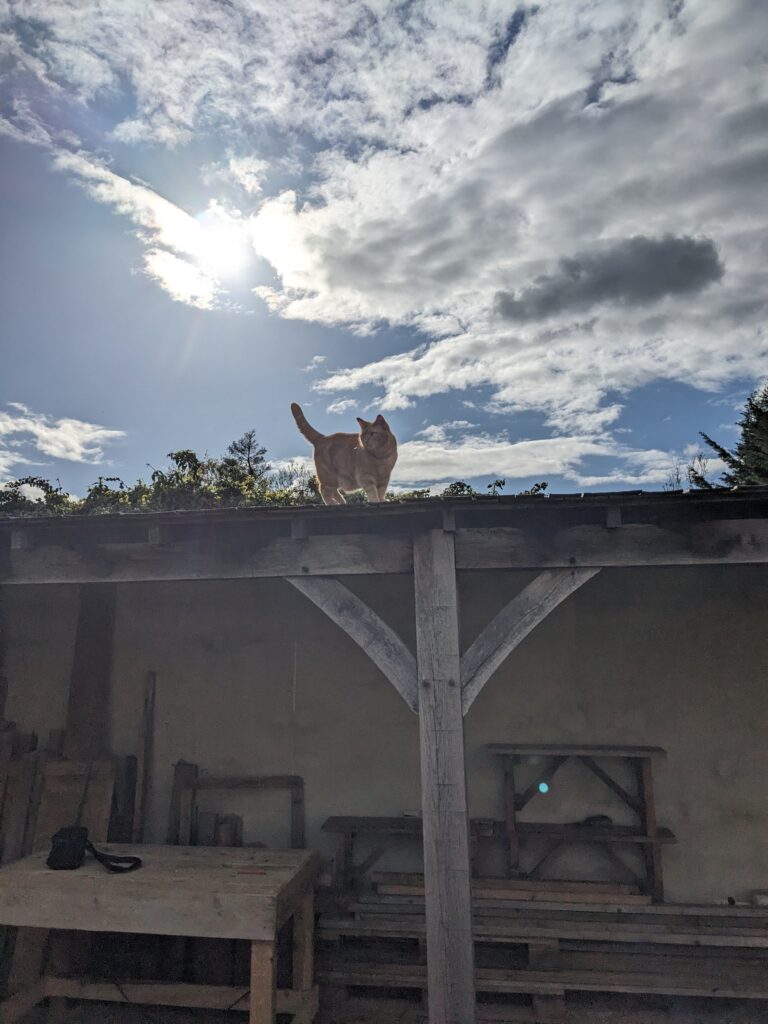
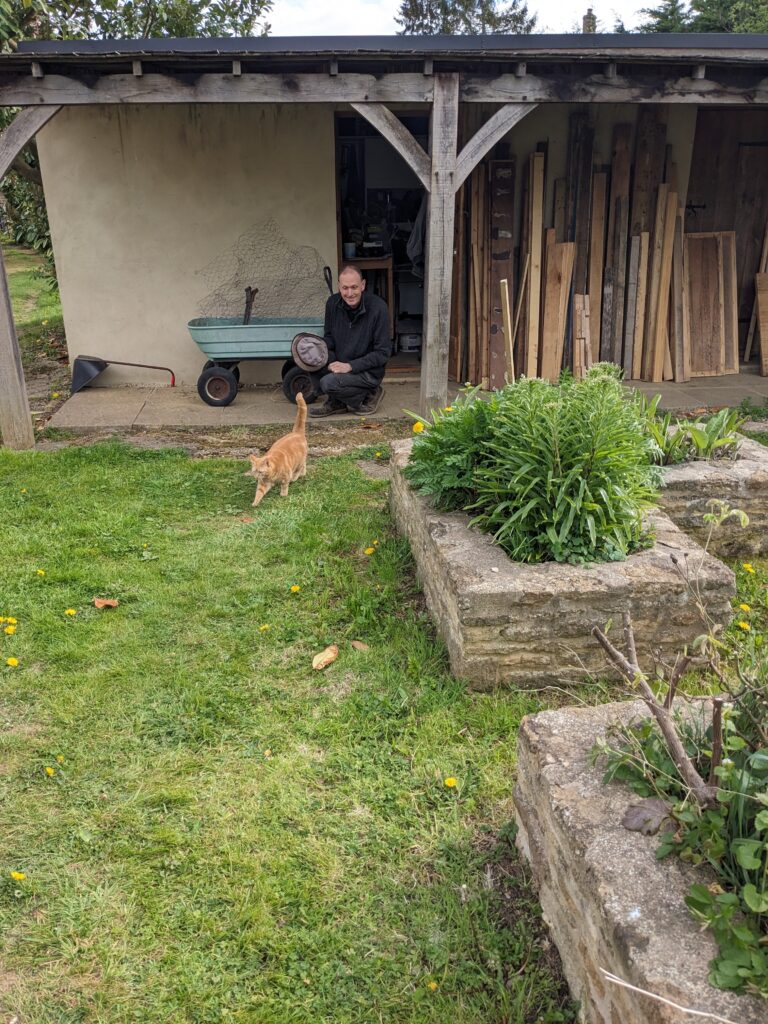
A local cat has started visiting regularly, she’s very friendly and also runs around climbing on everything, chasing everything and generally Being A Cat.
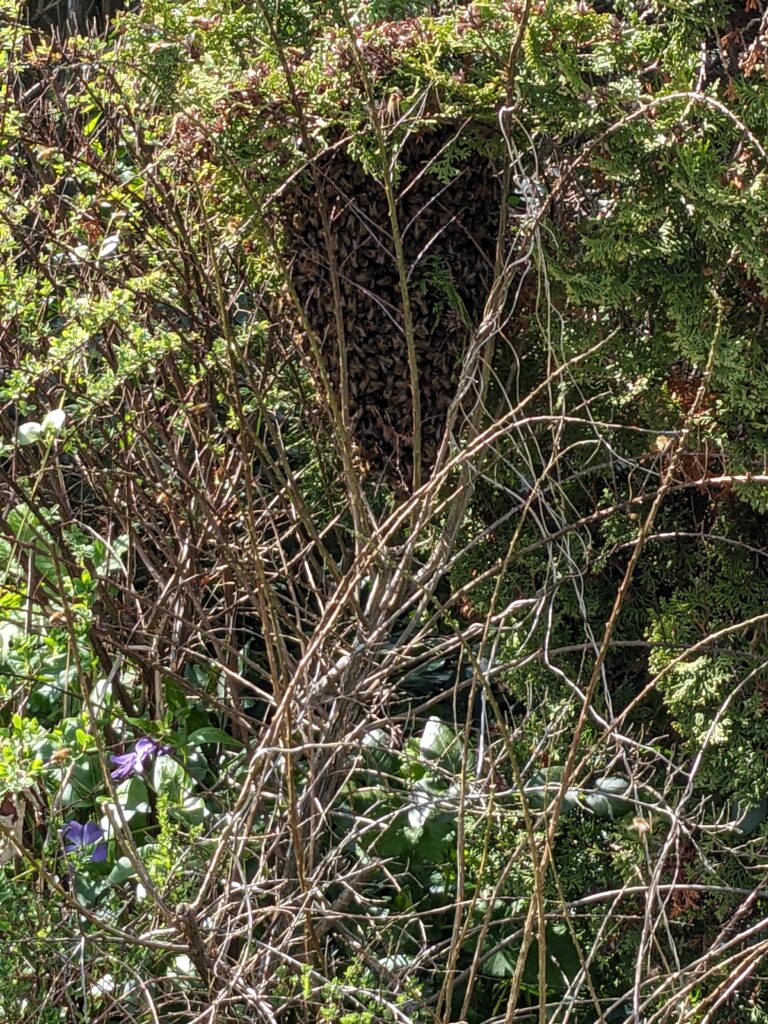
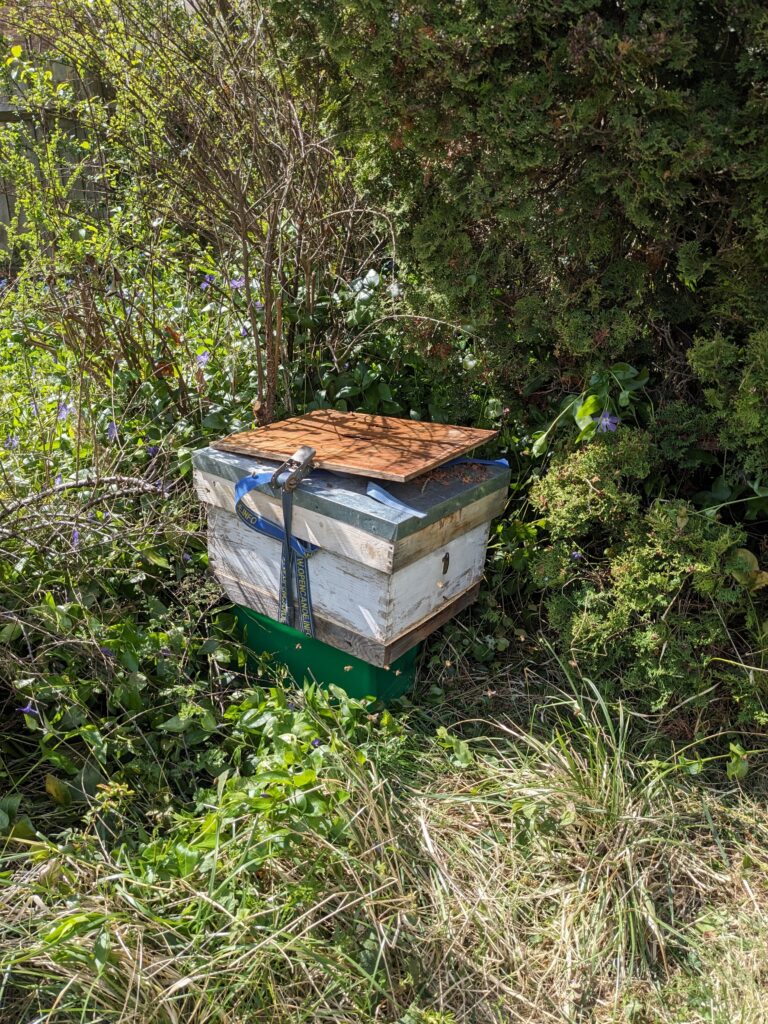
The latest excitement was a swarm of bees, which the local beekeepers have moved into a box and then left the bees to themselves for the rest of the day to settle in. The plan is to move the box up to their permanent home just outside the village this evening, once they’ve all settled in for the night.
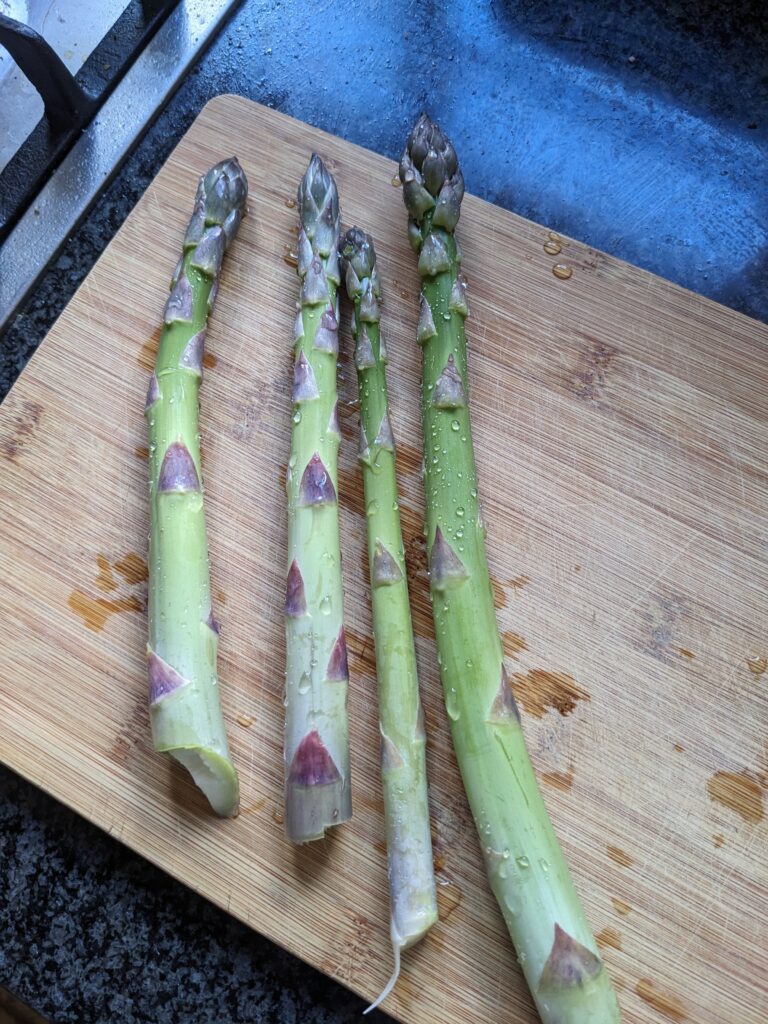
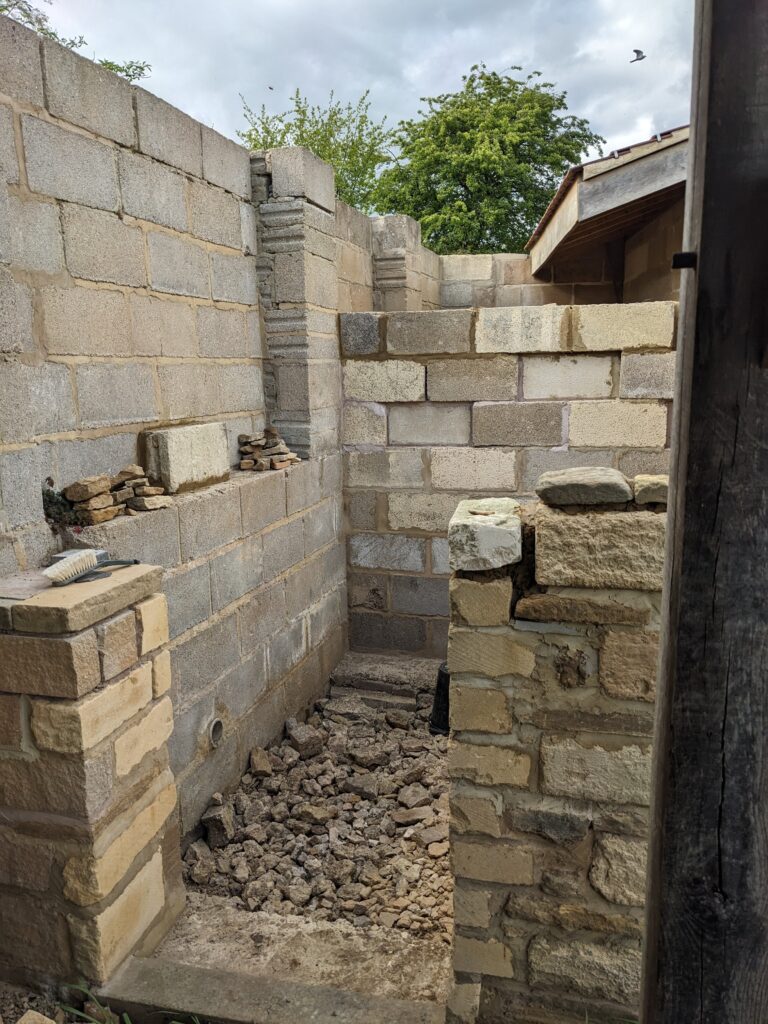
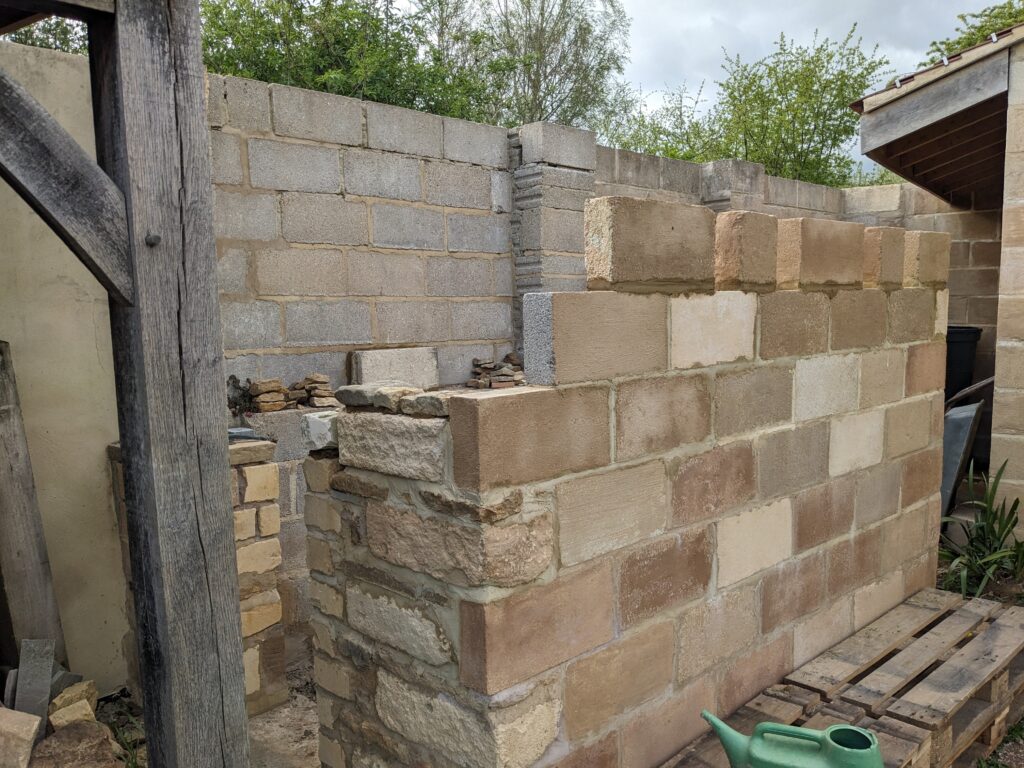
Visitor to the cloisterFlowering pippinBee swarmFirst asparagusCats love being high upBut also fuss!Forge building under constructionWindow slits in the inner wallBees settling in to their new home