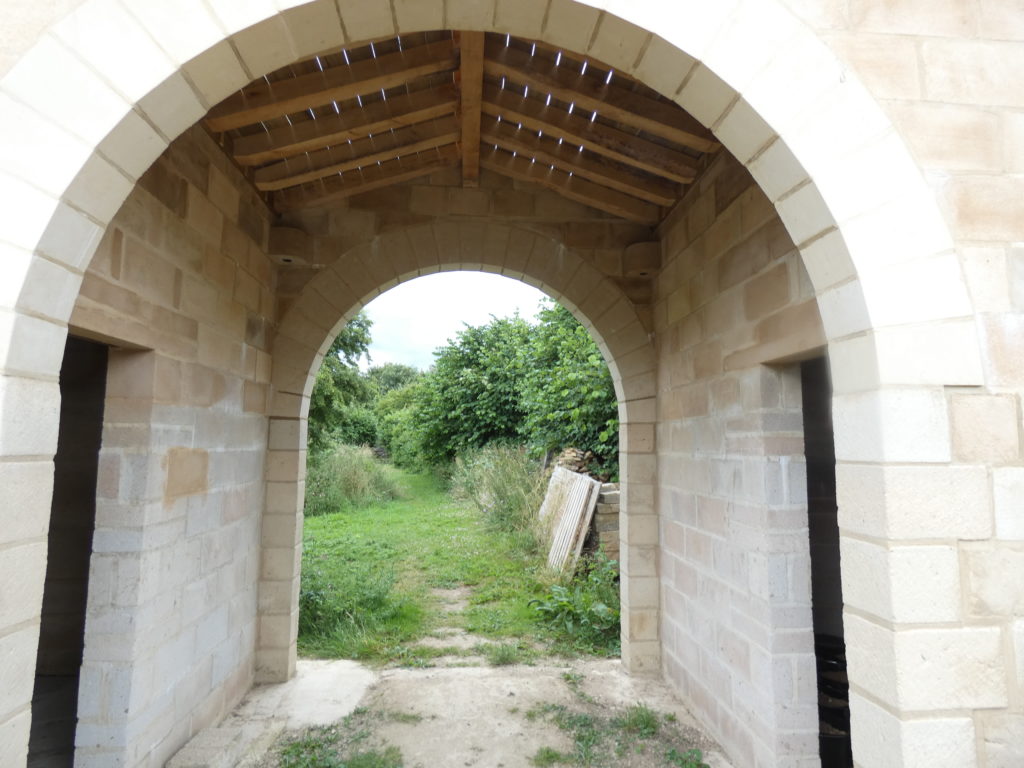
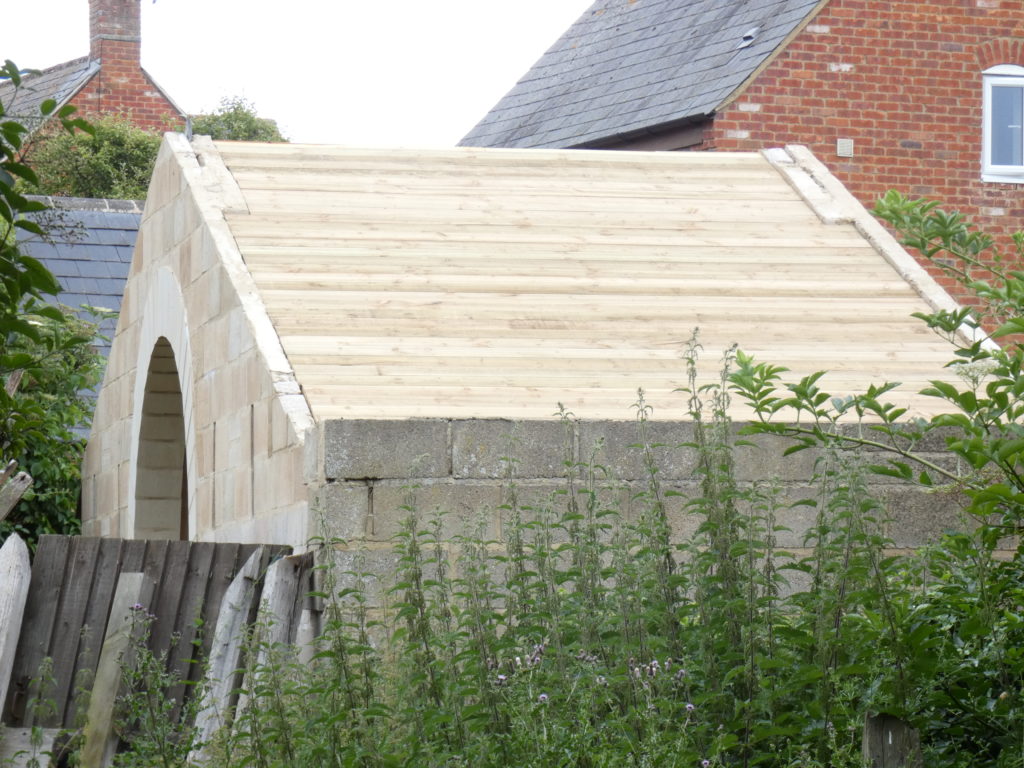
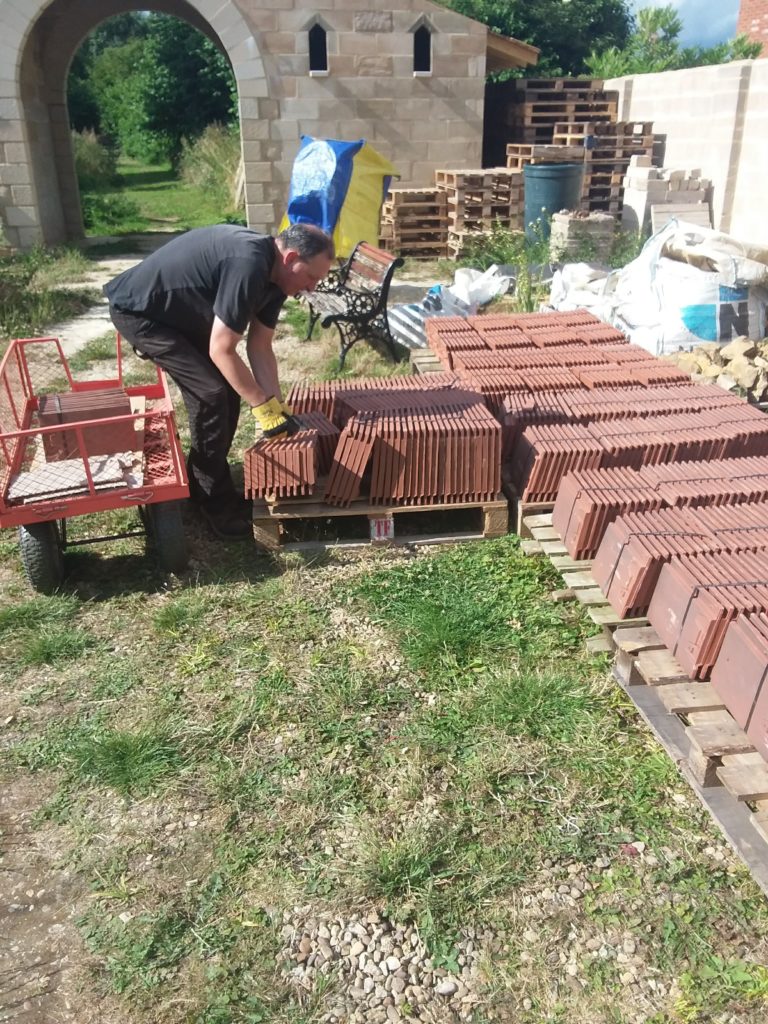
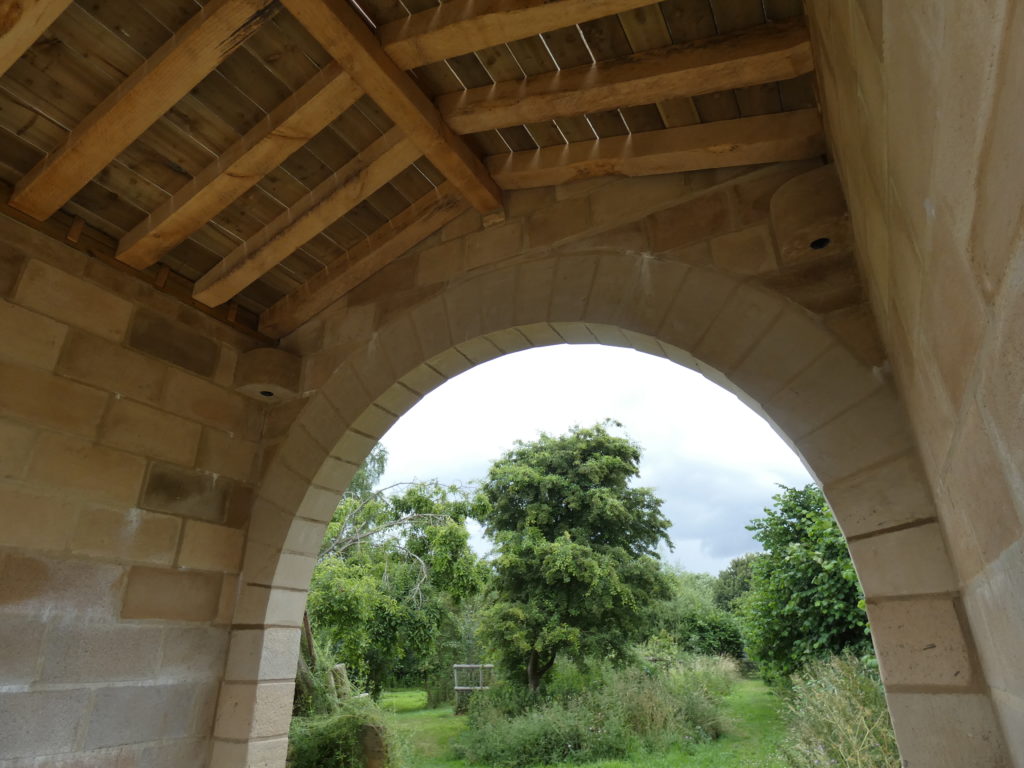
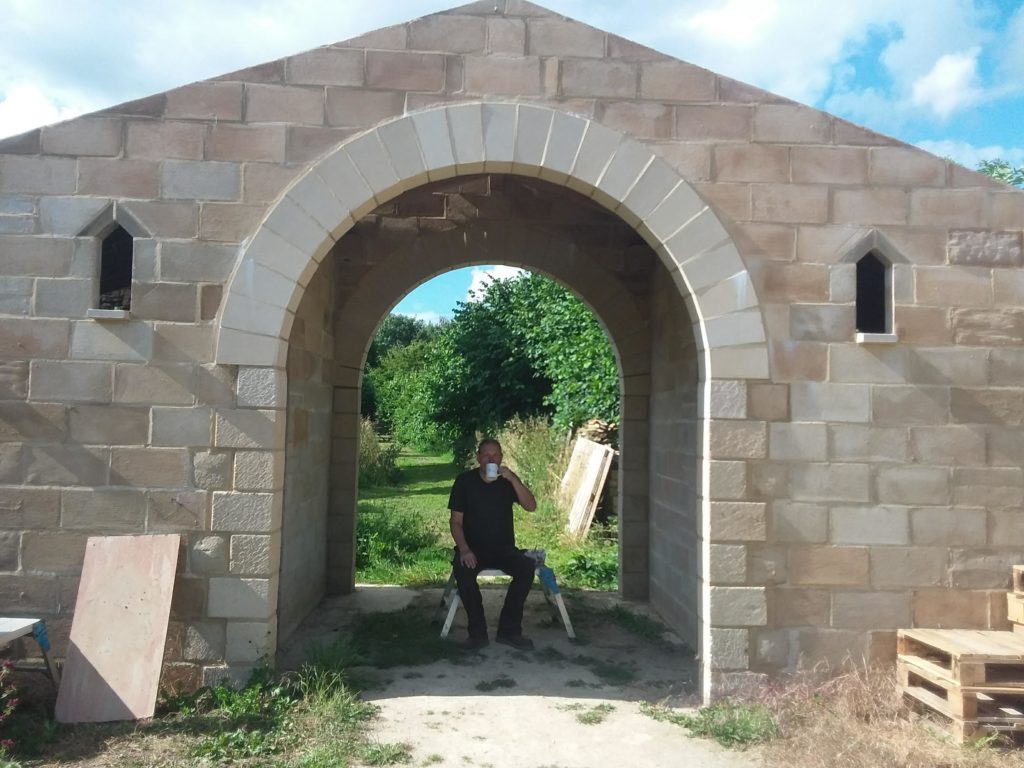
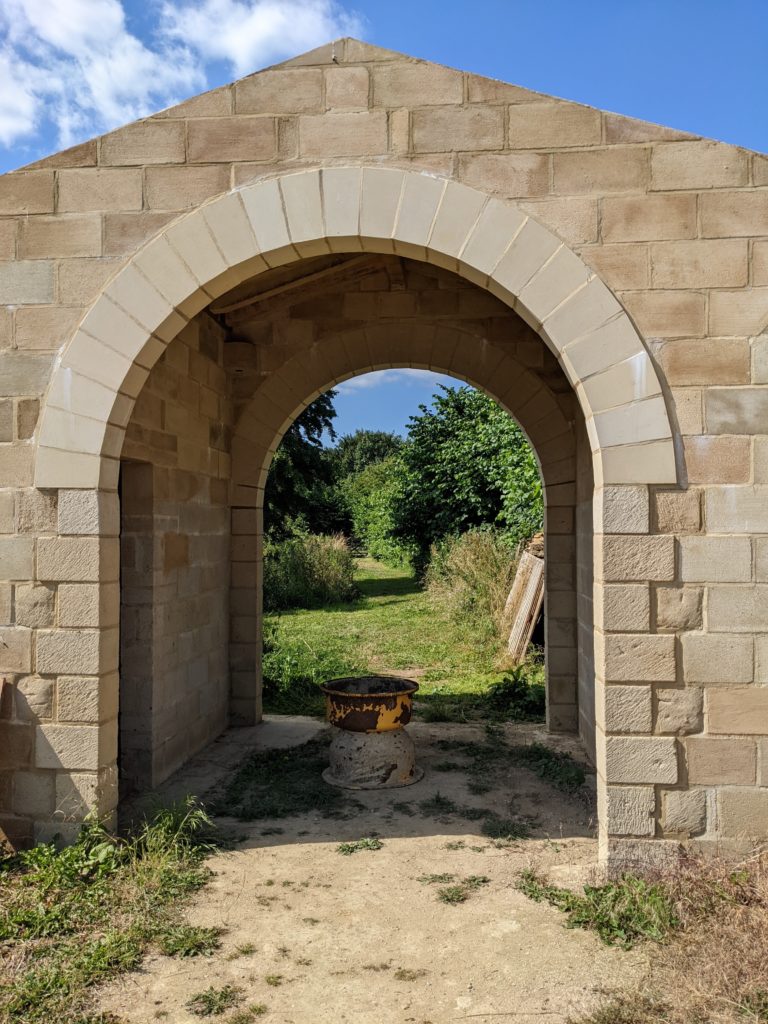
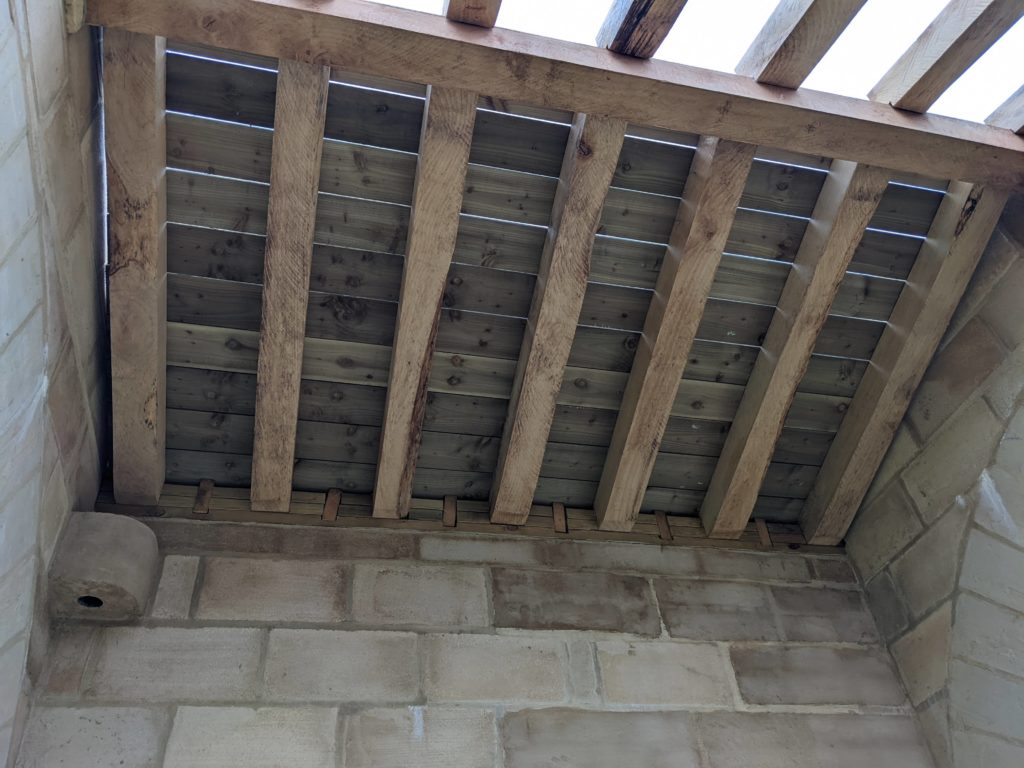
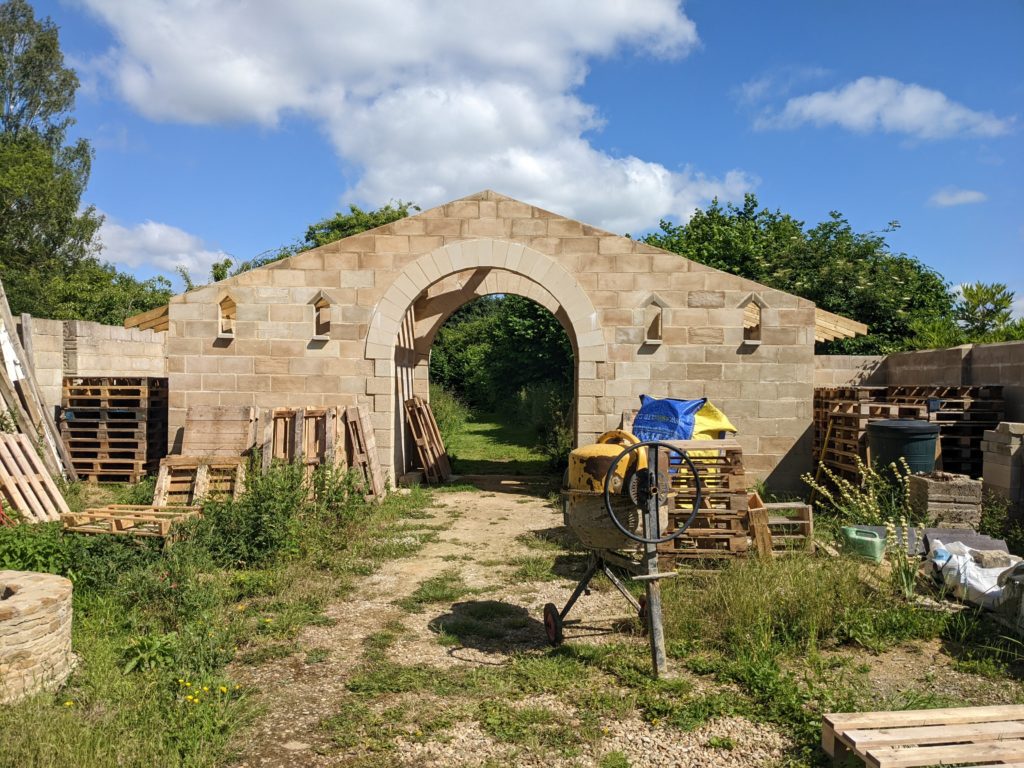
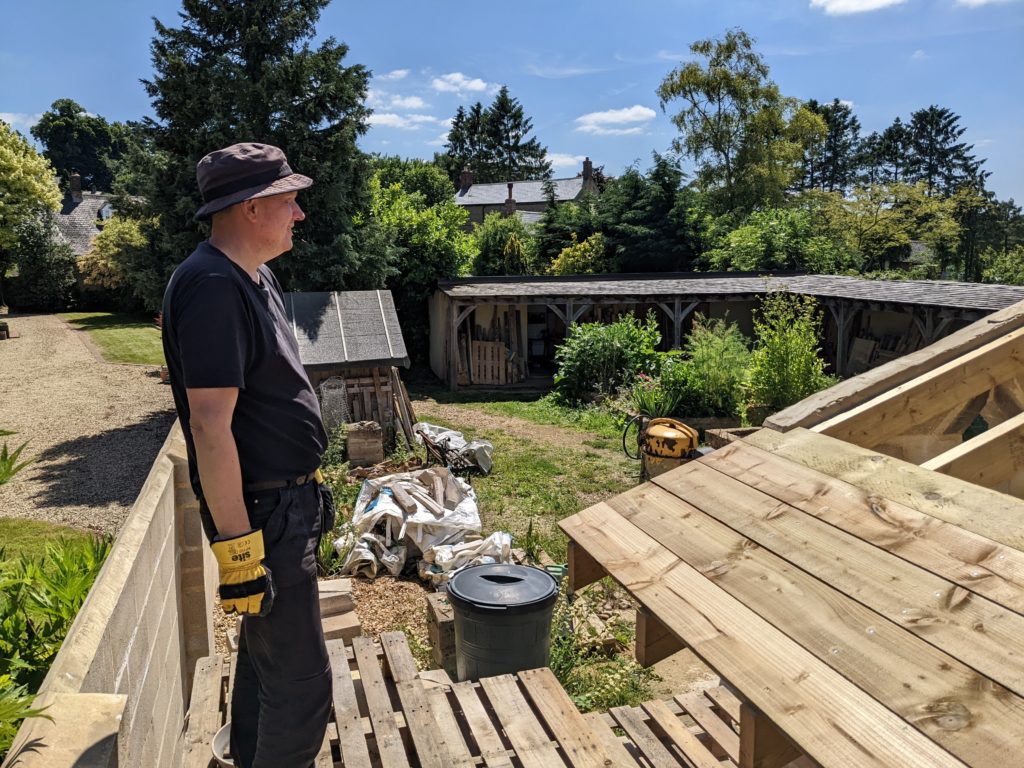
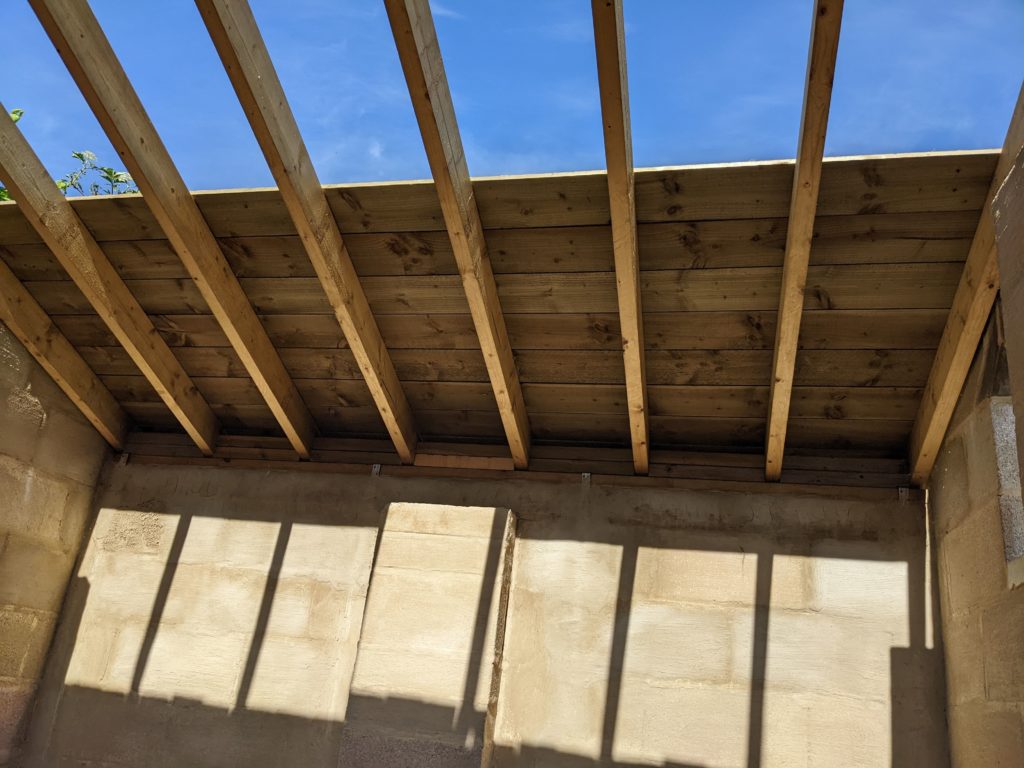
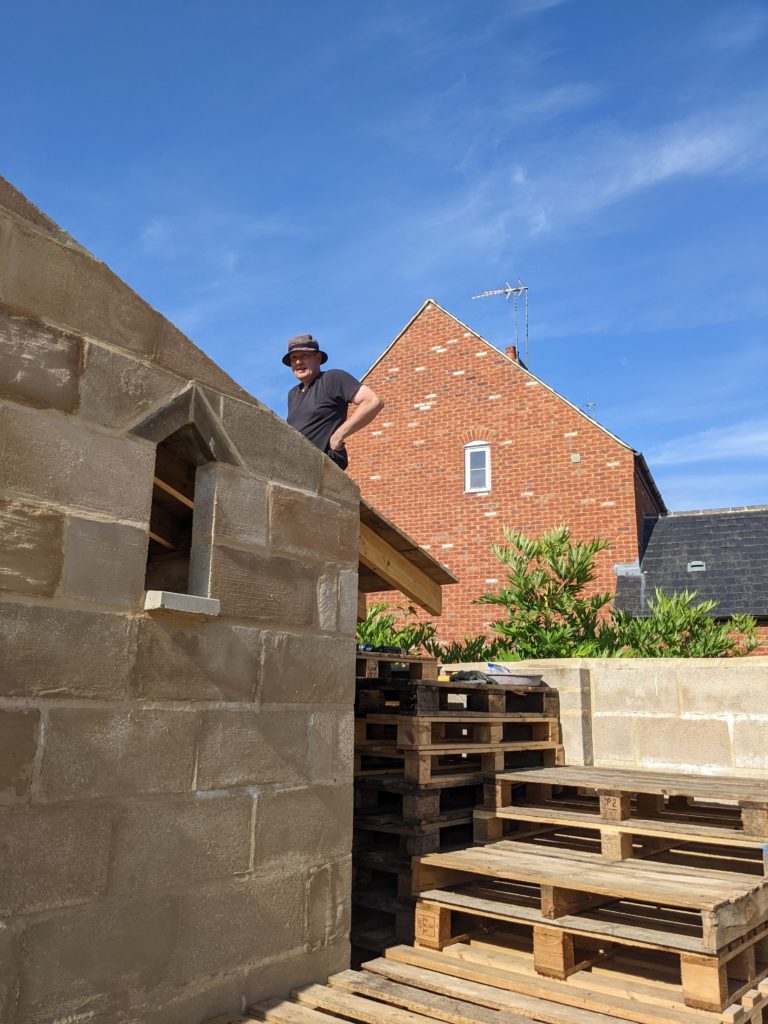
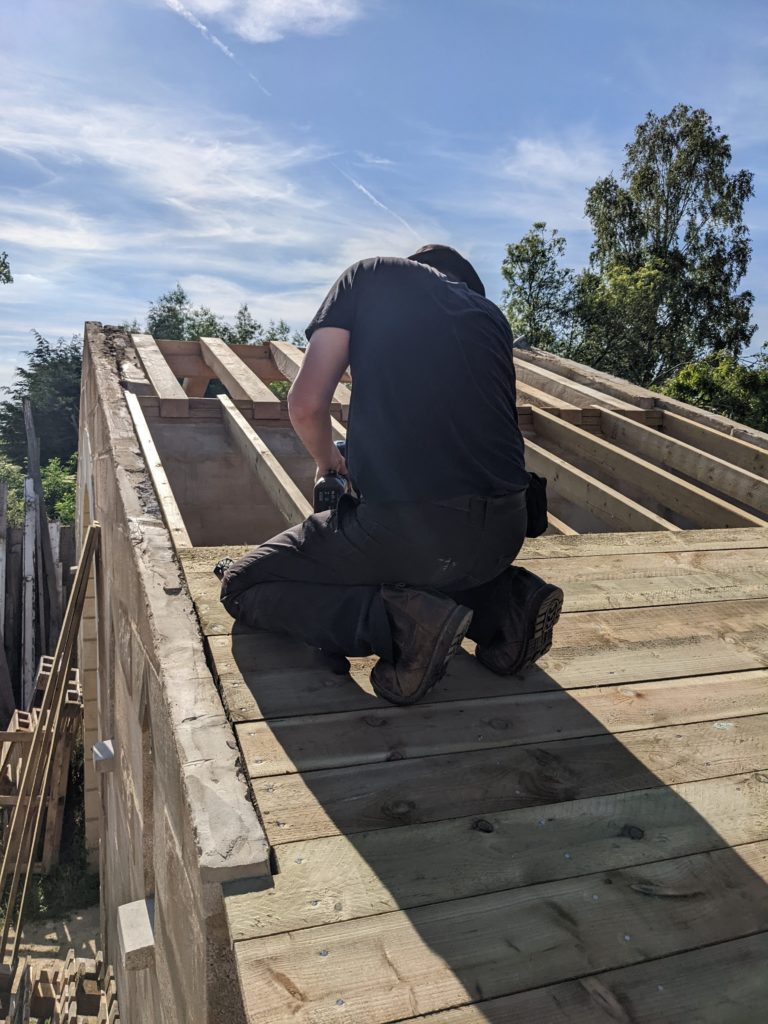
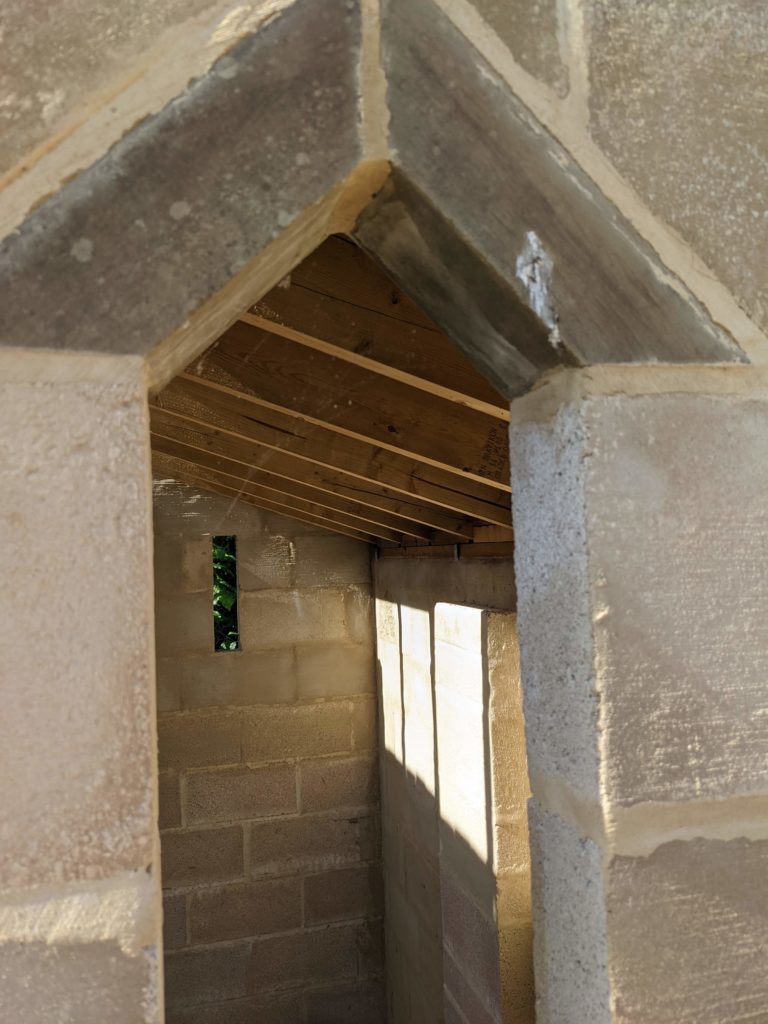
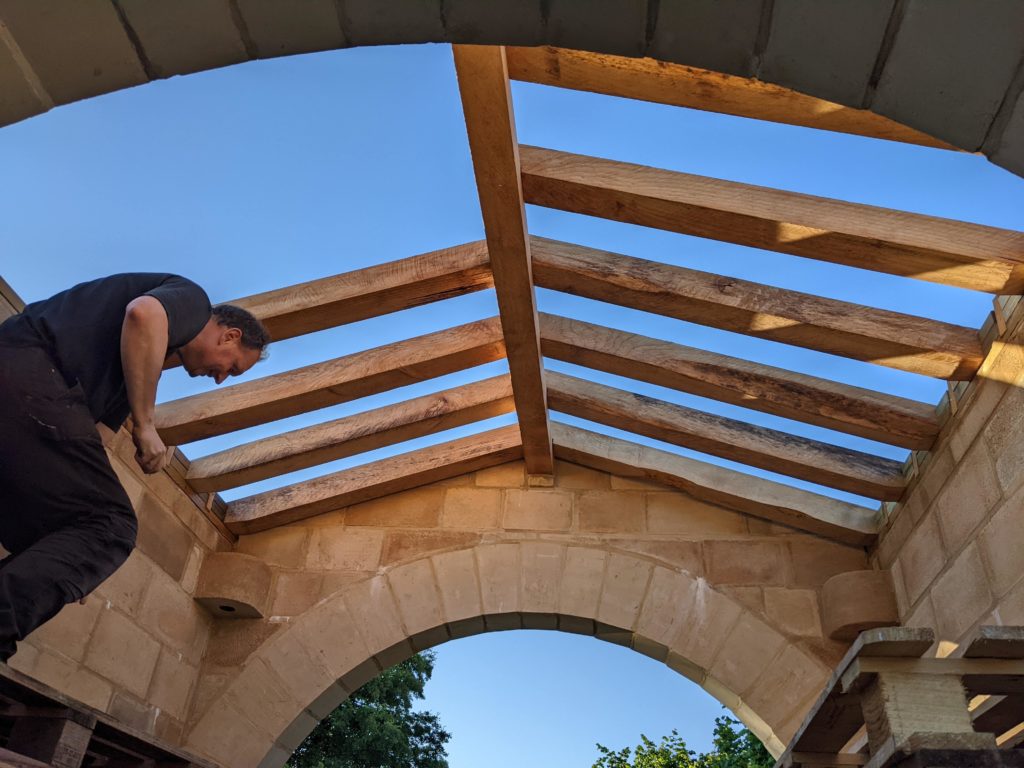
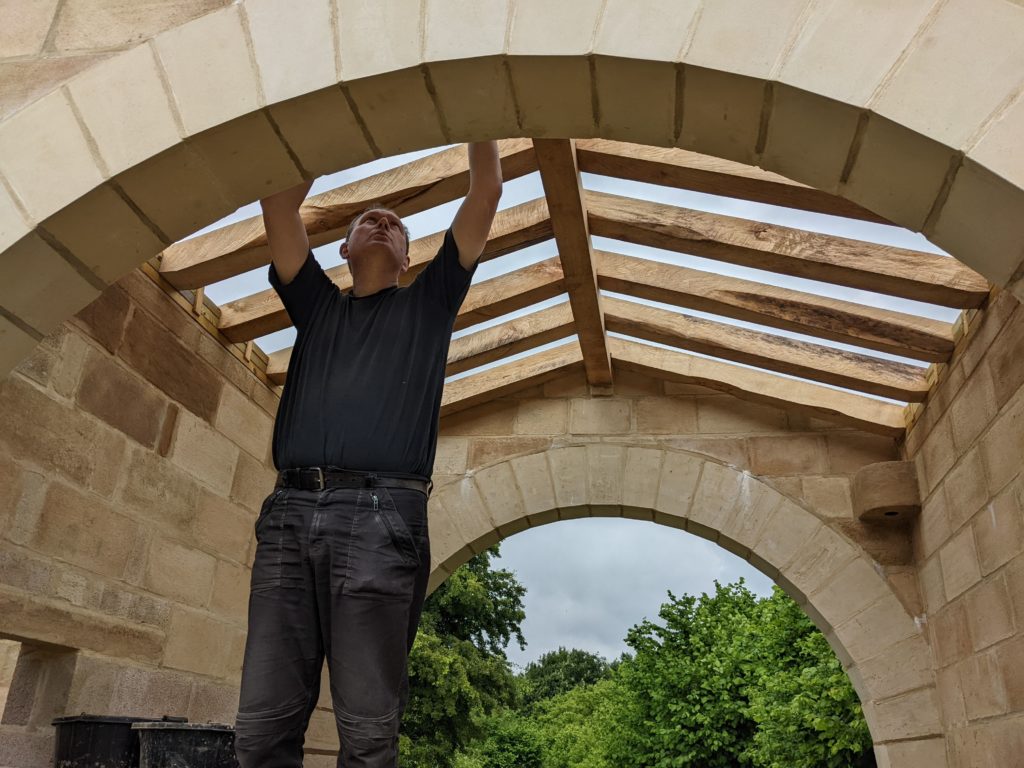
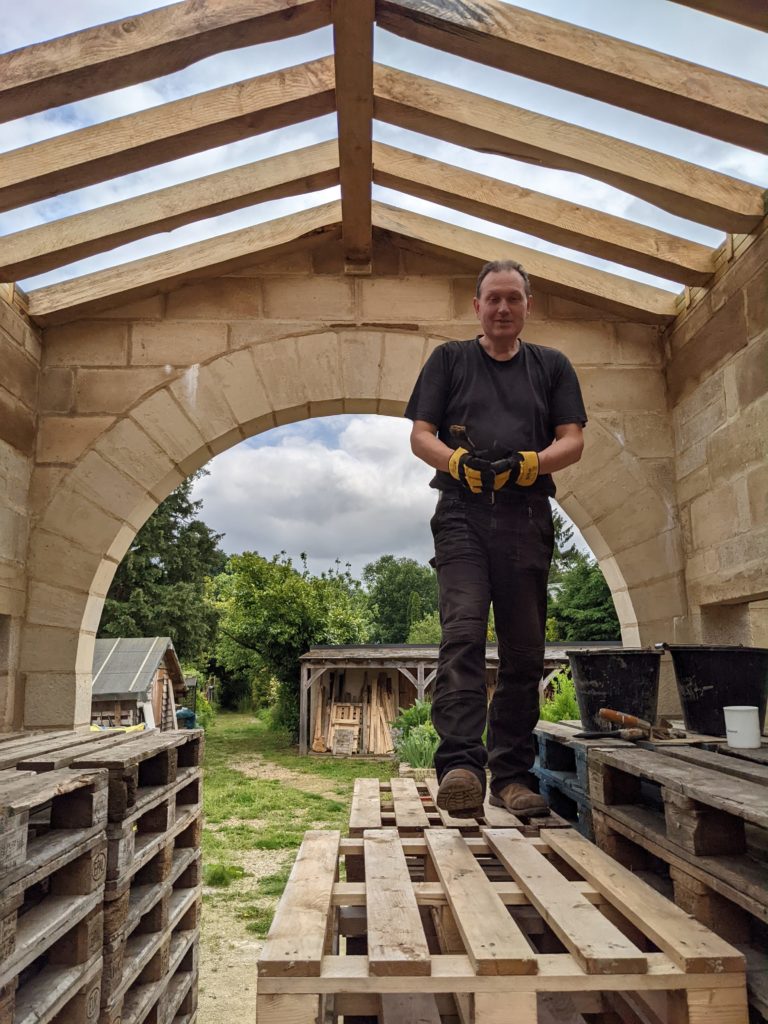
…but back in June, Al was still hard at work first building the structure of the rafters, then laying boards on top.
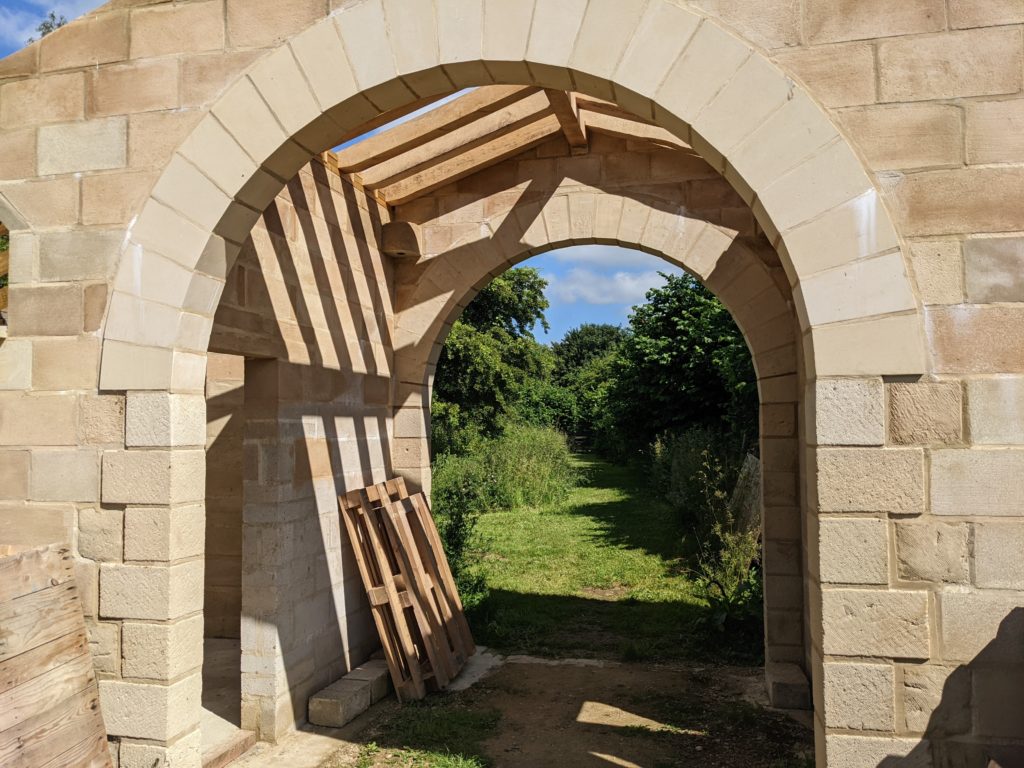
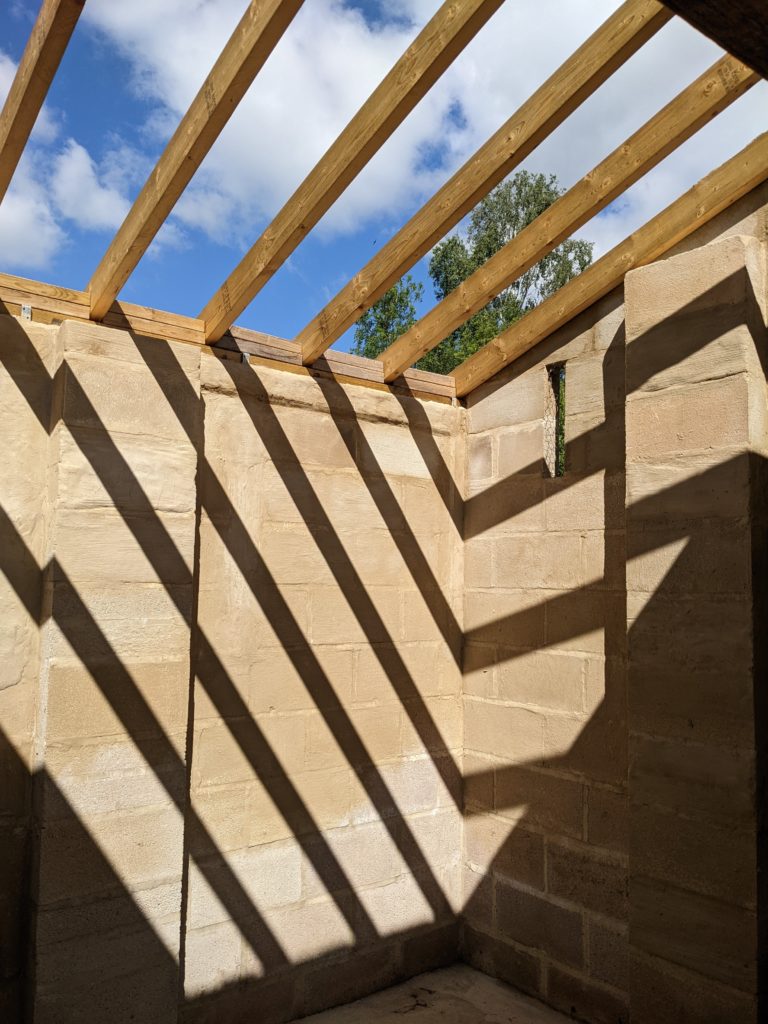
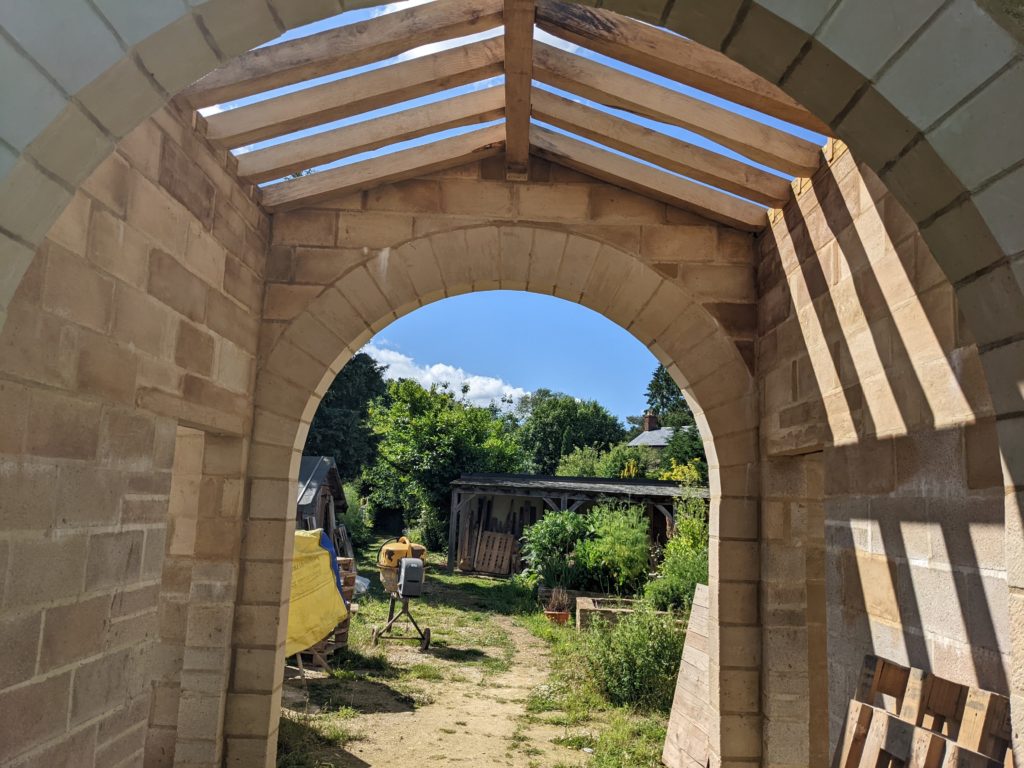
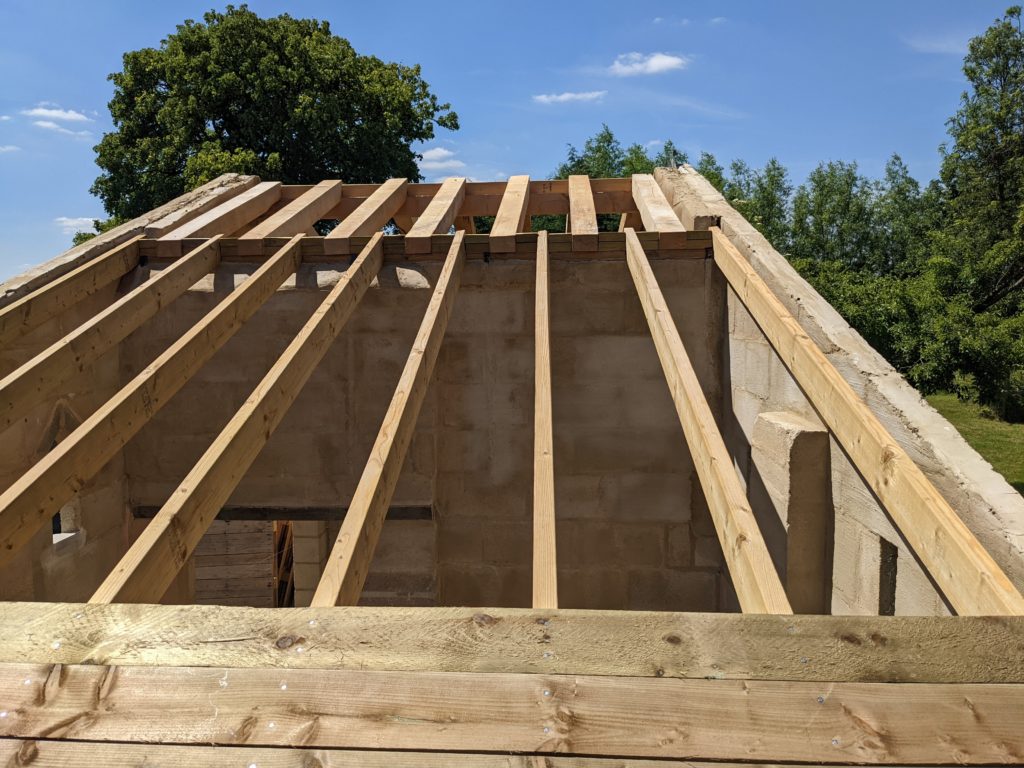
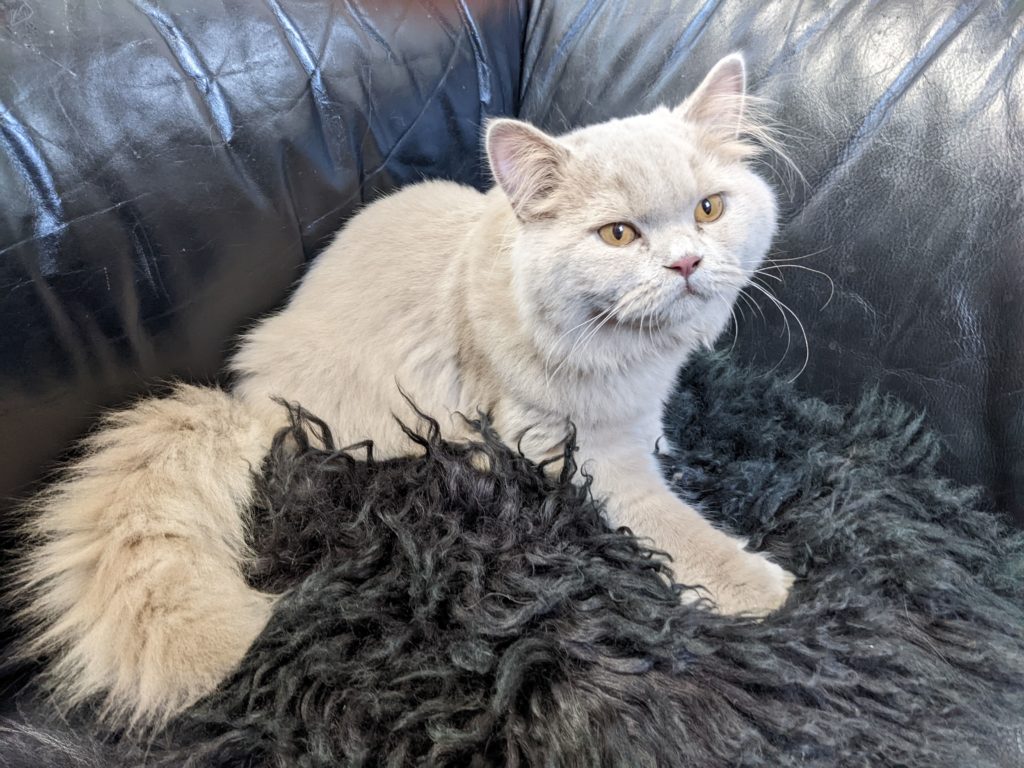
The humble monastery of Rumwoldstow was honoured to be visited by the esteemed bishop, Godfrid, and his utterly splendid cat Isidore. As Rumwoldstow exists before the Benedictine reforms of the mid-tenth century, the monastery and the behaviour of the nuns would not have been subject to very strict inspection.
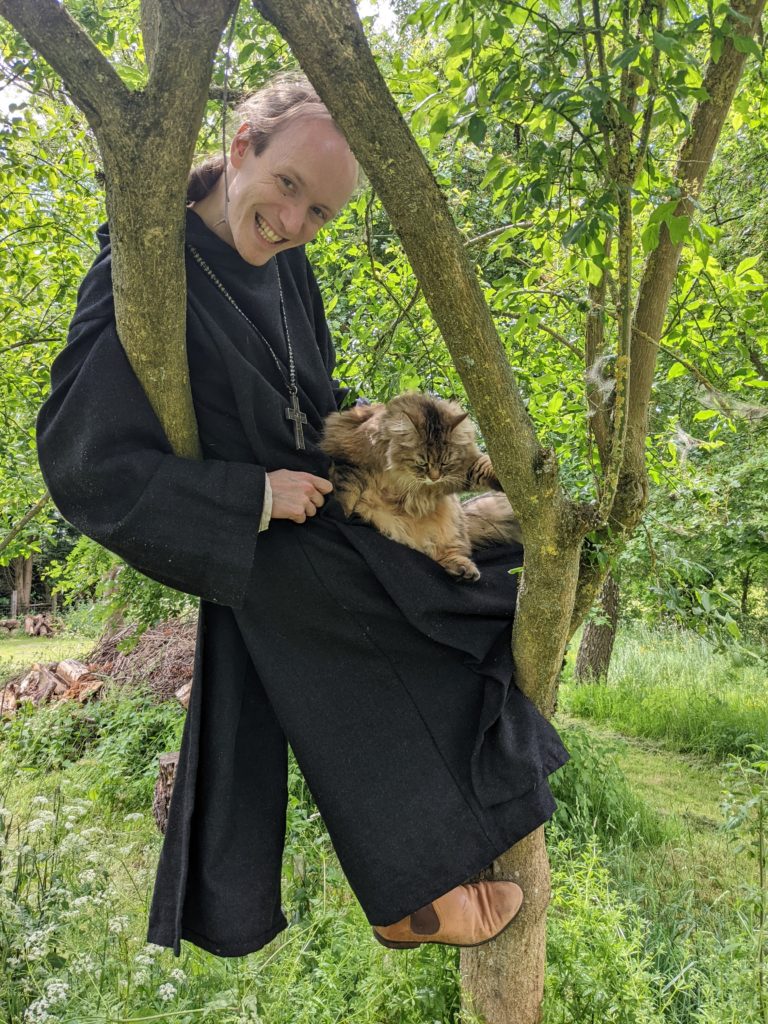
However, Godfrid’s visit caused much consternation, as is told in a linked set of short videos made in association with the Dark Ages Society:
Bishop Godfrid visits Rumwoldstow, a tale in video
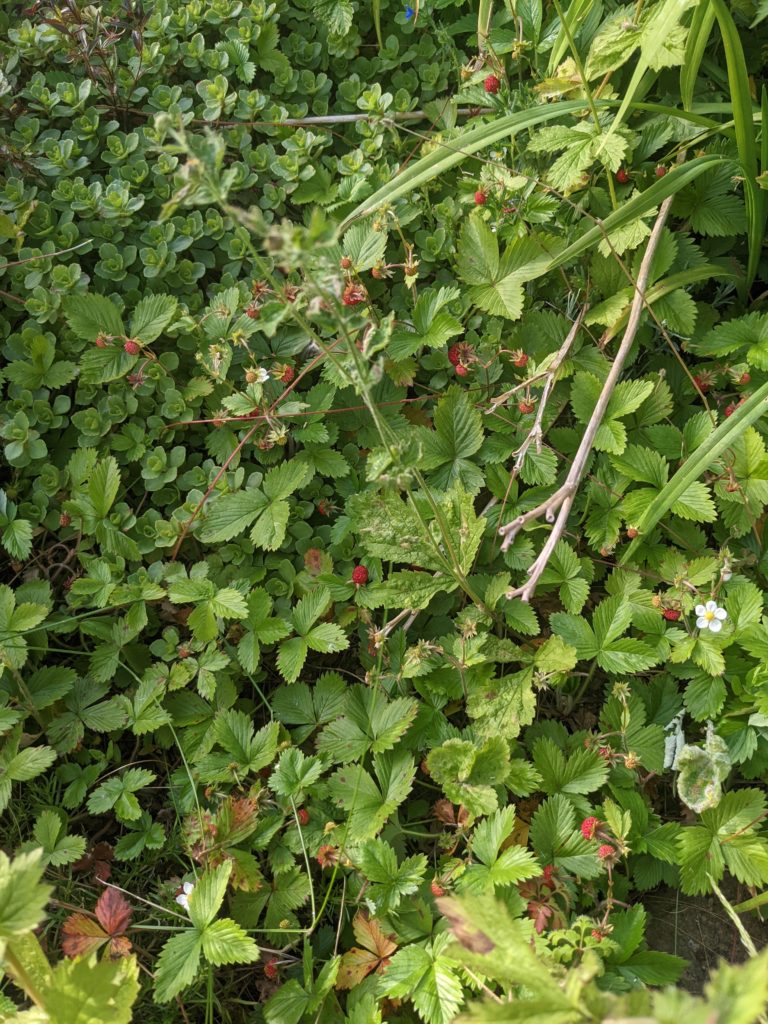
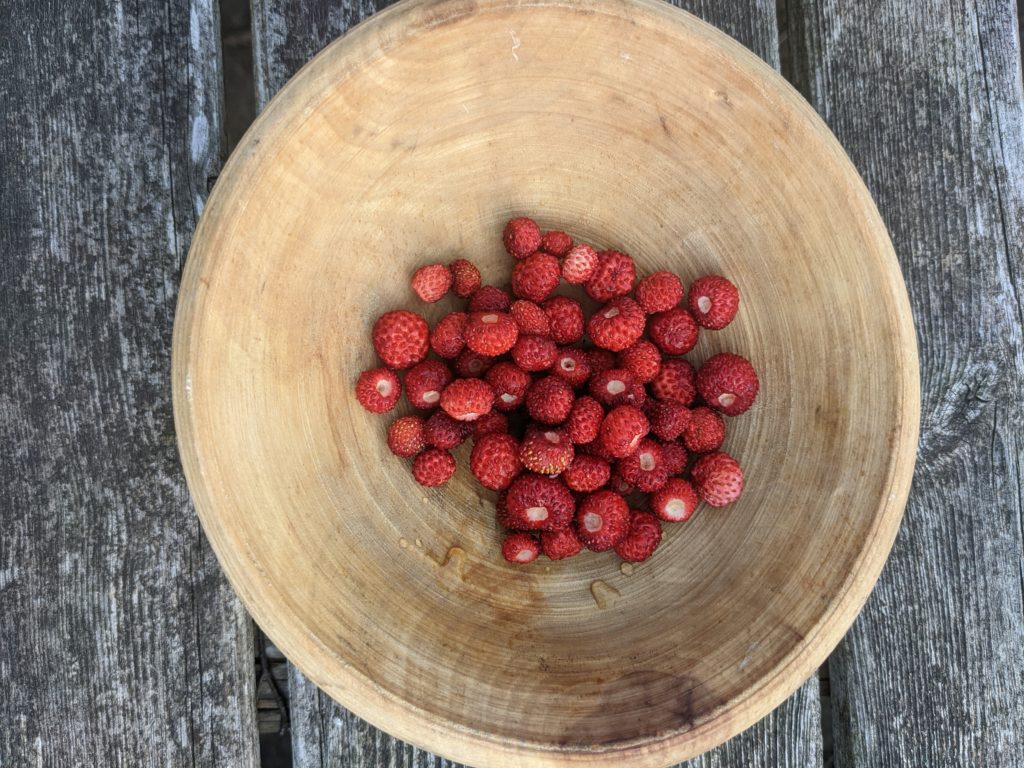
Not interested in videos? Well, the only other news is that the wild strawberries which have taken over part of the garden are ripe. And while the nuns live on a simple diet, it would be sinful to waste the lord’s bounty!
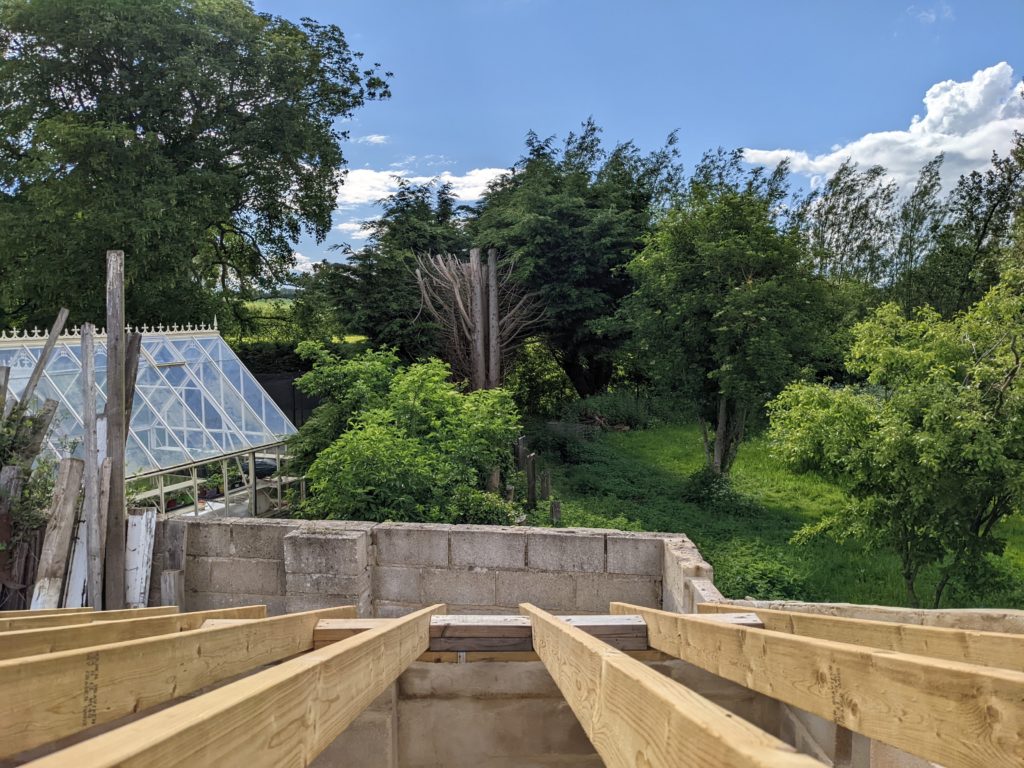
Some six years ago now, we moved to the house adjoining what is now Rumwoldstow. At that time, there were two self-seeded sycamore trees which overshadowed the walled garden almost entirely, being to the south. We somewhat sadly had them felled (we’ve planted other trees in more suitable locations) and one of them had a fine section of trunk that I couldn’t bear to waste, so we had some guys with a mobile sawmill cut it into beams. At the time, Rumwoldstow was a very faint beginnings of an idea and we had little in the way of plan for using the beams. However, thanks to Al’s hard work, they have now come into their own! He has used them to build the rafters for the central gatehouse tunnel; they are perfect, and were just sufficient for the job!
It’s great to make a showpiece of timber that has travelled no more than 50m from where it grew.
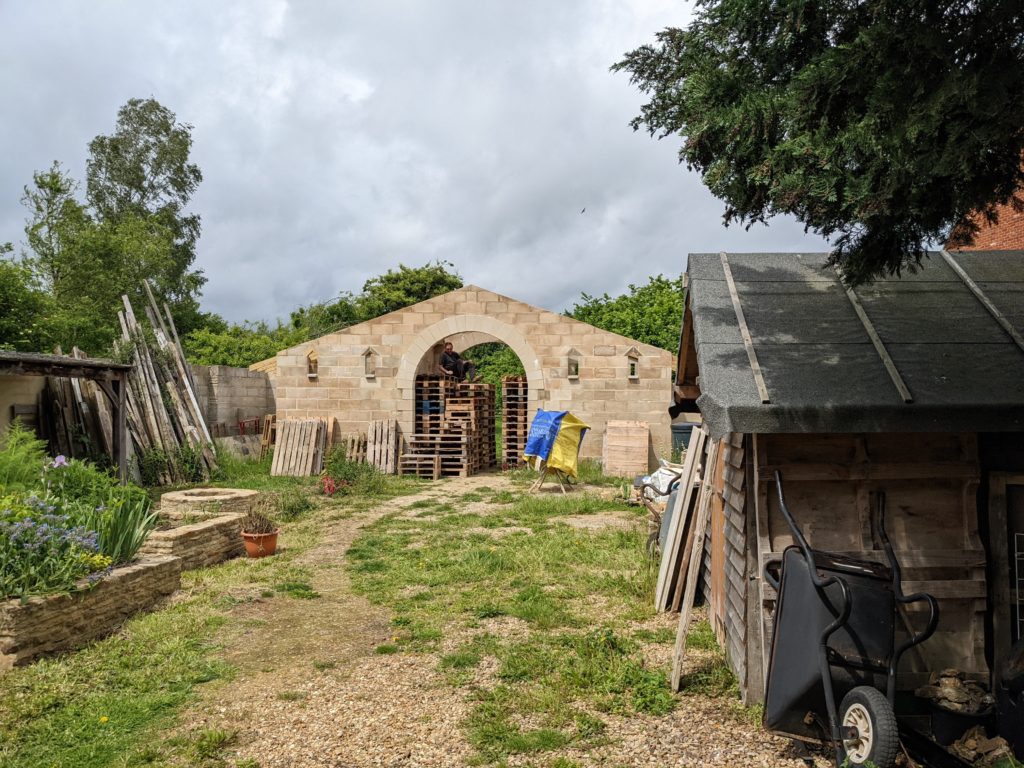
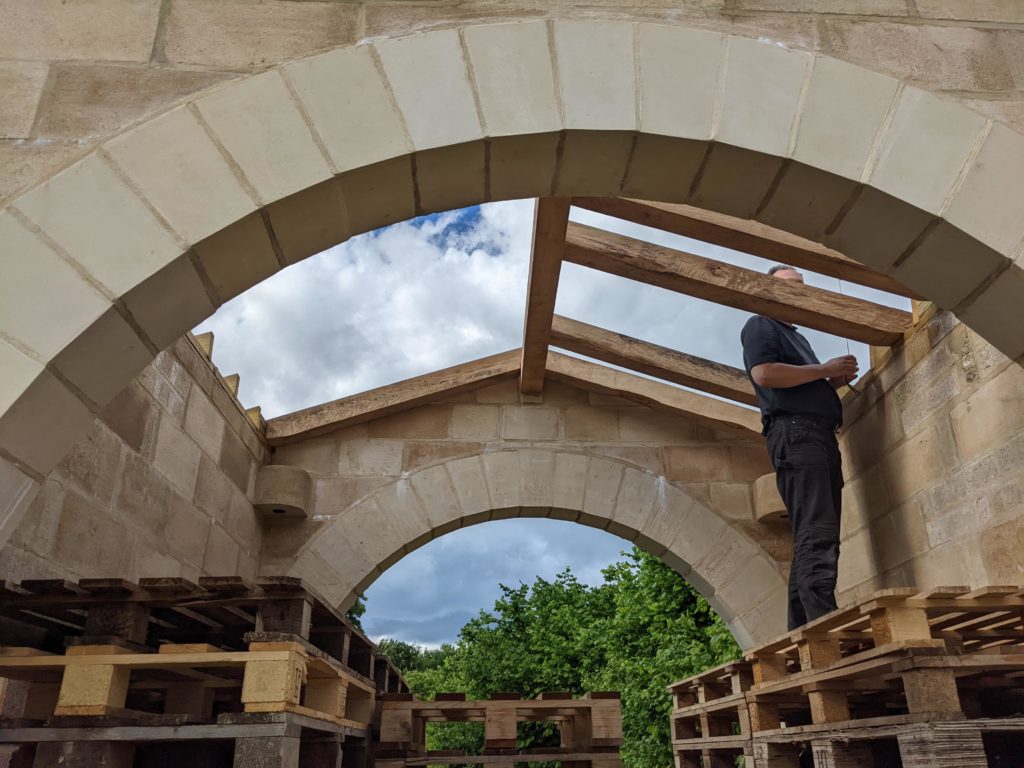
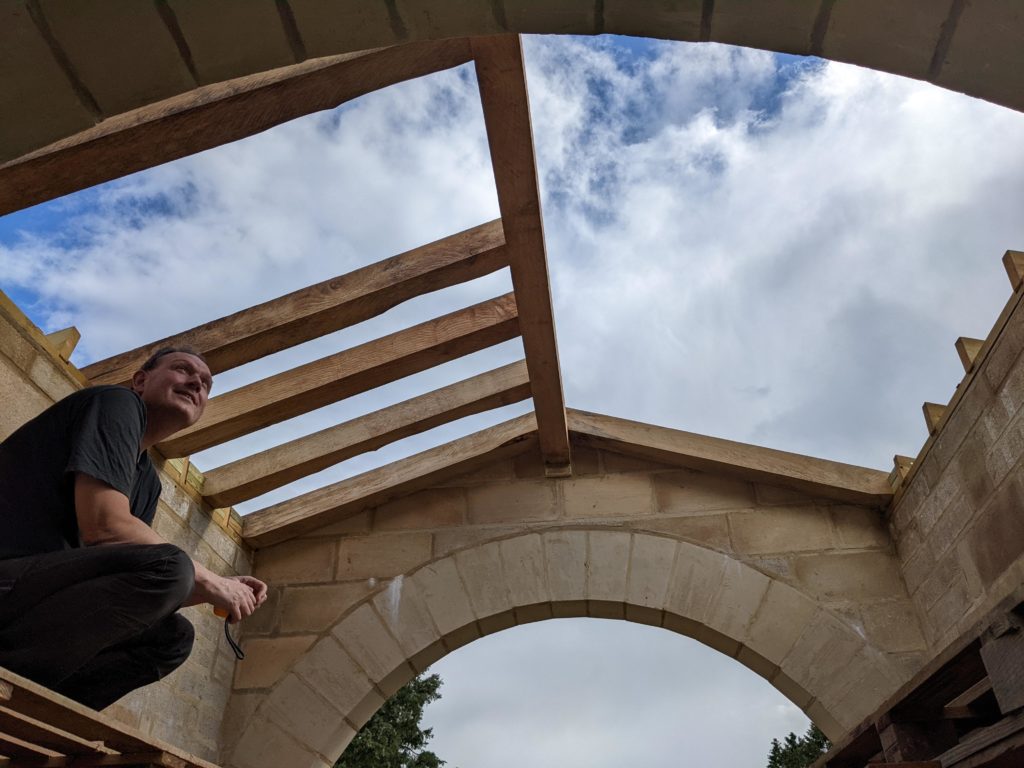
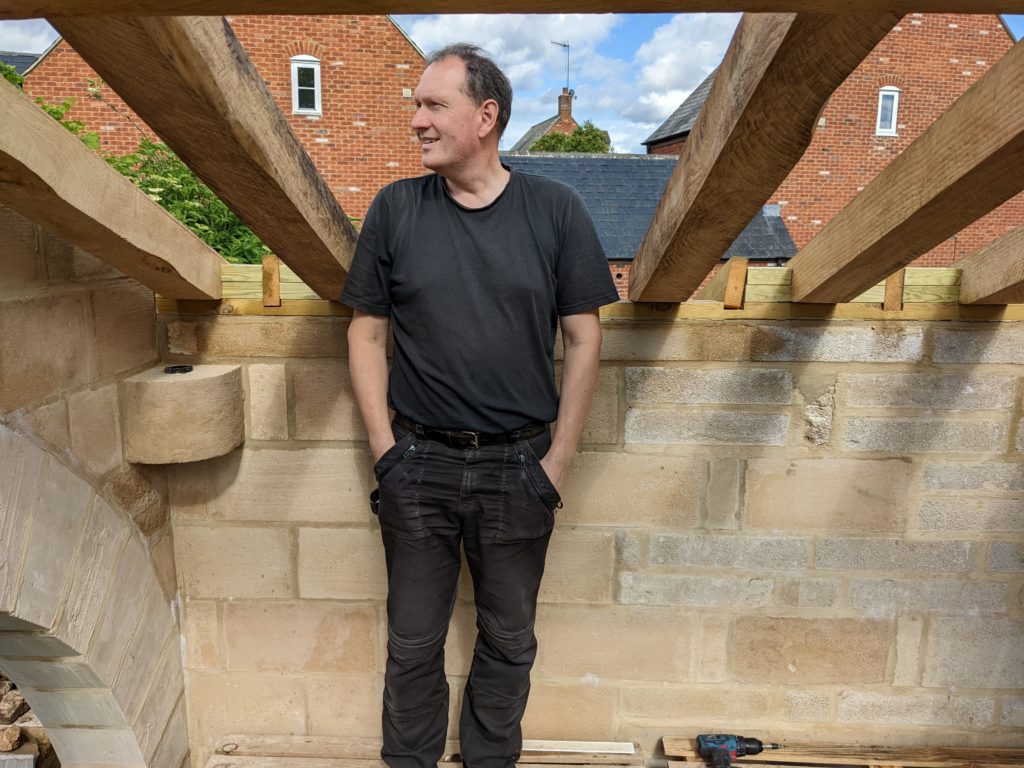
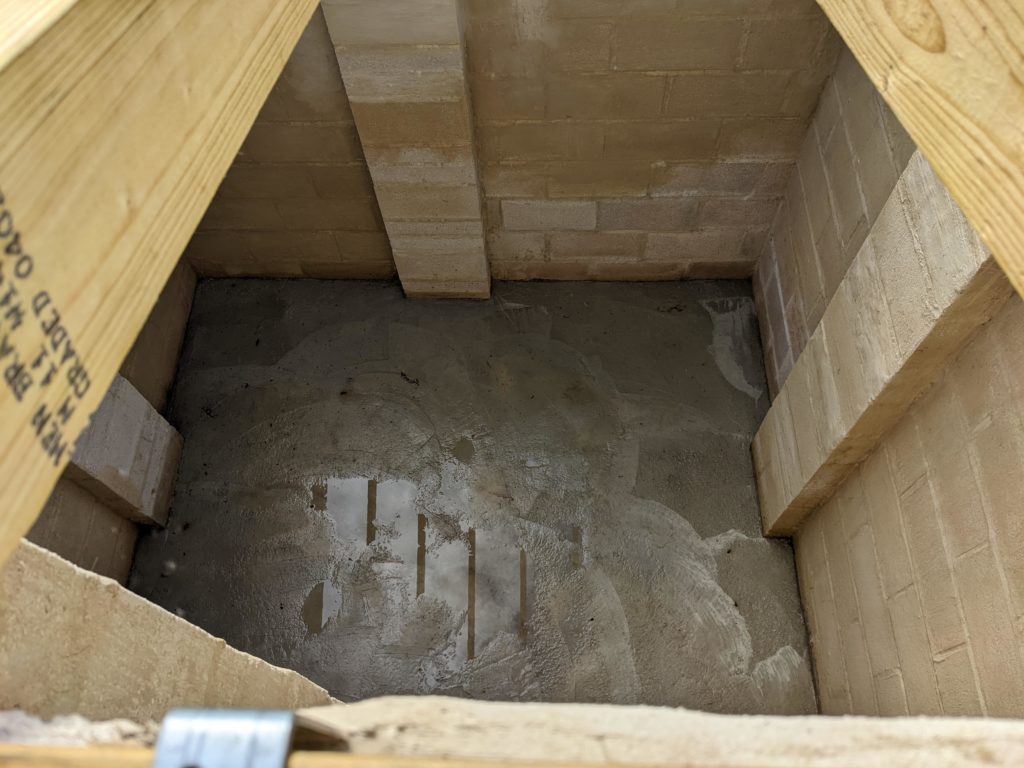
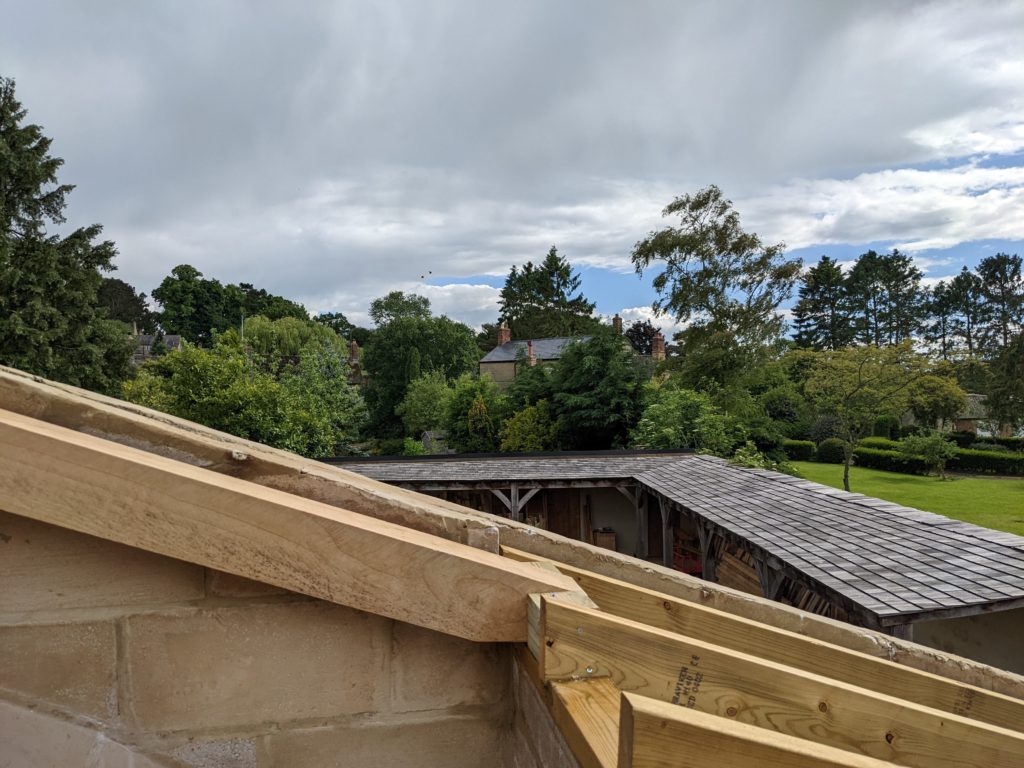
The rafters over the guardrooms to the sides of the gatehouse tunnel are ordinary timber bought from a builders’ merchant. But it won’t be as visible.
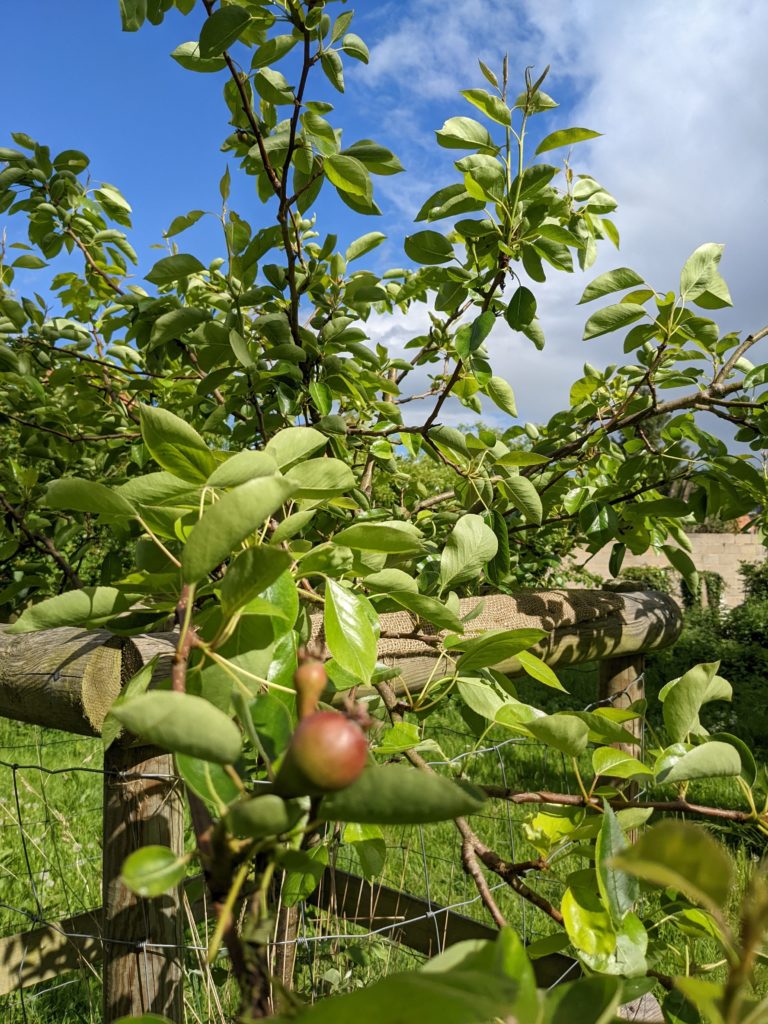
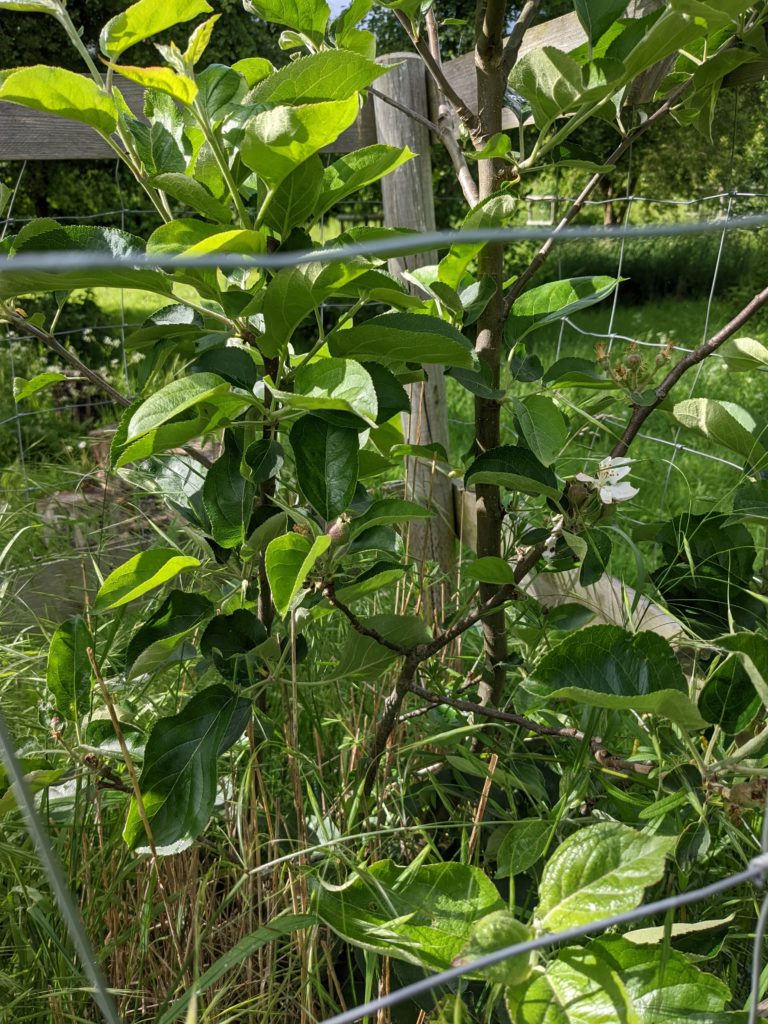
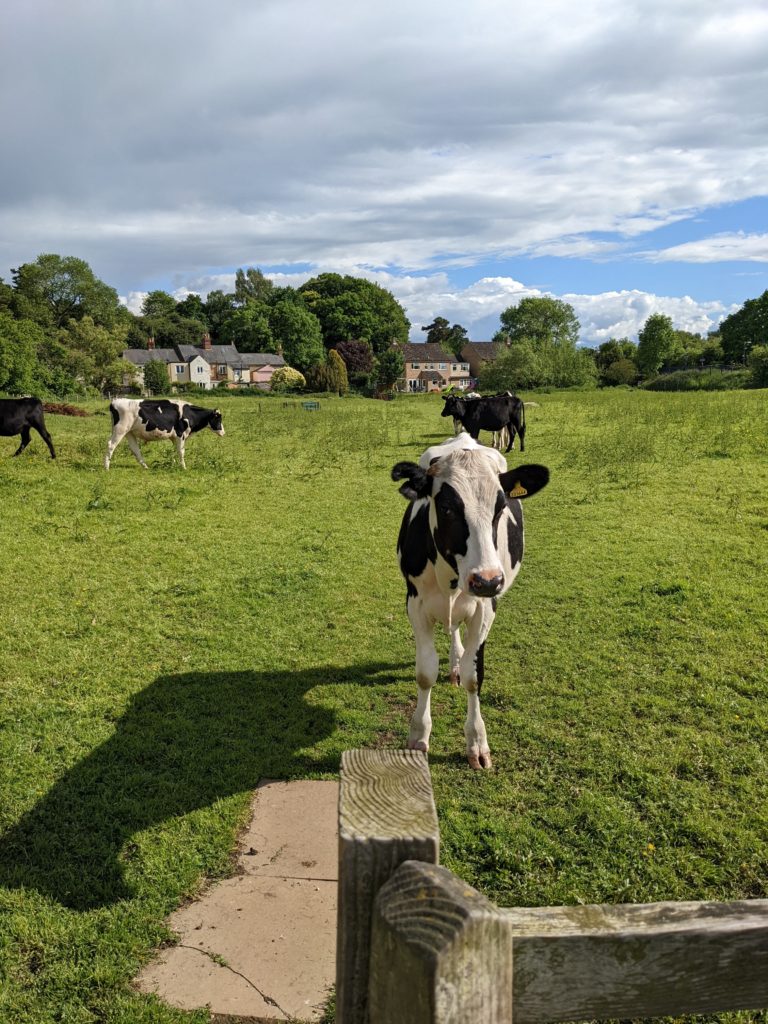
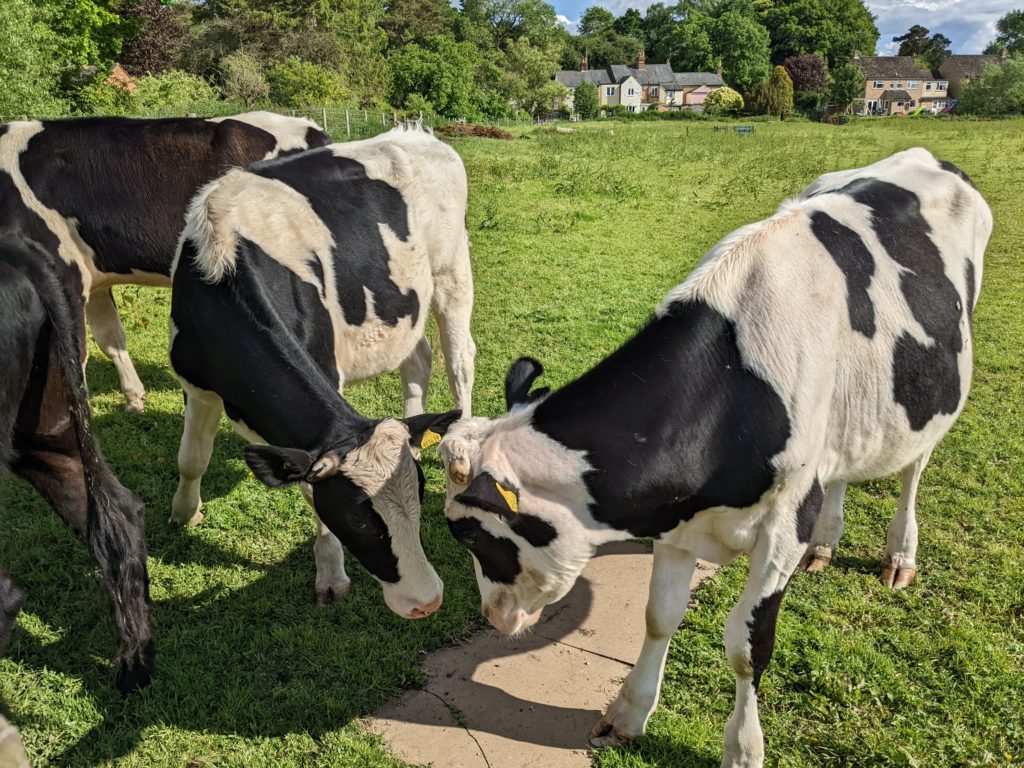
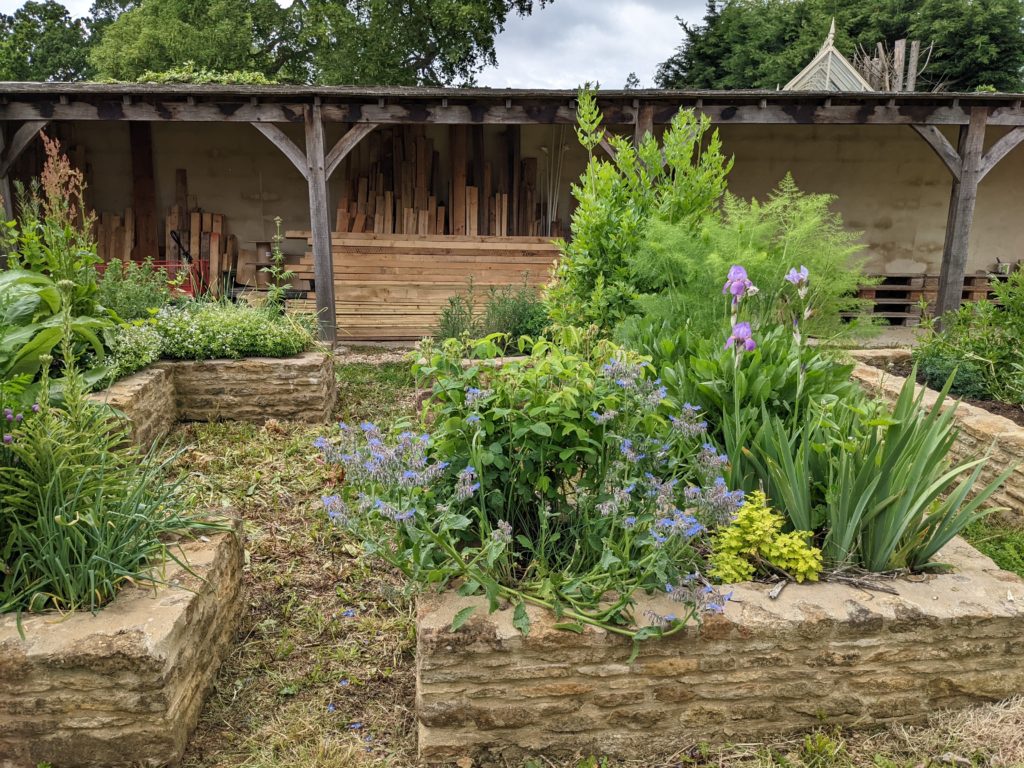
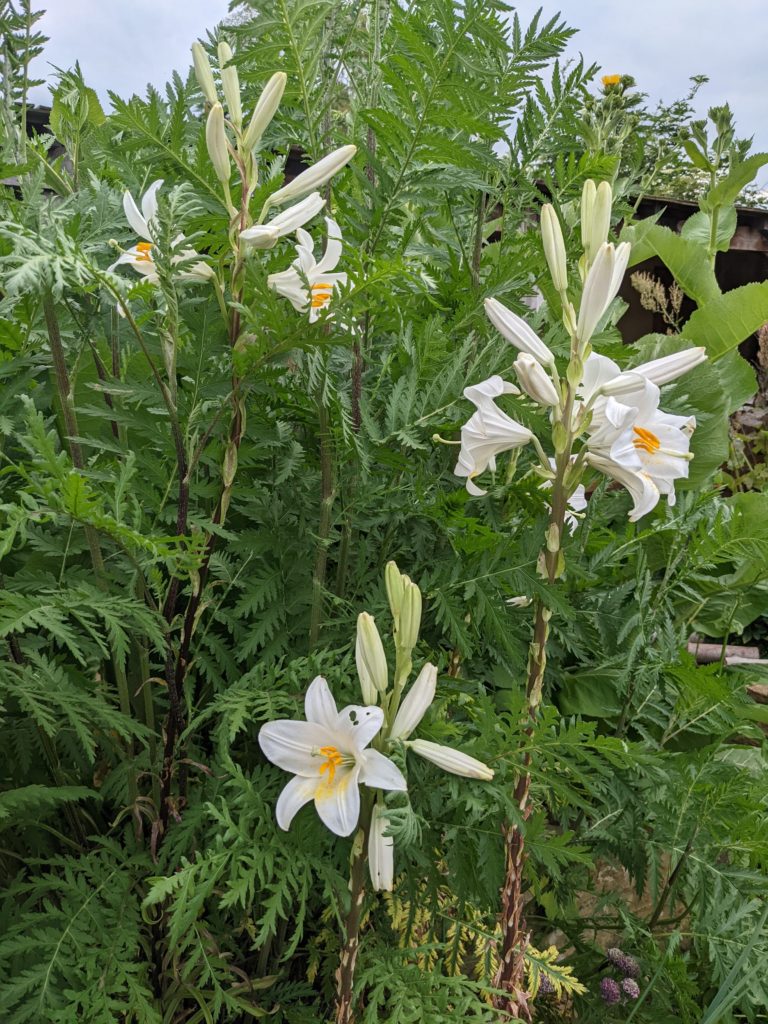
One final shot of the garden, which has been strimmed so you can actually walk around it. Slightly inauthentic borage – the Romans had it, and the later mediaevals, but I don’t know of evidence of it in the tenth century. But it’s covered in bees. The Iris Germanica didn’t flower last year, apart from one randomly white blossom, but the plants have filled out excellently and we have some nice purple flowers.
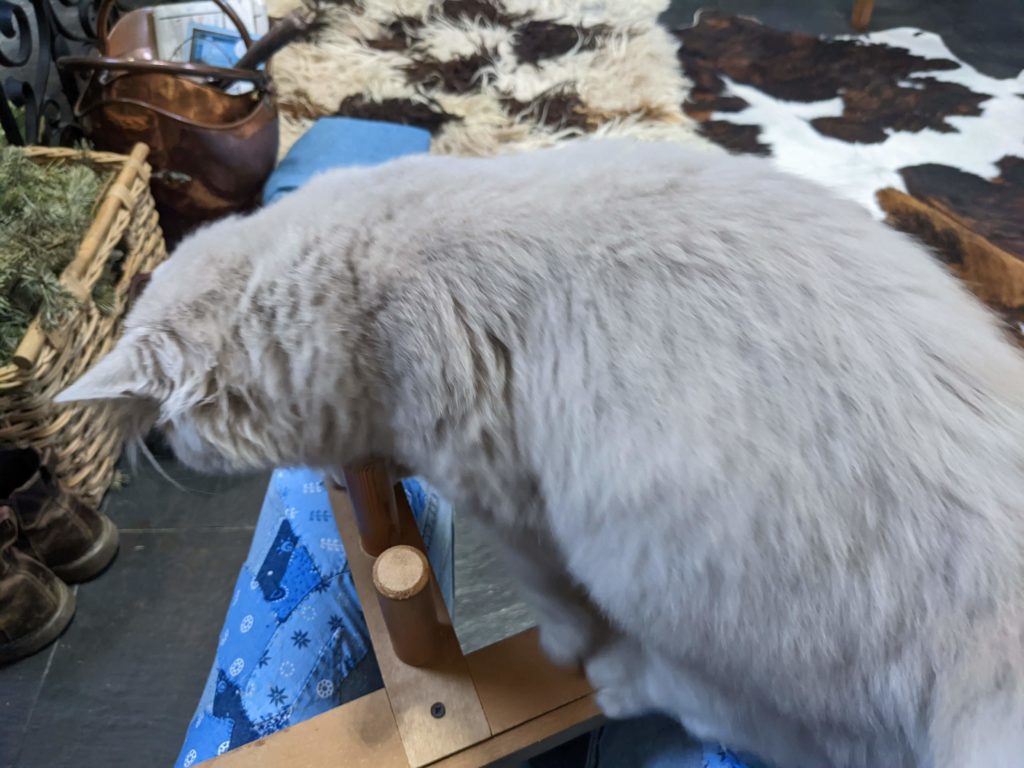
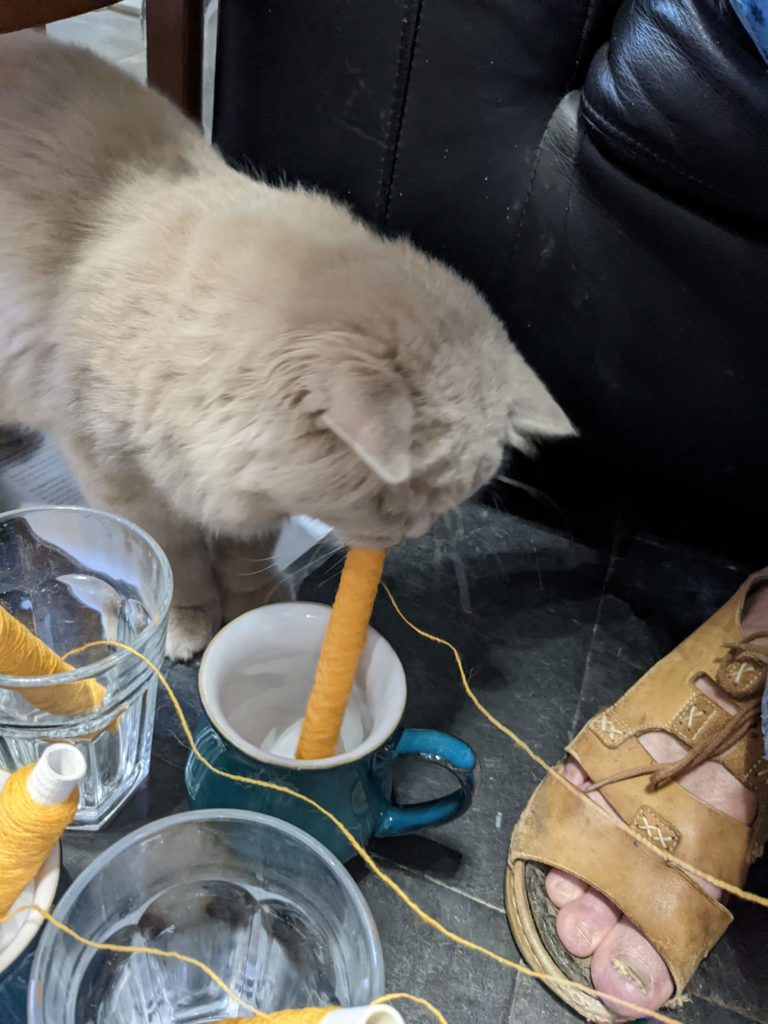
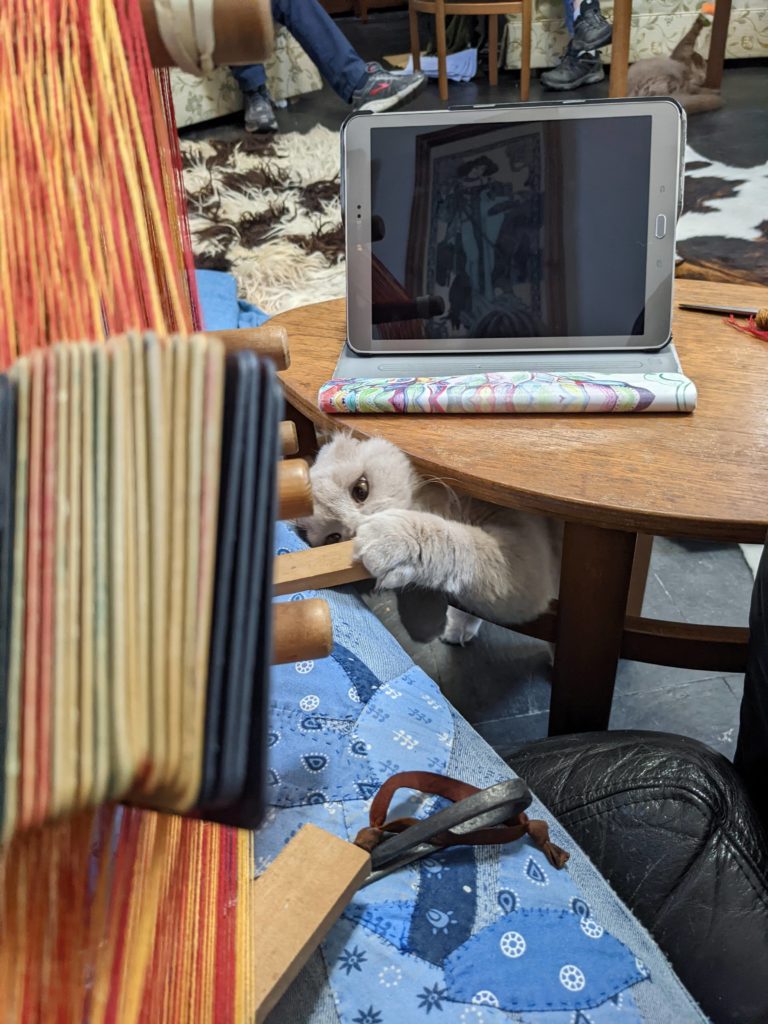
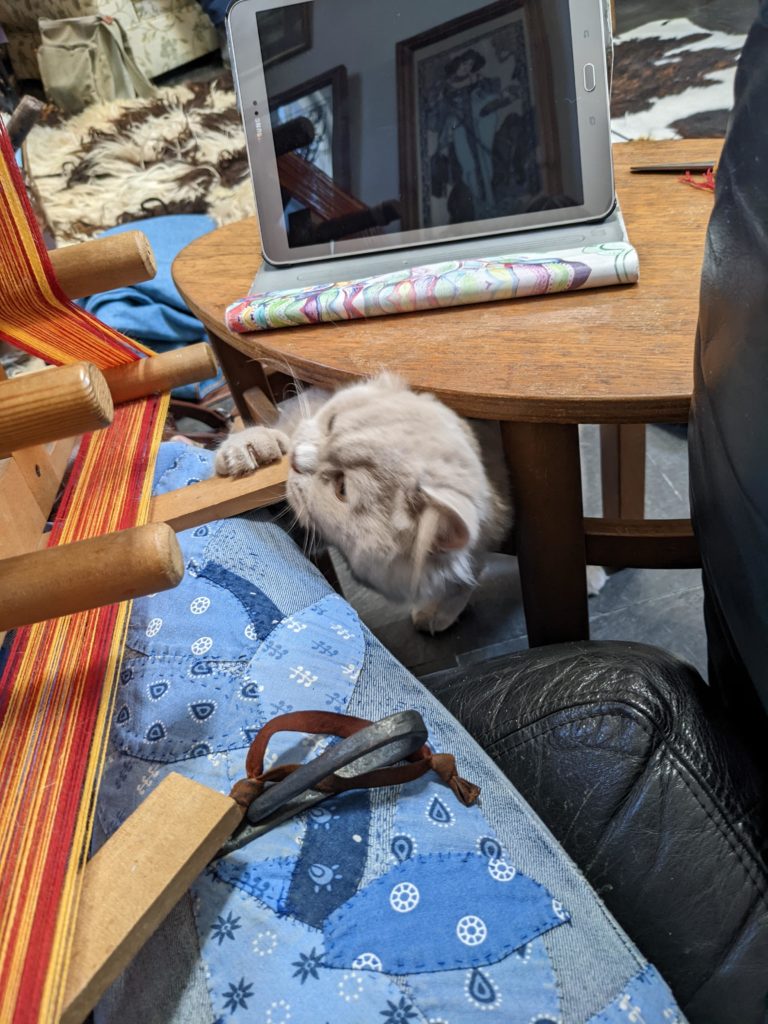
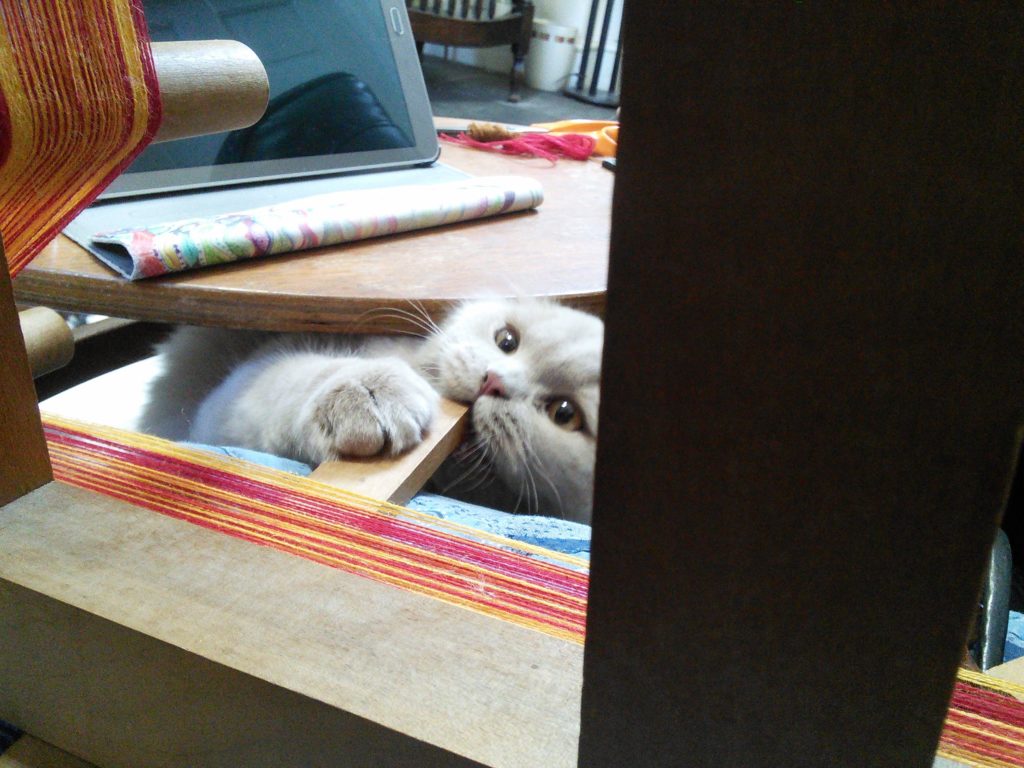
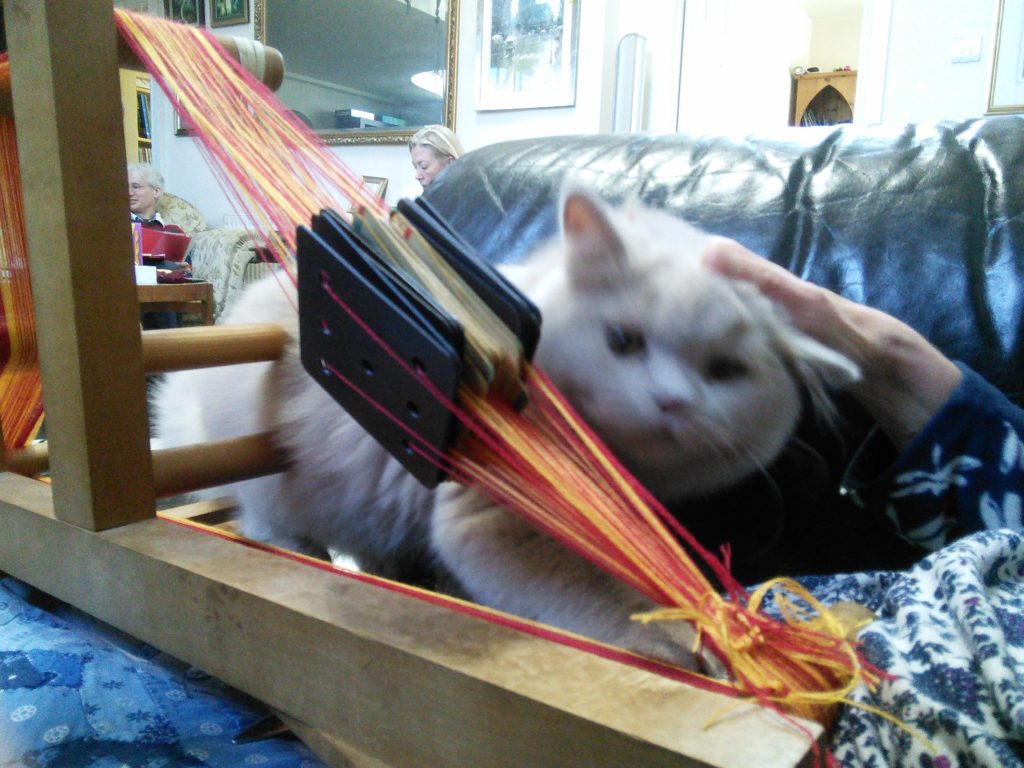
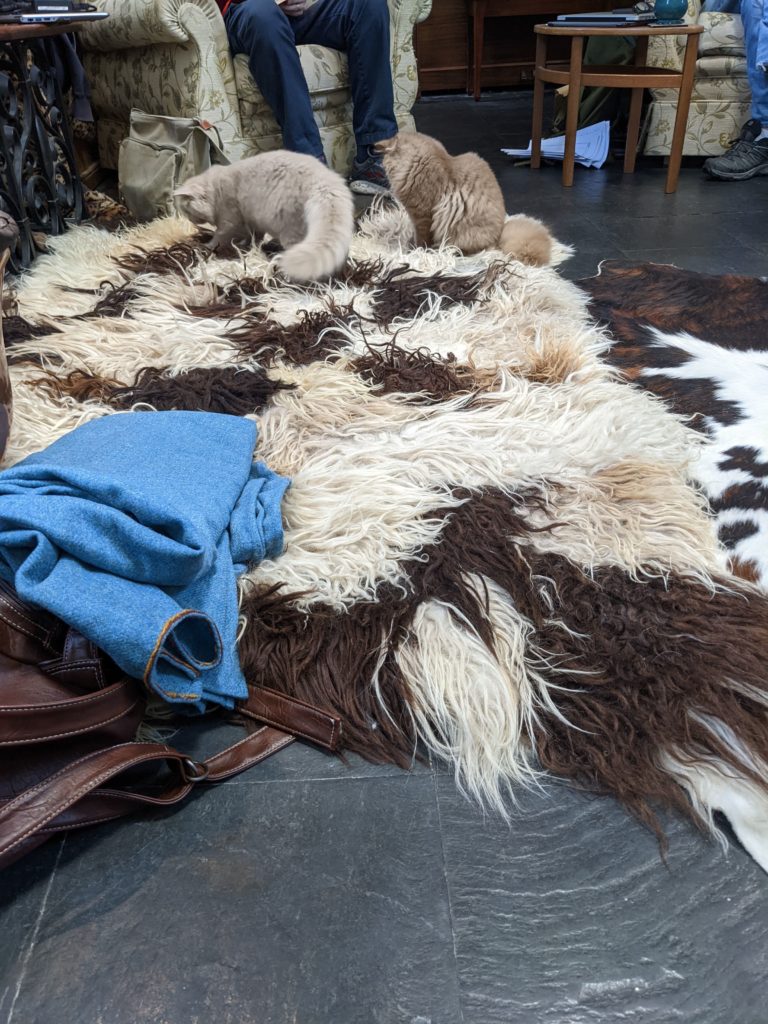
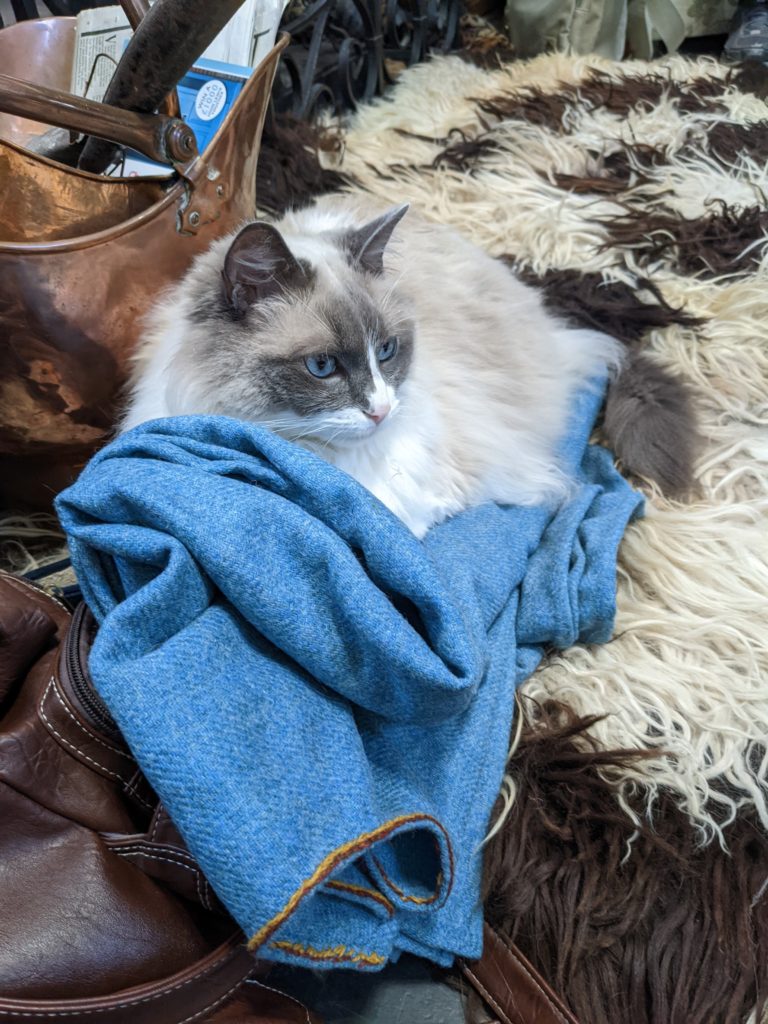
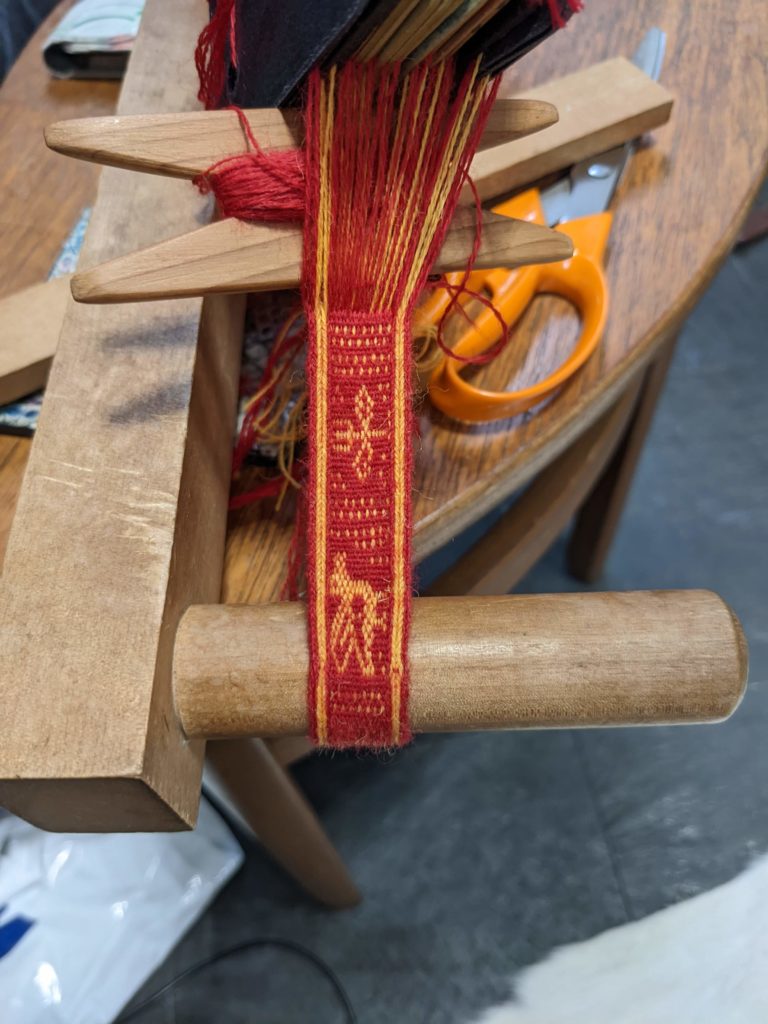
…so I read on the internet, and it is true, but yesterday I was roleplaying with friends and it was the perfect opportunity to warp up and start weaving my mantle trim. And my host has kittens. “Photos or it didn’t happen”, I hear you cry. Fair enough.
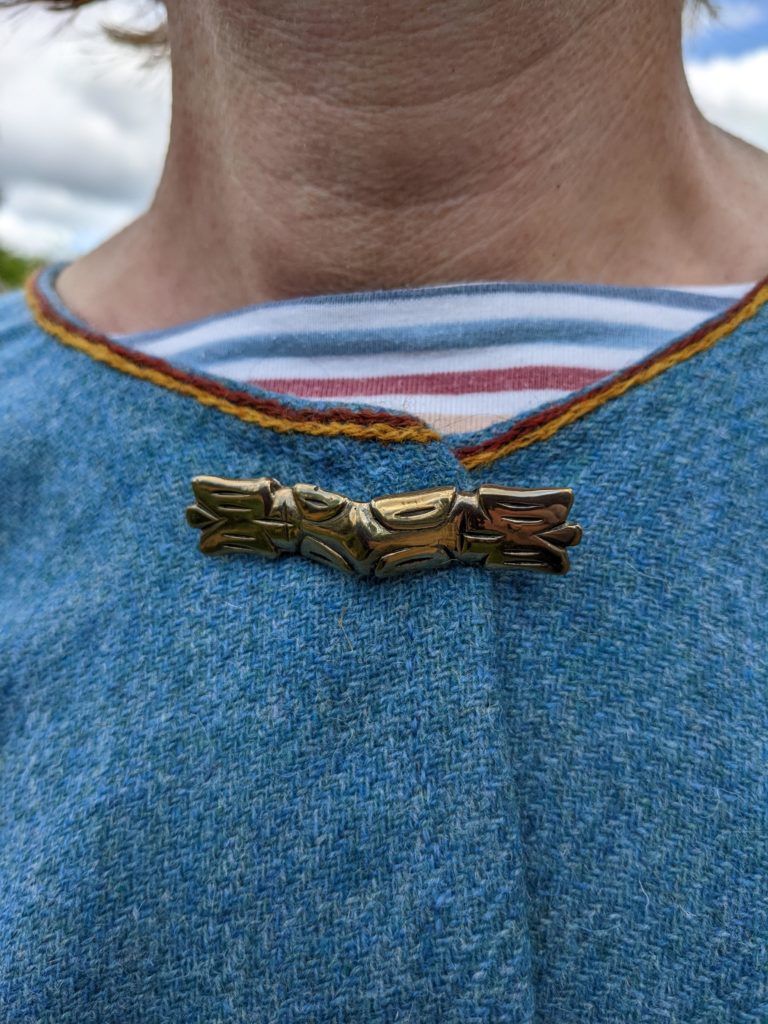
My circular mantle is all sewn together, a complete circle with a round neckhole and an open front so you can easily put it on even when wearing a wimple. I described the garment’s cutting out stage here. And to close it, I’ve bought a lovely little ansate brooch based on a find from York, made by the skilled hands of Adam Parsons. These are now considered a common type of brooch for mid to late Anglo-Saxon clothing, and it works very well to pin my light, elegant cloak.
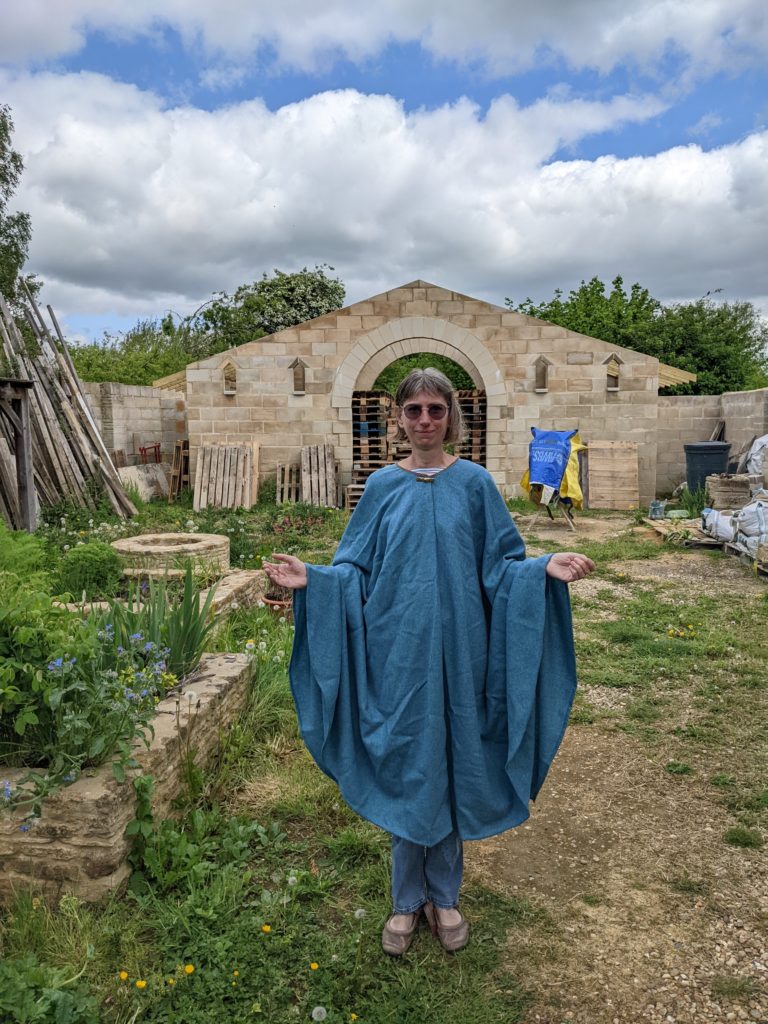
I am still unsure as to the accuracy of this reconstruction. In favour of the front opening is ease of putting on / taking off, and so far I’m finding that the front stays closed and by raising my hands at the sides, I keep my tummy warm! And a circular, or semi-circular, cloak seems somehow more of a European mediaeval garment than a poncho (but that is a really speculative argument).
On the other hand, maybe early mediaeval women just put the mantle on in the morning and wore it all day, living as they did in un-insulated houses in a chilly climate. And while I don’t think the opening shows much when worn, you could reasonably argue that at least some of the manuscript illuminations would show it, if it is a common part of garment construction.
Either way, I love it! It is lightweight, warm and comfortable, the fabric is super, and I have decided to tablet-weave a band instead of embroidery, because I’ve long wanted an excuse to design a high status band with crap lions on it. And this is a high status garment, using a vast amount of finely woven dyed cloth and wasting the cut-off corners (though I will likely use them for something). More on the lions in a future post!
The nuns of Rumwoldstow were delighted this afternoon to receive a missive from the noble lady Wulfruna, who I believe to be an honoured geneat among the people of Cilternsaete. She sent us a gift to help us make our herbal infusions.
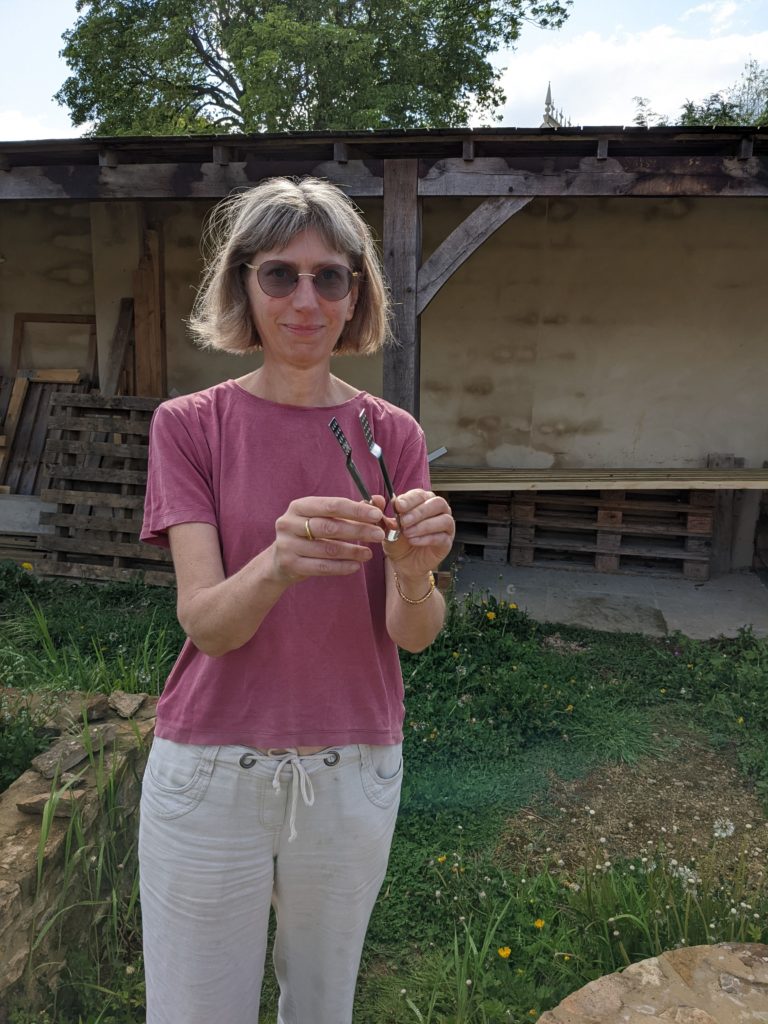
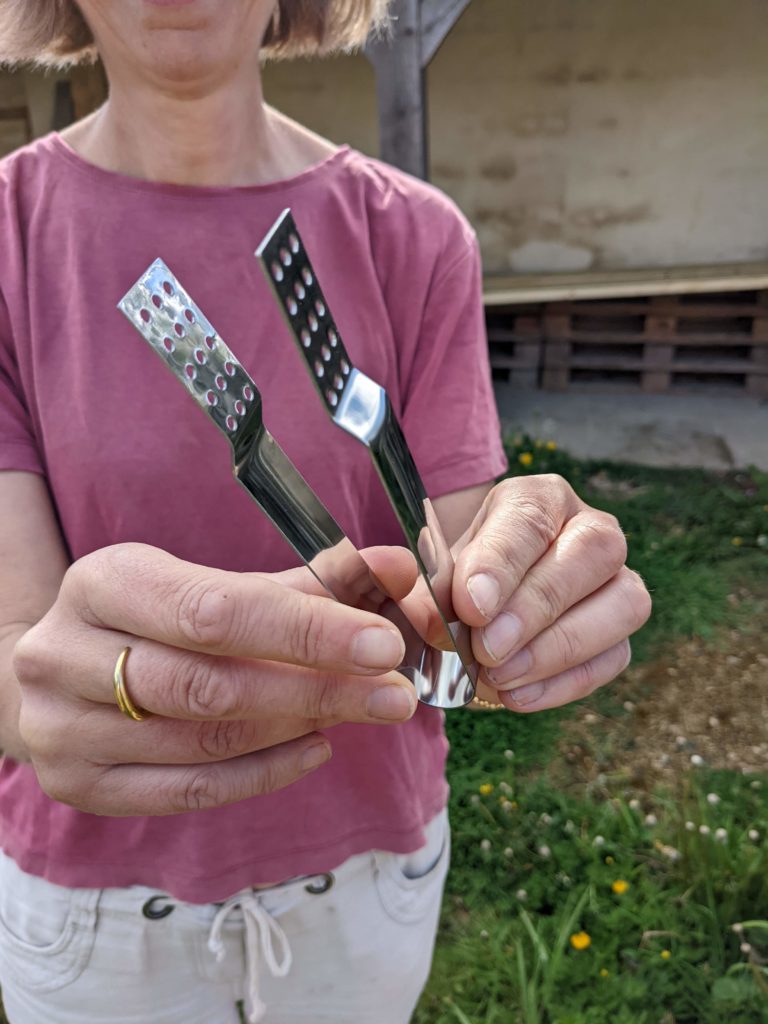
Yes, we’ve been given a teabag squeezer! It will live in the scullery drawer, and we thank the lady Wulfruna for her kindness.
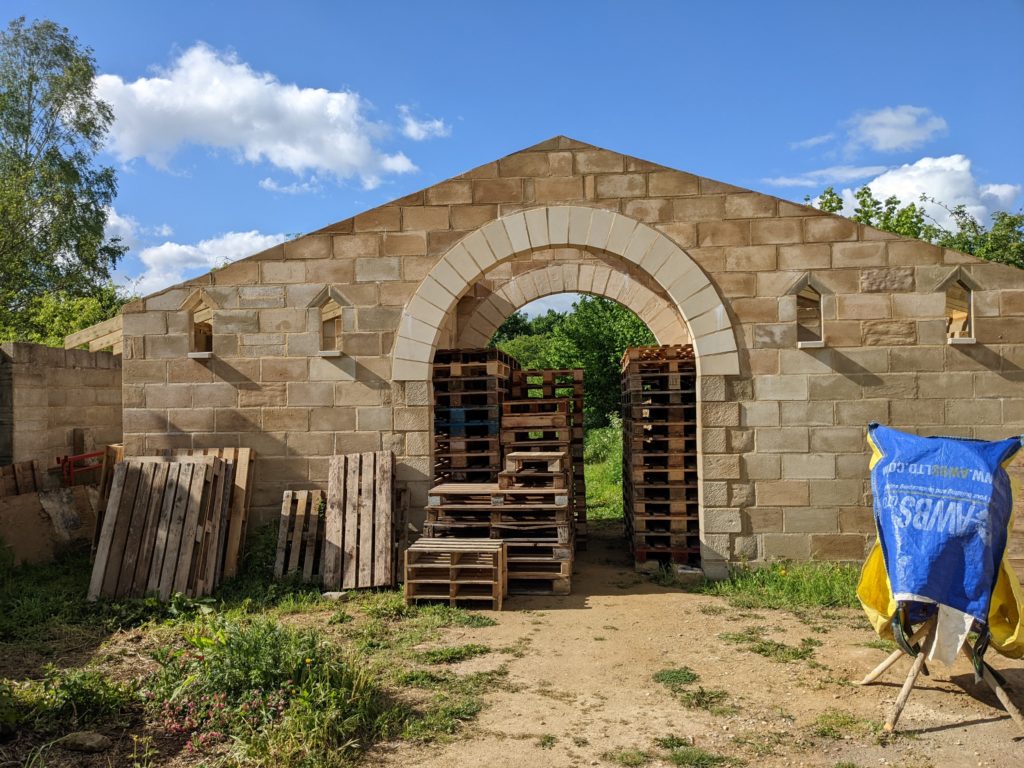
Al has cut and fitted the rafters for the guardroom roofs, freeing up the pallets from inside the guardrooms, to now build working platforms for the next state which is fitting rafters in the tunnel area.
After spending a frustrating hour or so yesterday trying to find a plugin to display a panorama photo that I took from the temporary working platform in the west guardroom, I’m posting this entry as a roundup and reminder of the different available options.
In all cases there may be settings I’ve missed…
0 / 5. Algori 360 image distorts the image, I guess because it supports up / down movement where this image is simple 360 wraparound. Worse, it doesn’t seem to work at all in the post preview as viewed from the home page – I see a blank space.
Panorama is created with a block called “360 Image”
3 / 5. A Panorama Viewer panorama is created in plugin settings and then embedded in the page as a shortcode block. It doesn’t show up in the post preview, and is by default a little zoomed out so you see black arcs top or bottom of the image. If you zoom in a touch it looks ok, but how many viewers will do that?
Best of a surprisingly rubbish bunch.
2 / 5. Easy Panorama is inserted as a block called “Panorama”. Scales OK but again, doesn’t work in the post preview (do any of them???) and the end result is spoiled by a nasty interface. You move on mouseover and it’s very twitchy, giving a nasty visual impression, and it stops at the end of the image instead of wrapping round so the 360 illusion is lost for me.

0 / 5. 360 View seems to have two names which is confusing. Again, distorts the image and doesn’t work in post preview.
2 / 5. This is the only one that works in post preview! Unfortunately straight lines come out curved, and the view doesn’t wrap. WP-PhotoNav must be inserted as a shortcode and it took me a while to find the instructions. There is no visual cue even on mouseover that this is anything other than a static image, so lacks discoverability.
We had the pleasure of welcoming guests to Rumwoldstow this afternoon, to play some harmless board games including tabula and merels, which you may know as mills or nine mens’ morris. After a little discussion we established a common set of rules and played with great civility, despite the guests being ahem, not entirely Christian, in fact probably Danes. I lost two games of tablut but won a game of merels, so feel that the honour of the house was not disgraced.