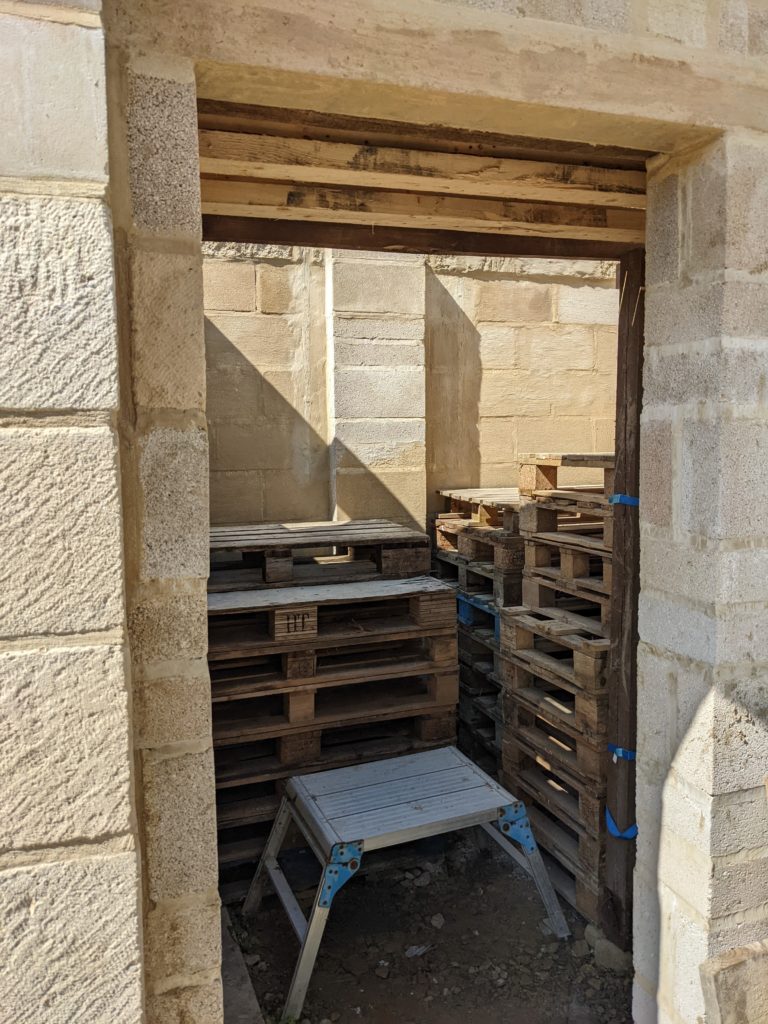
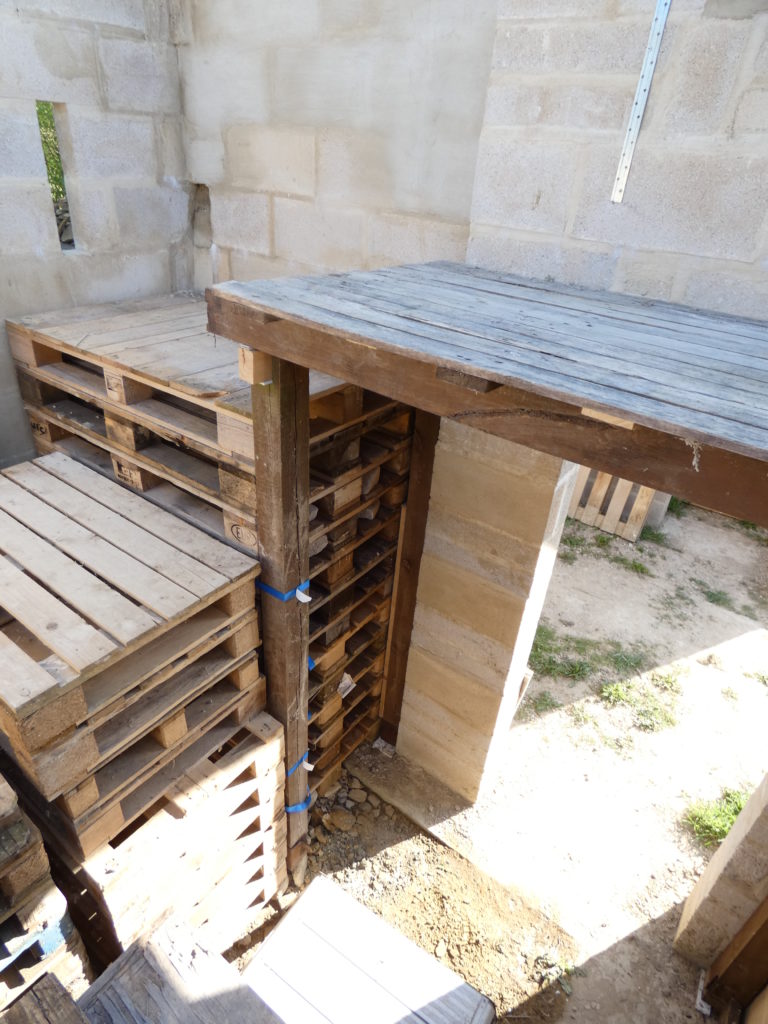
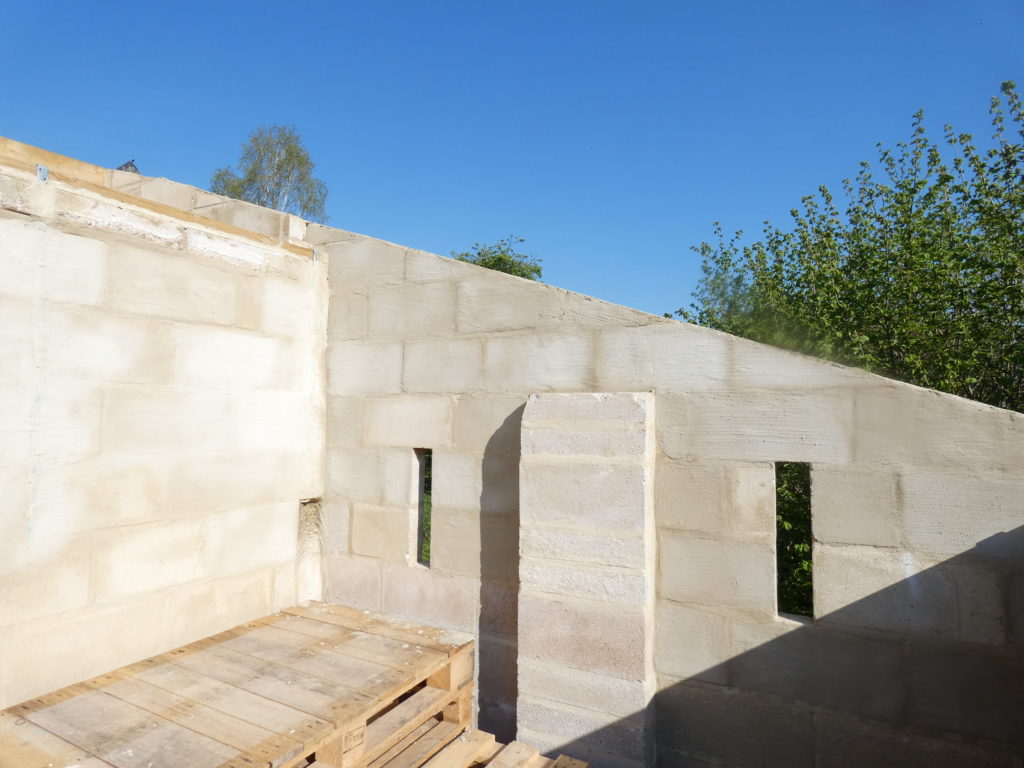
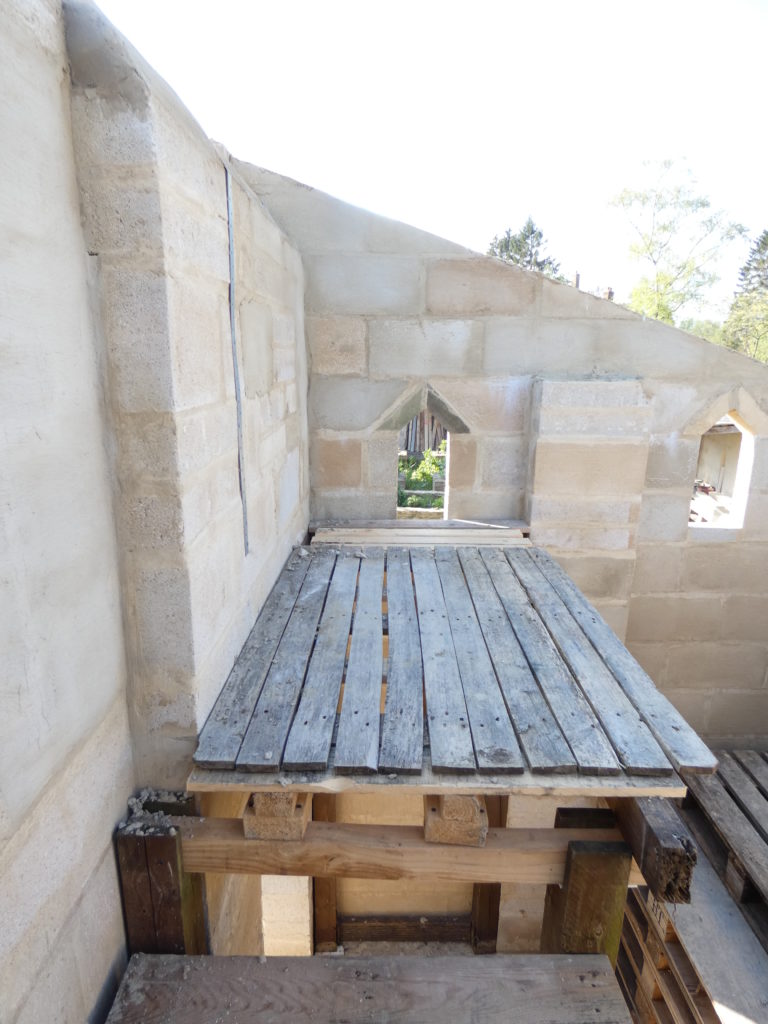
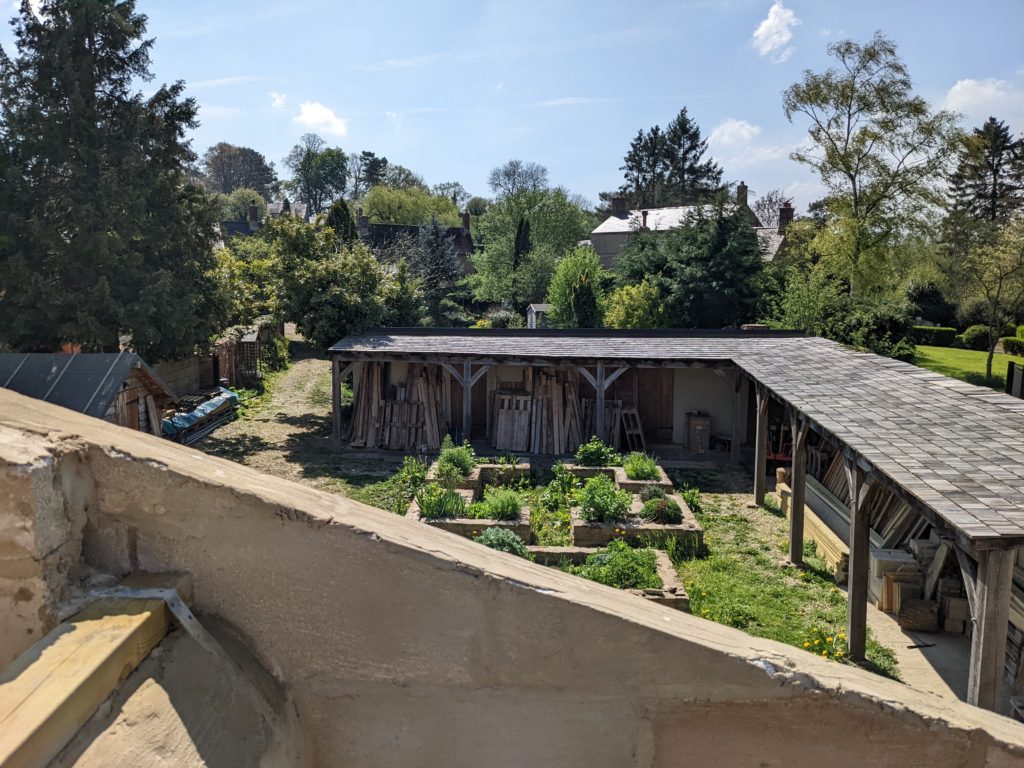
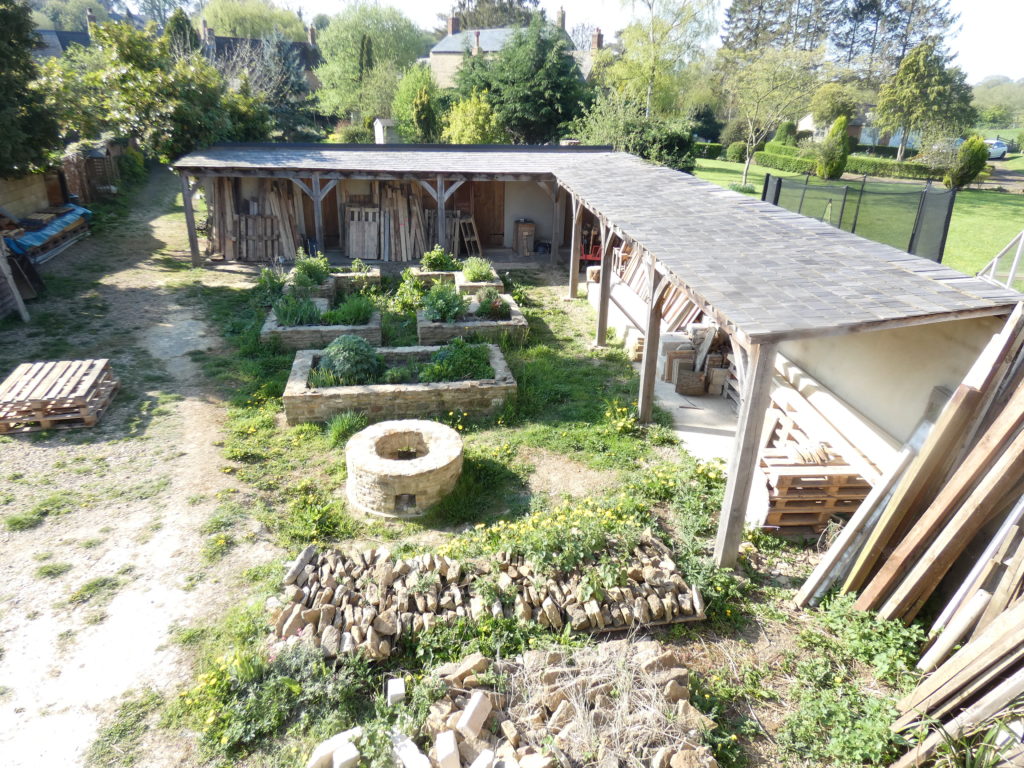
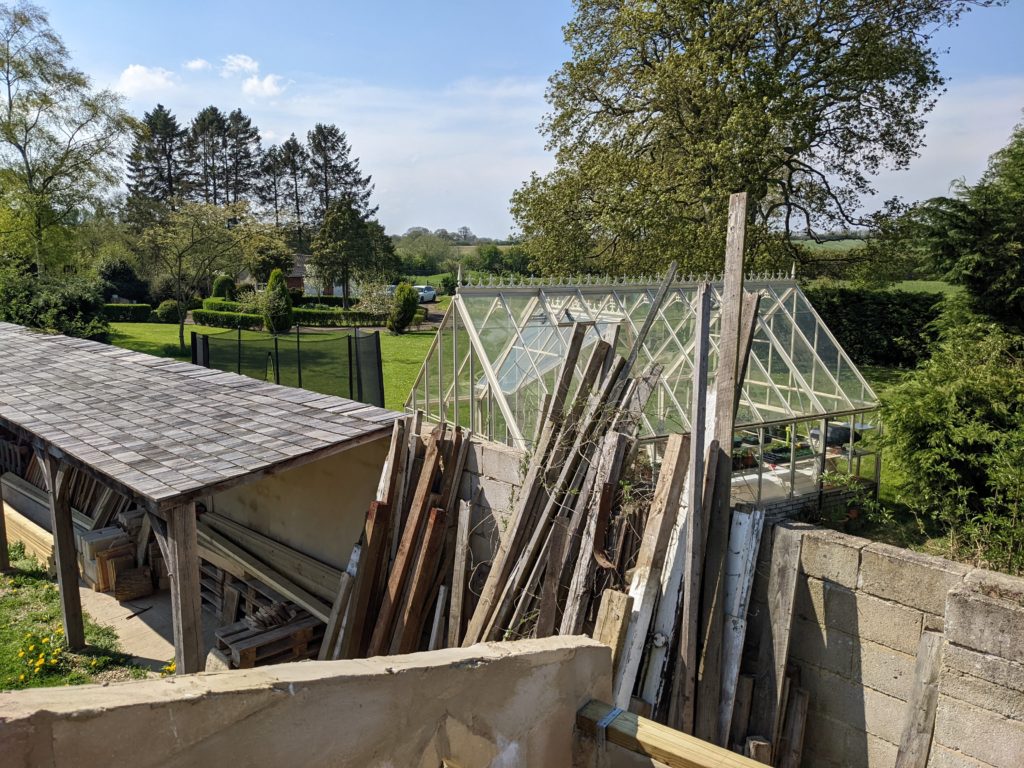
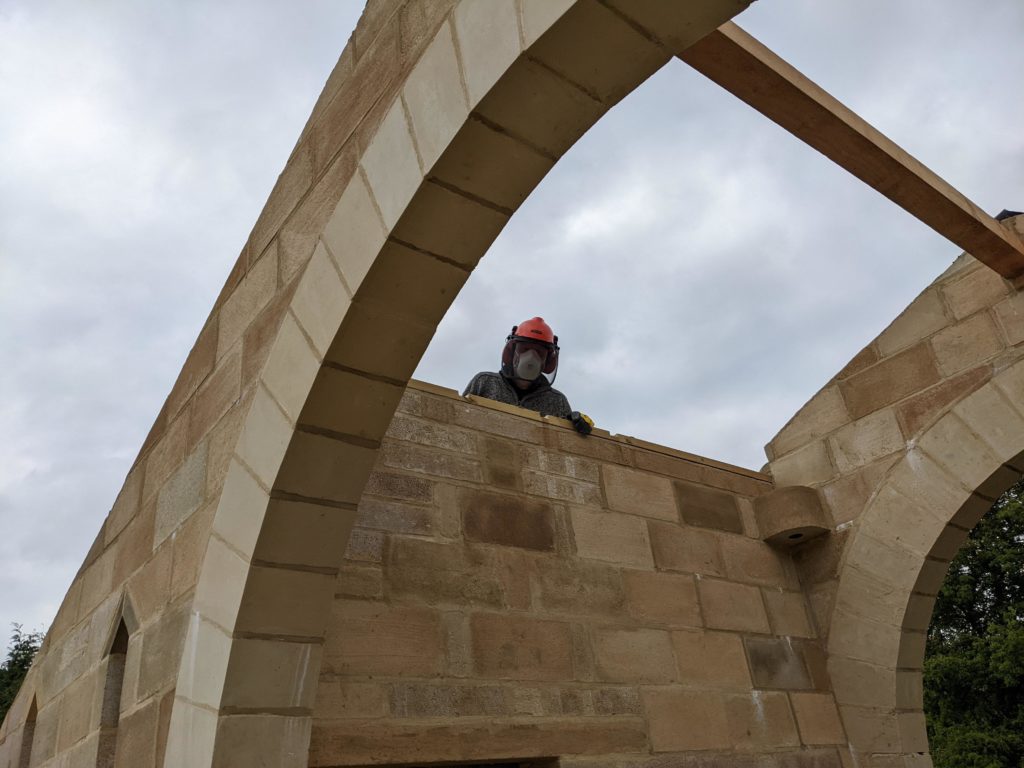
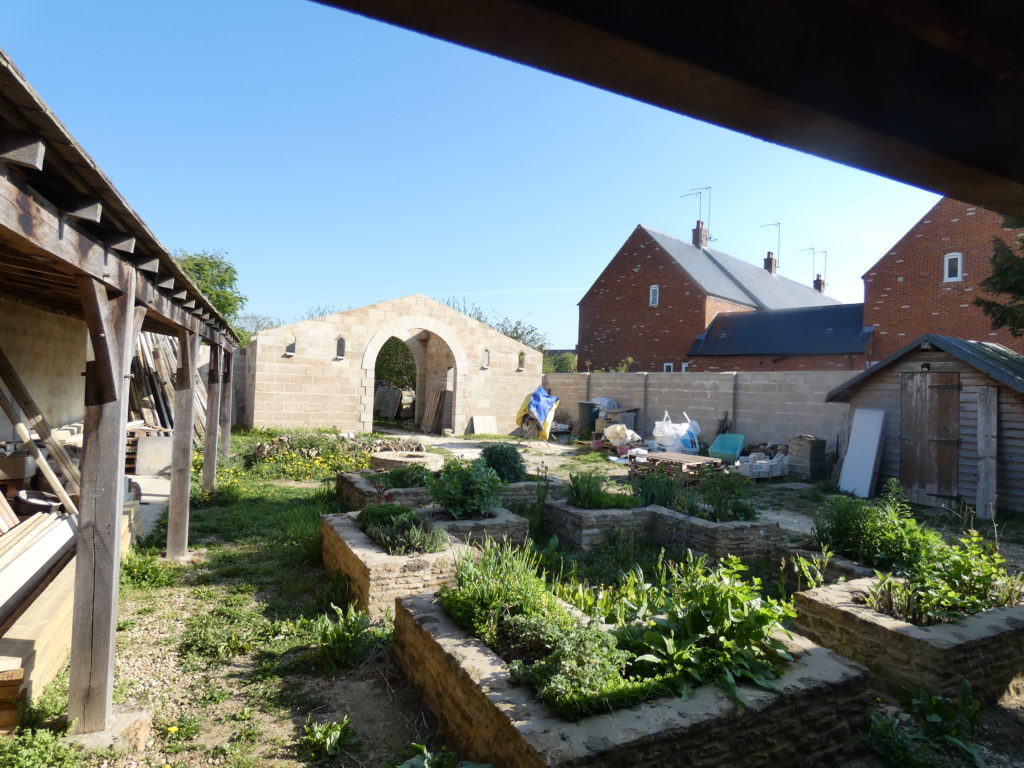
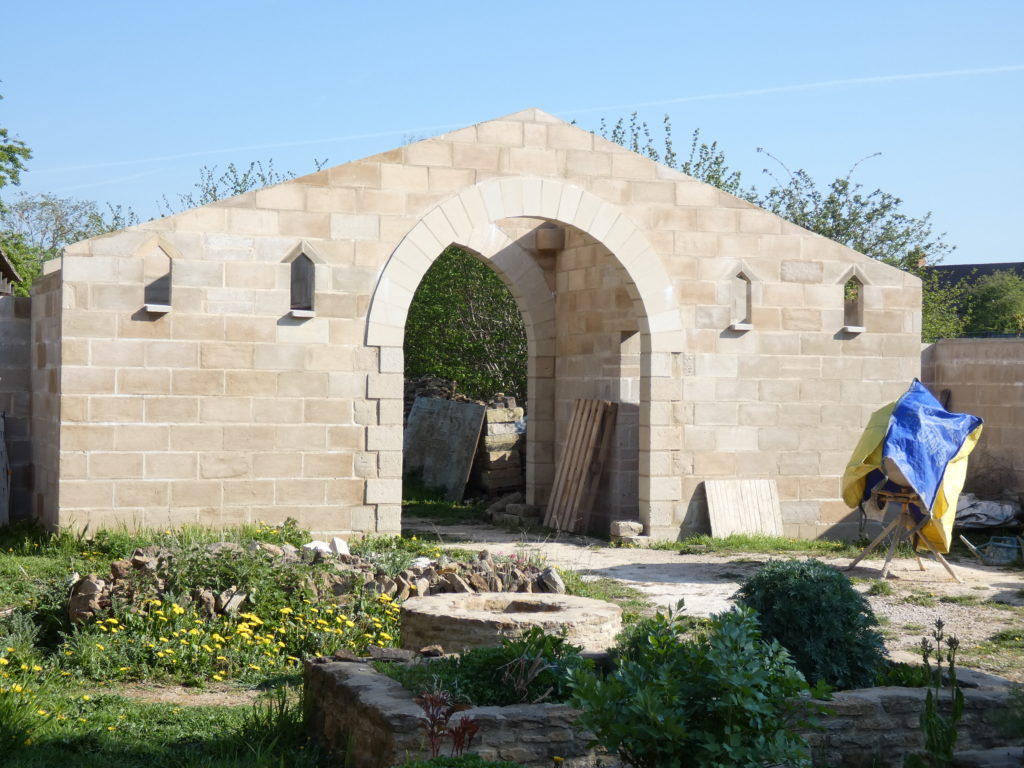
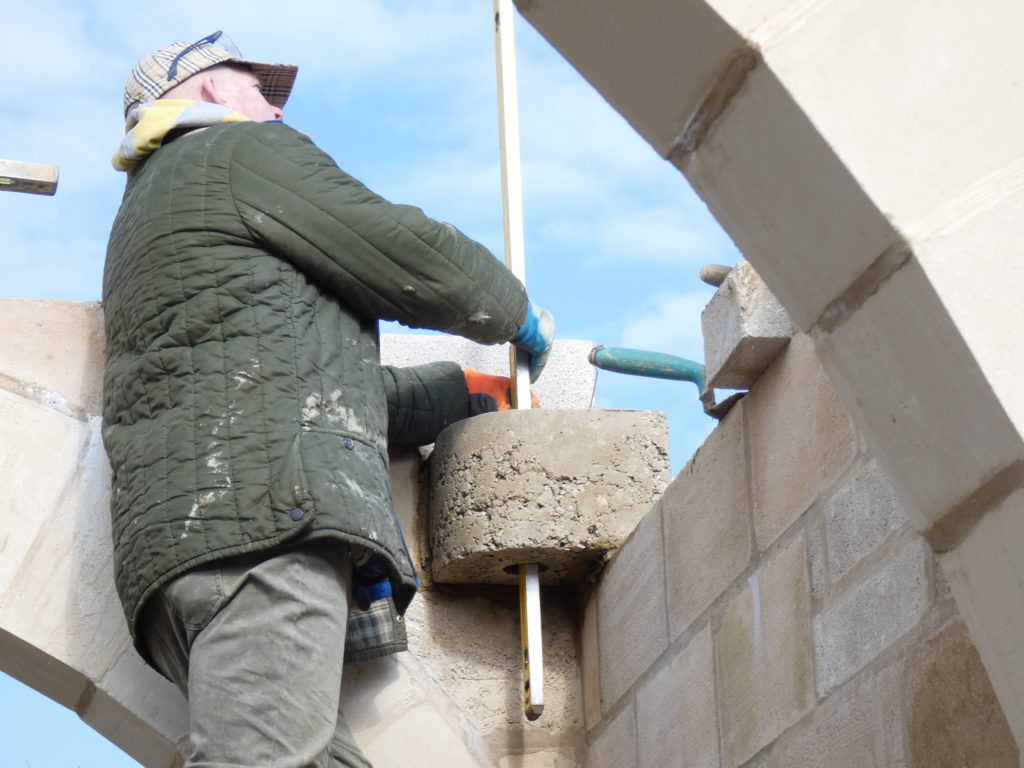
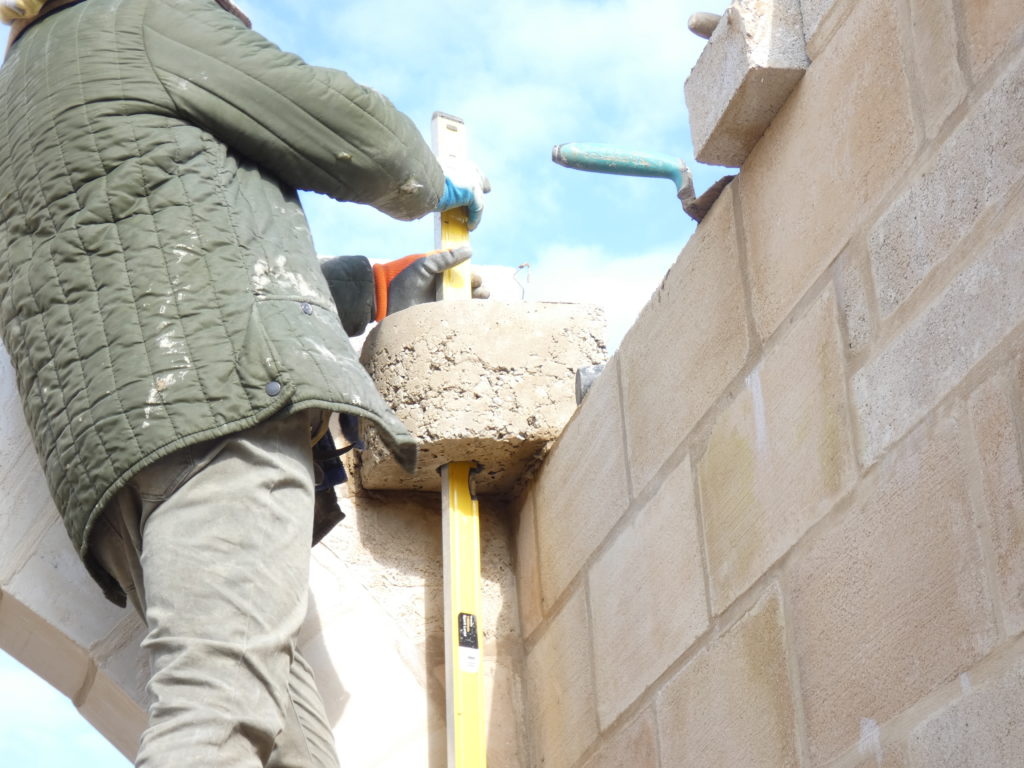
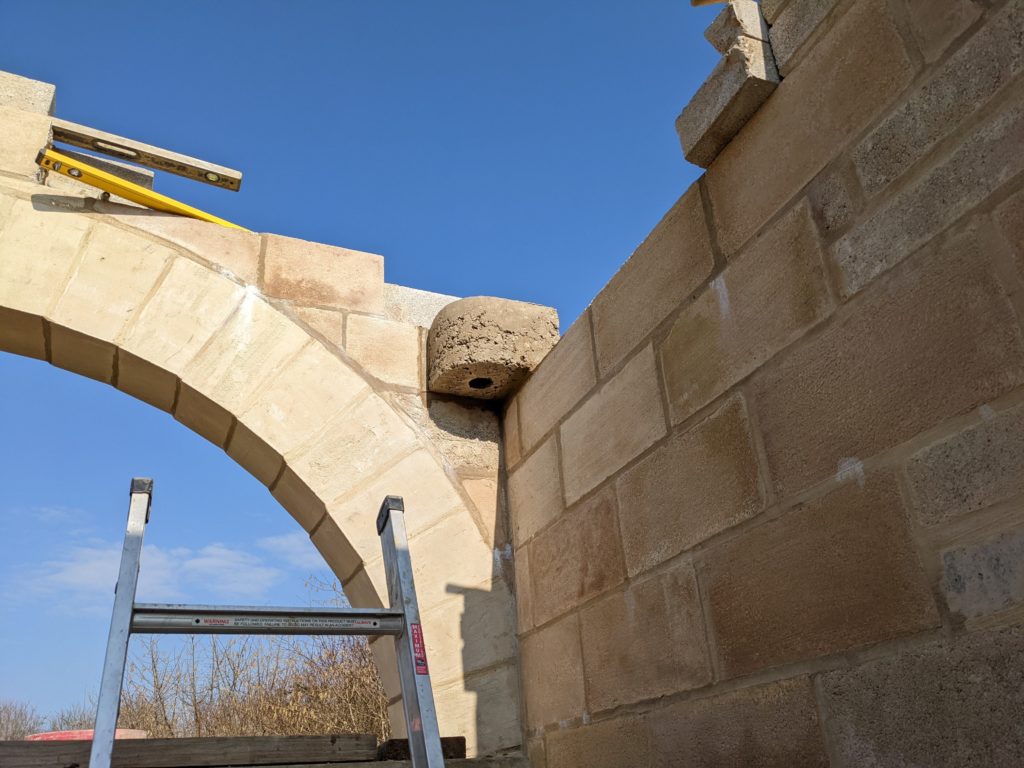
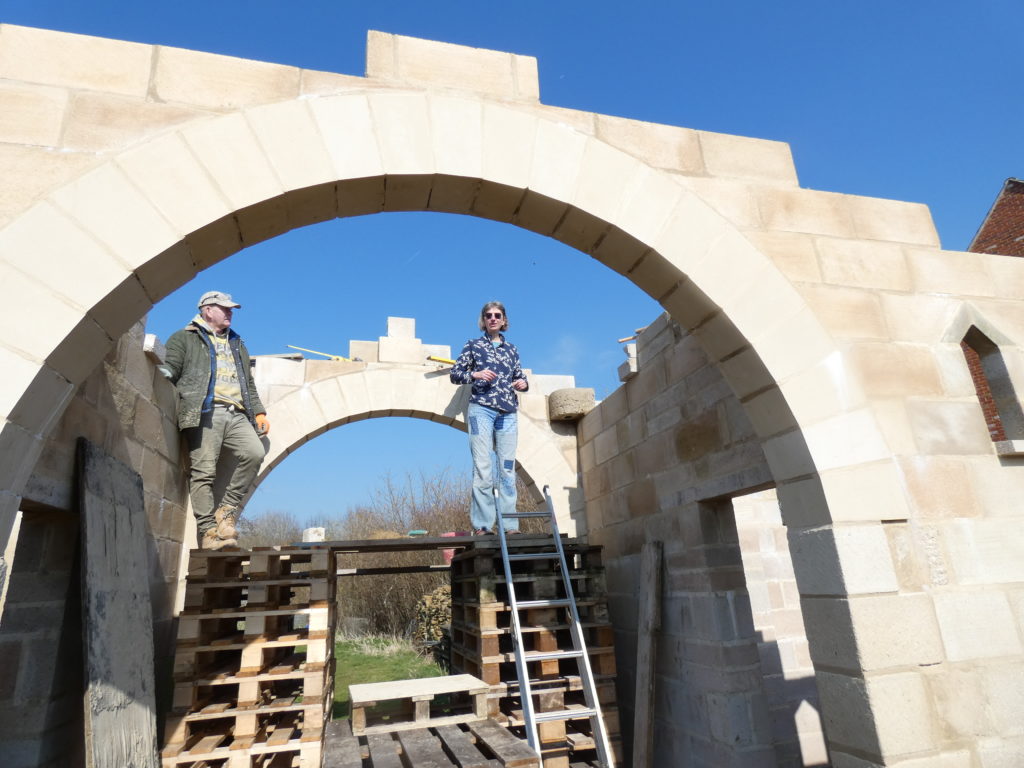
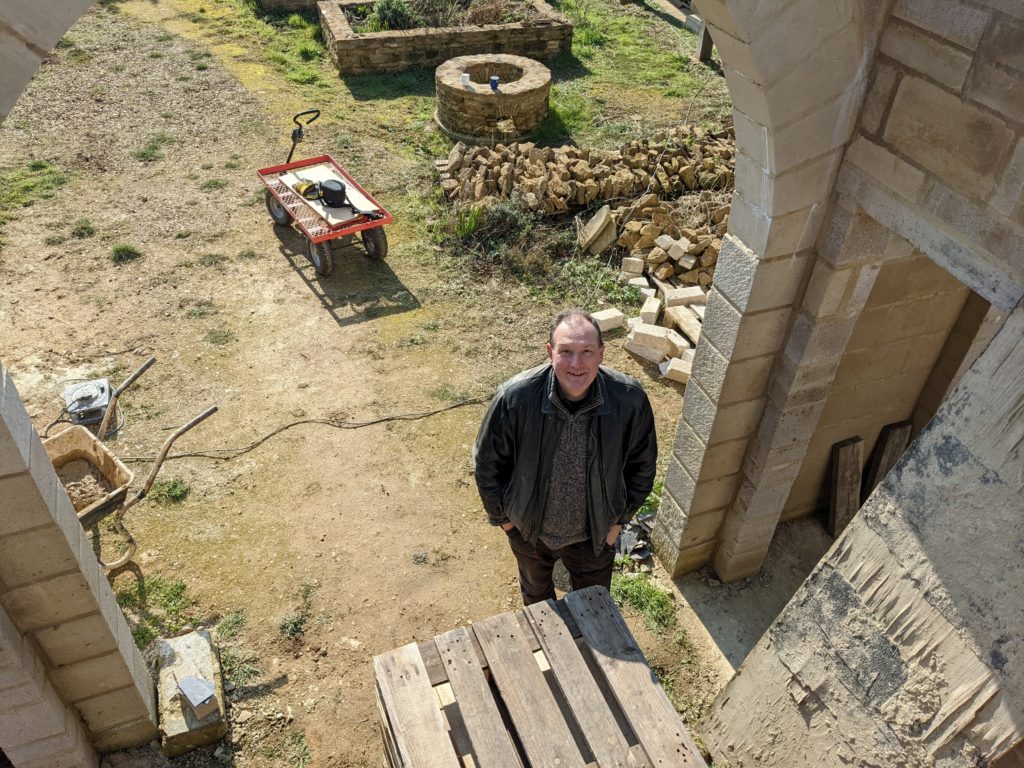
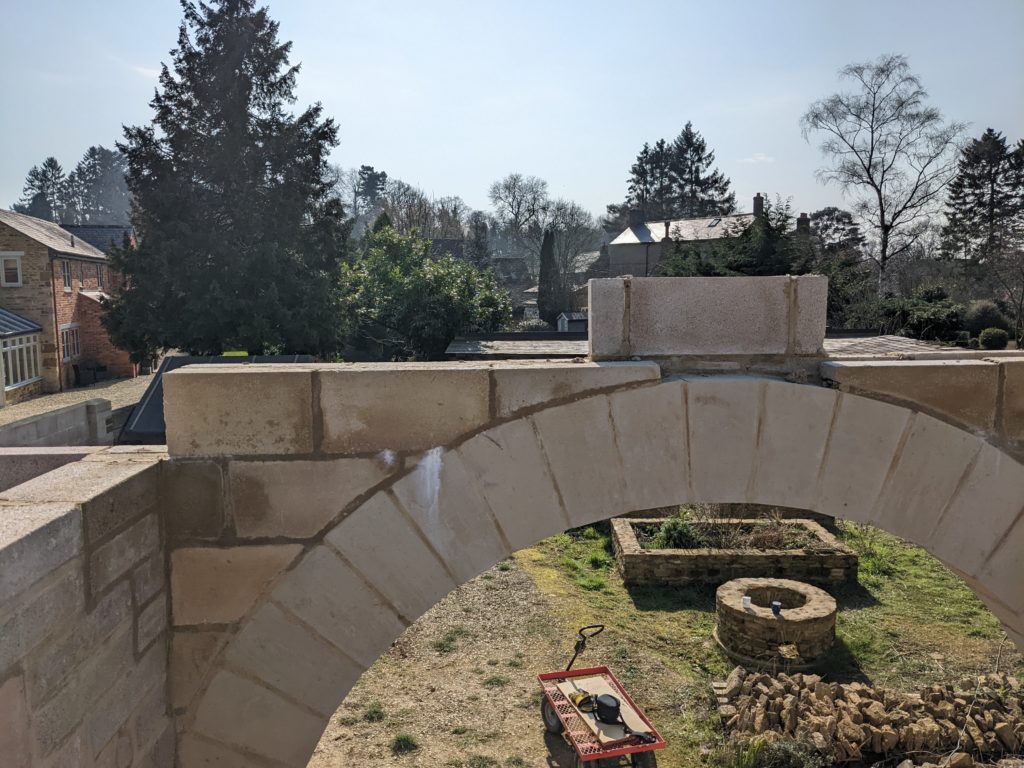
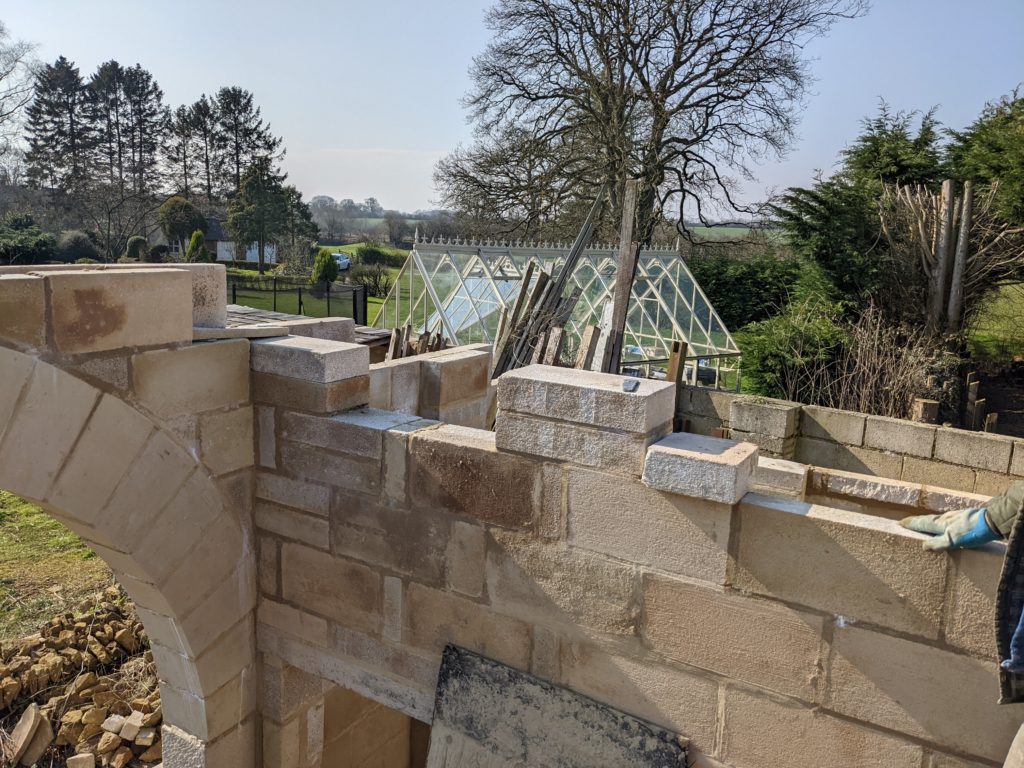
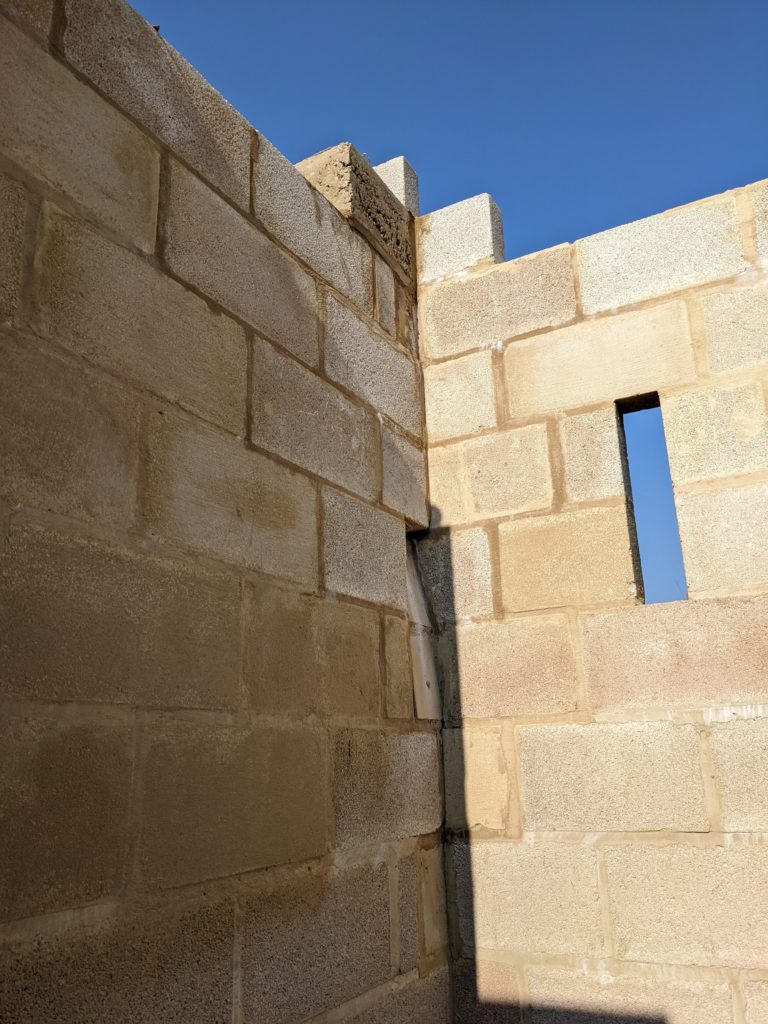
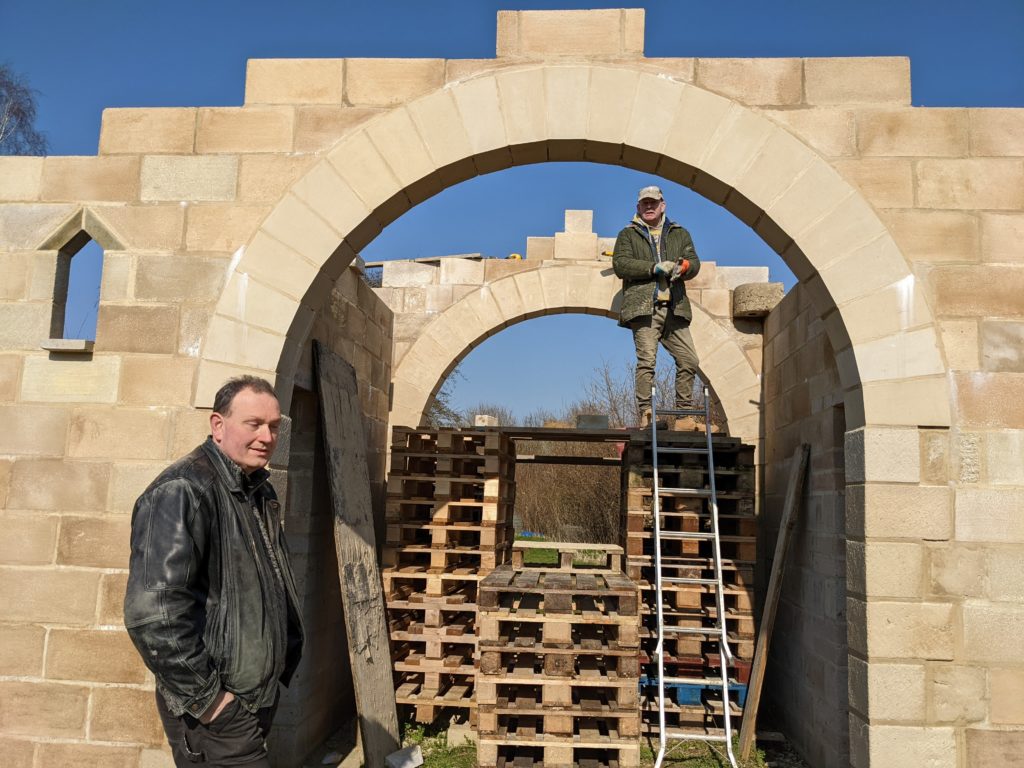
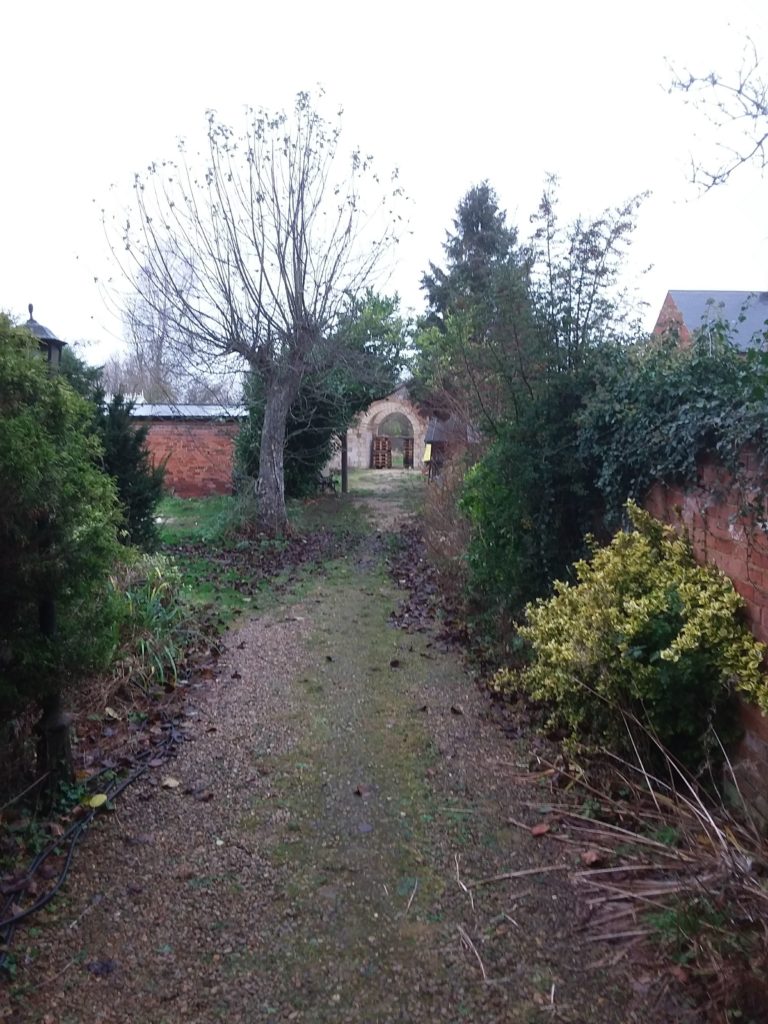
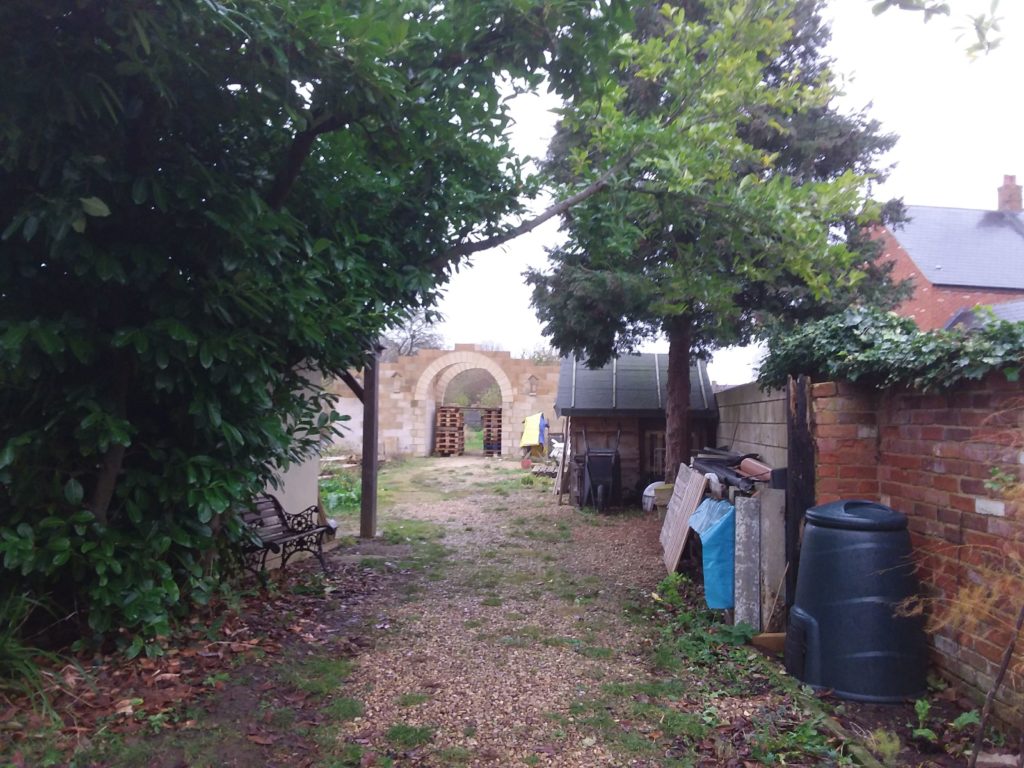
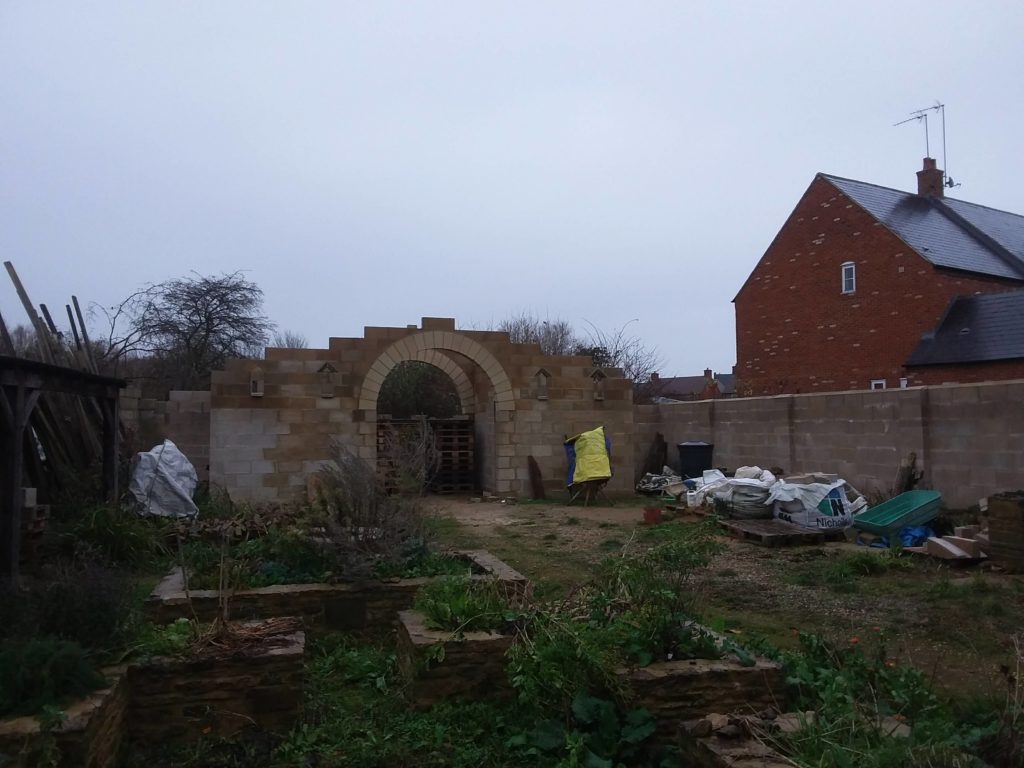
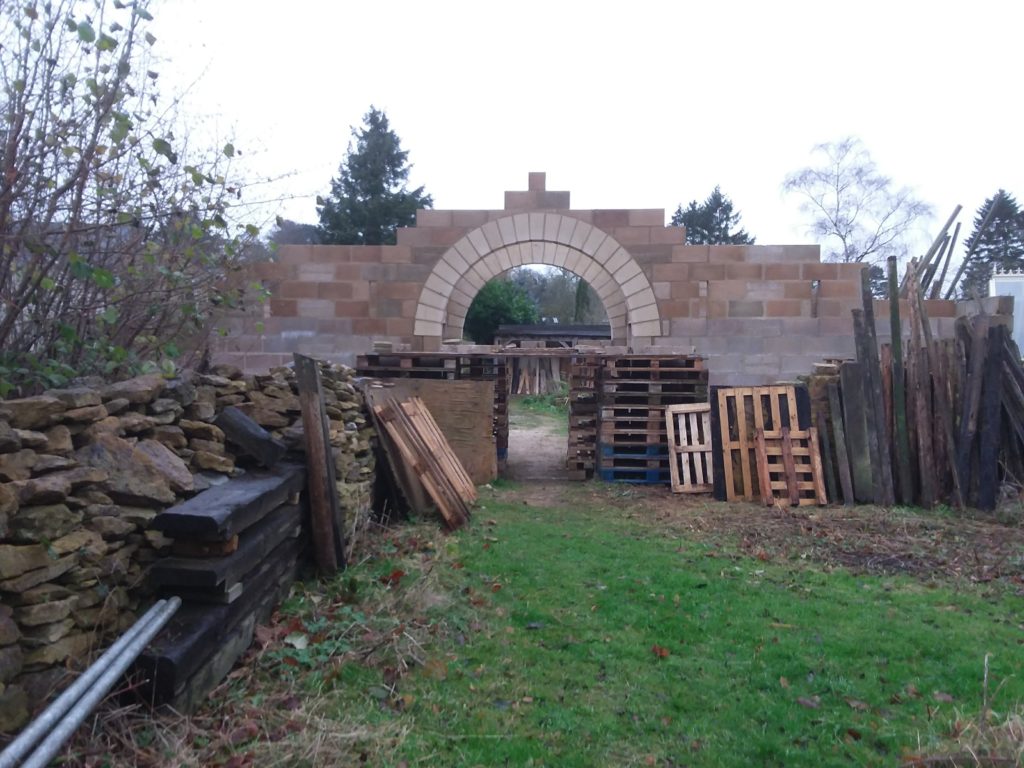
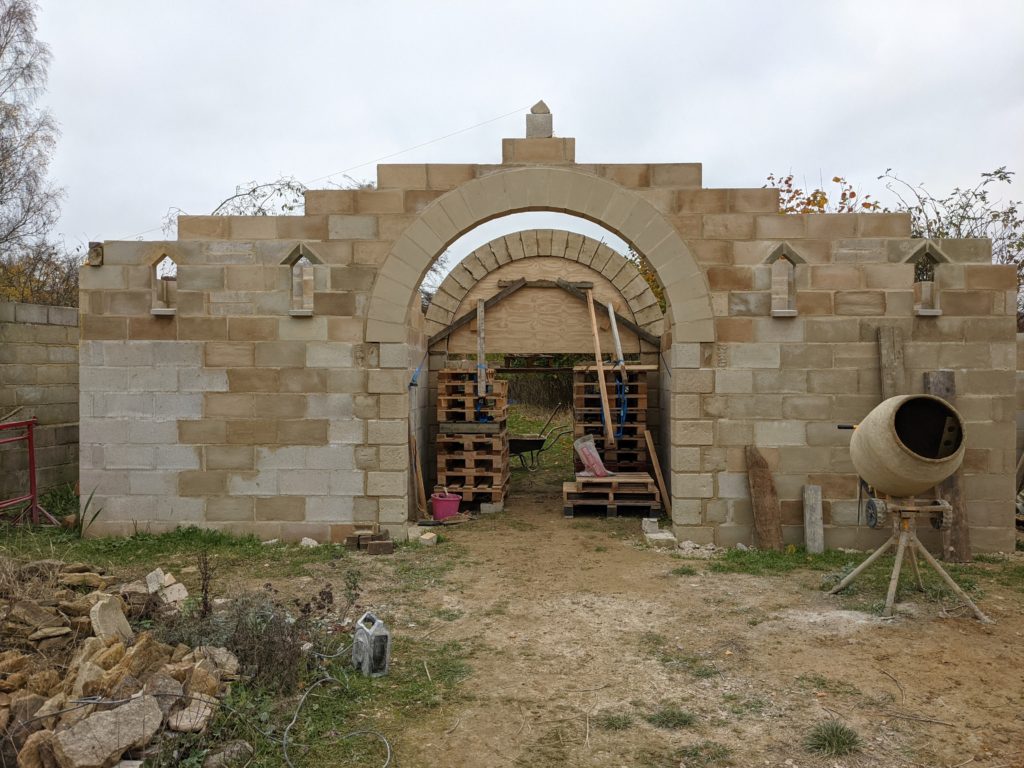
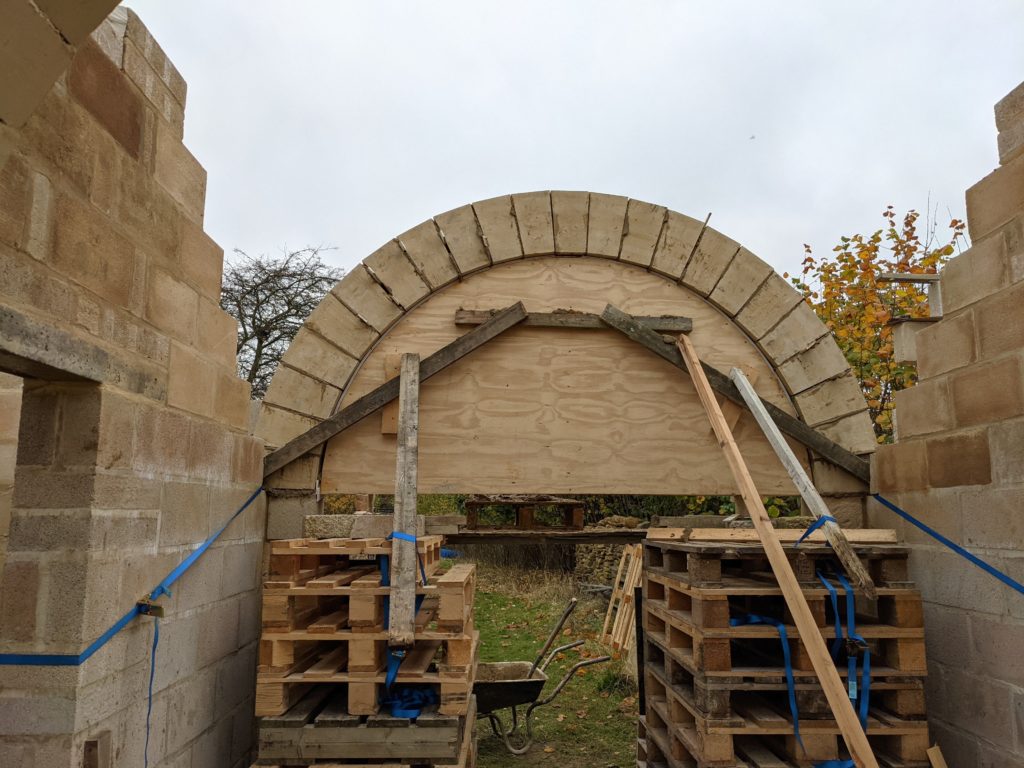
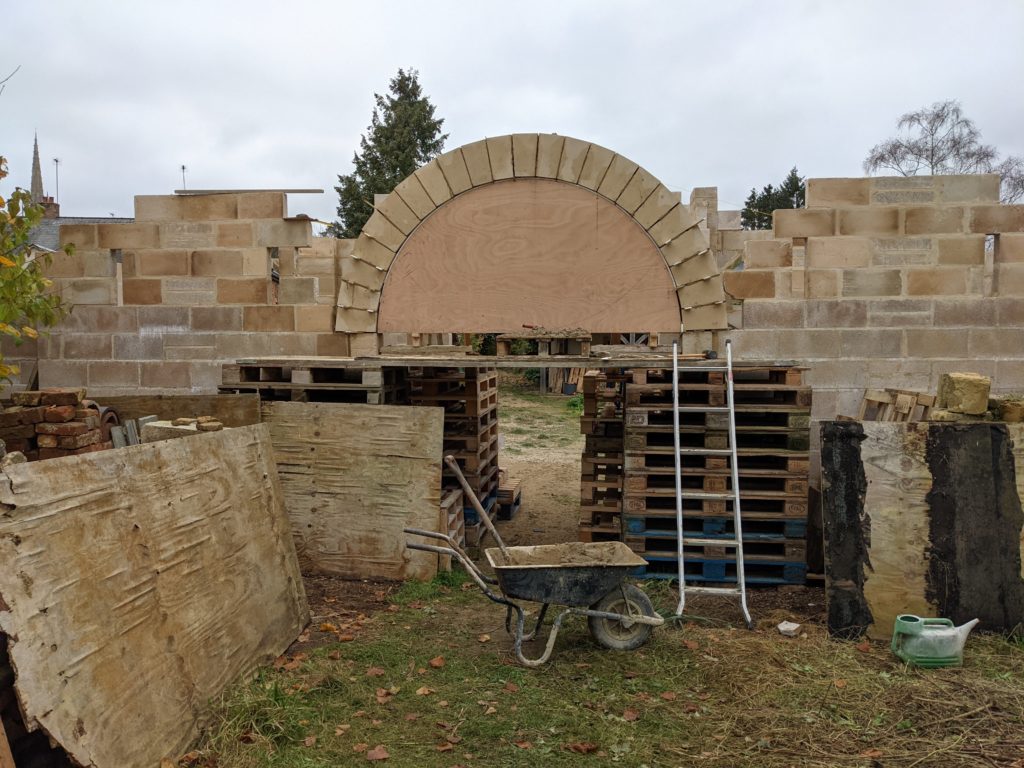
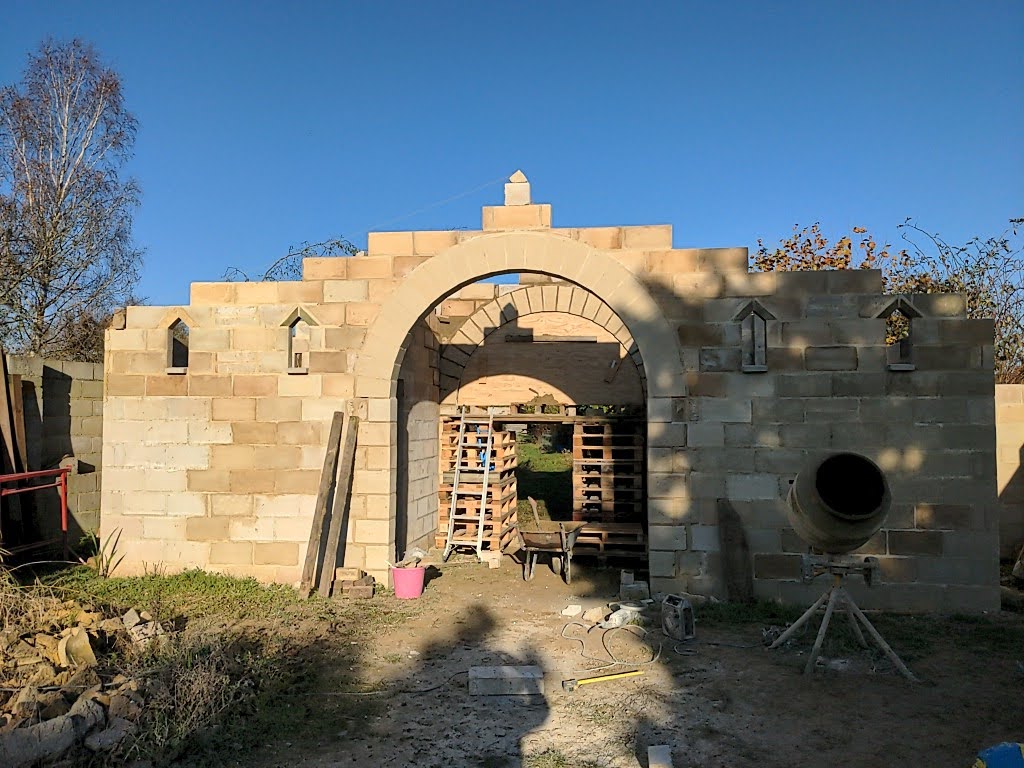
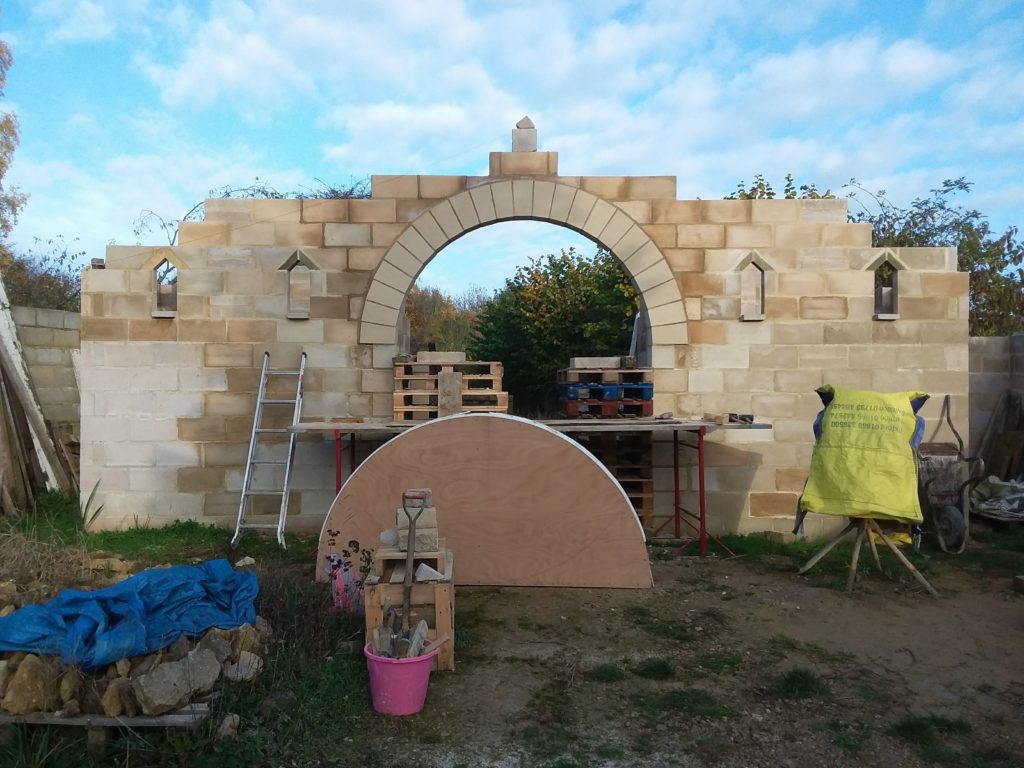
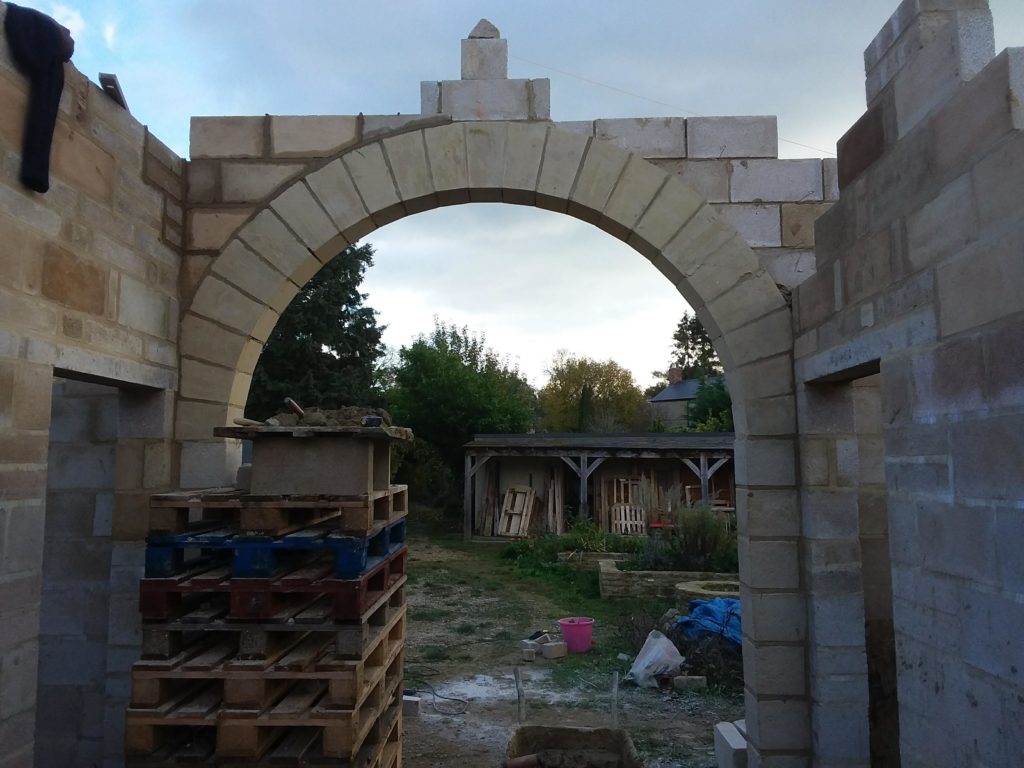
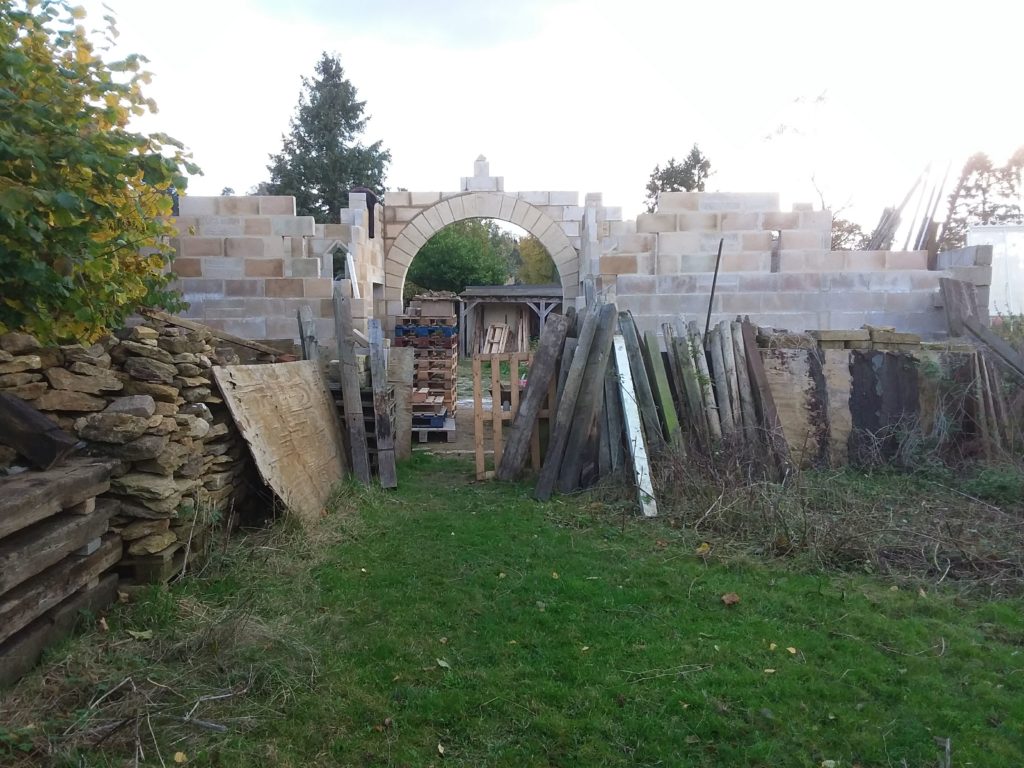
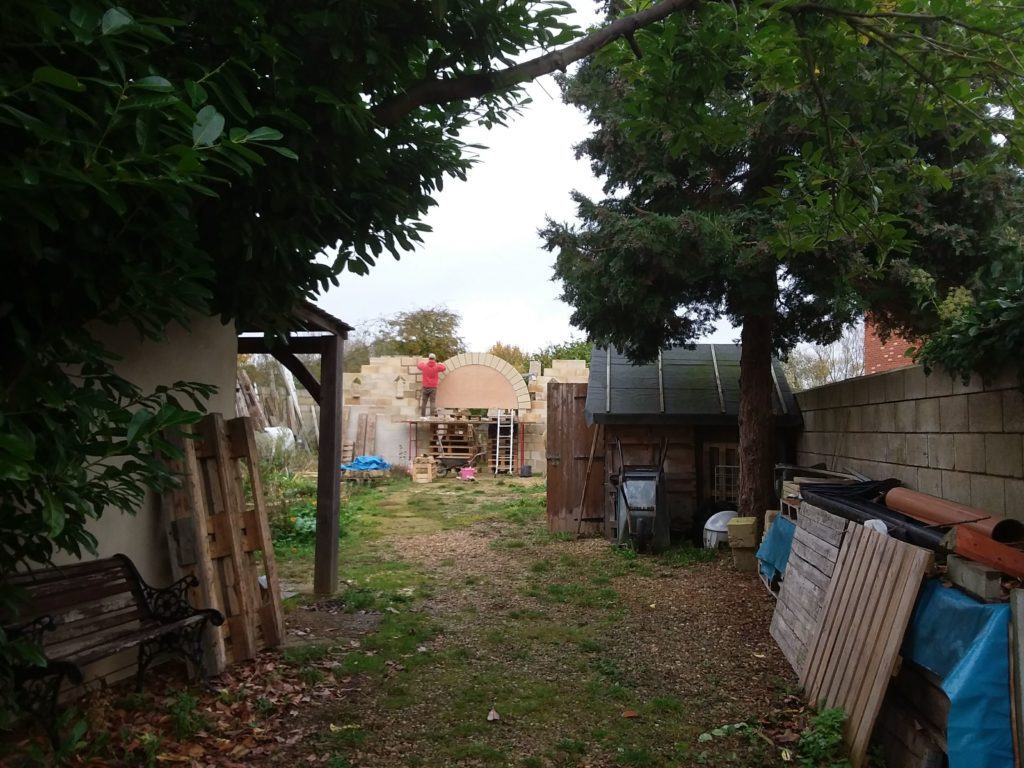
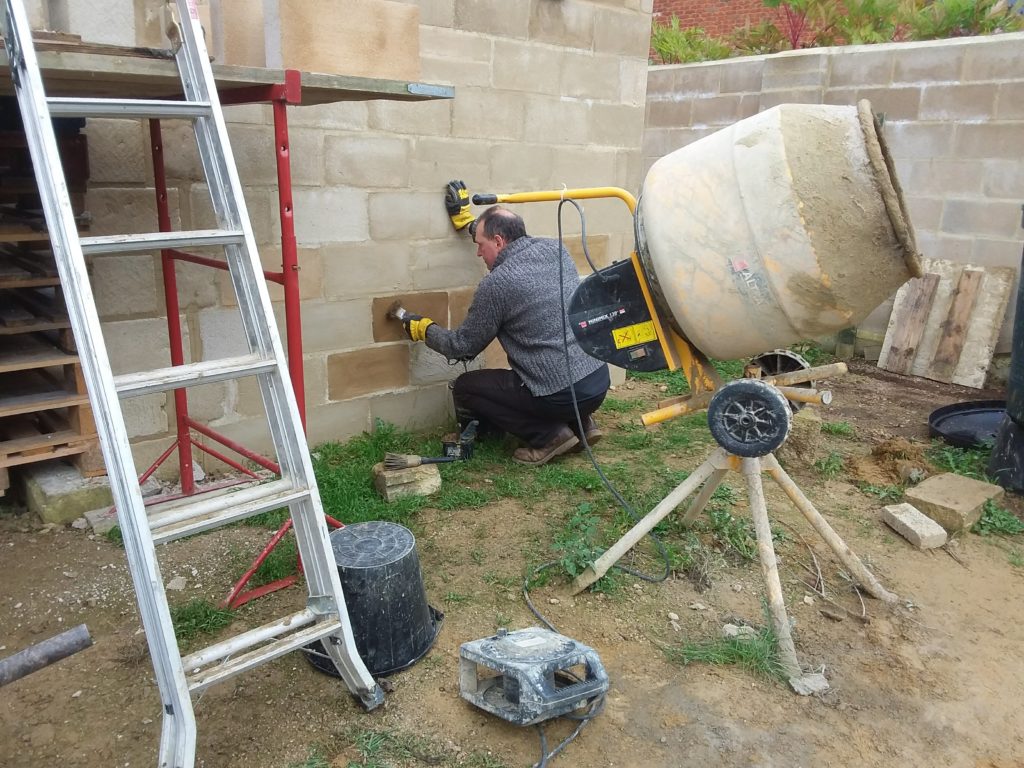
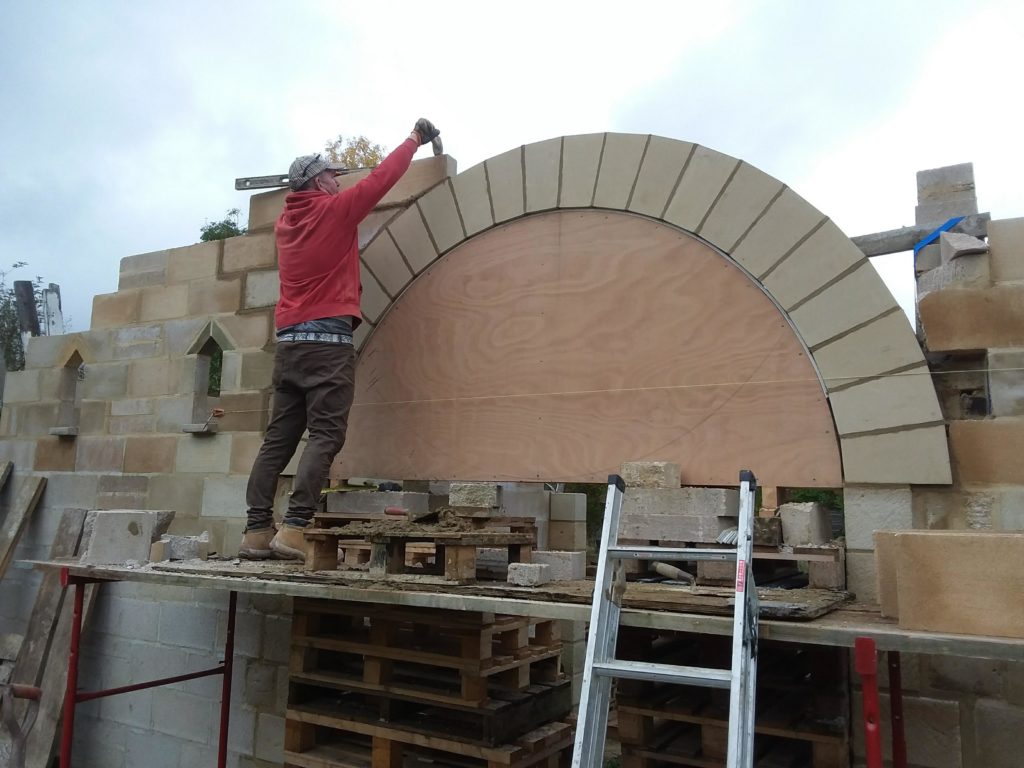
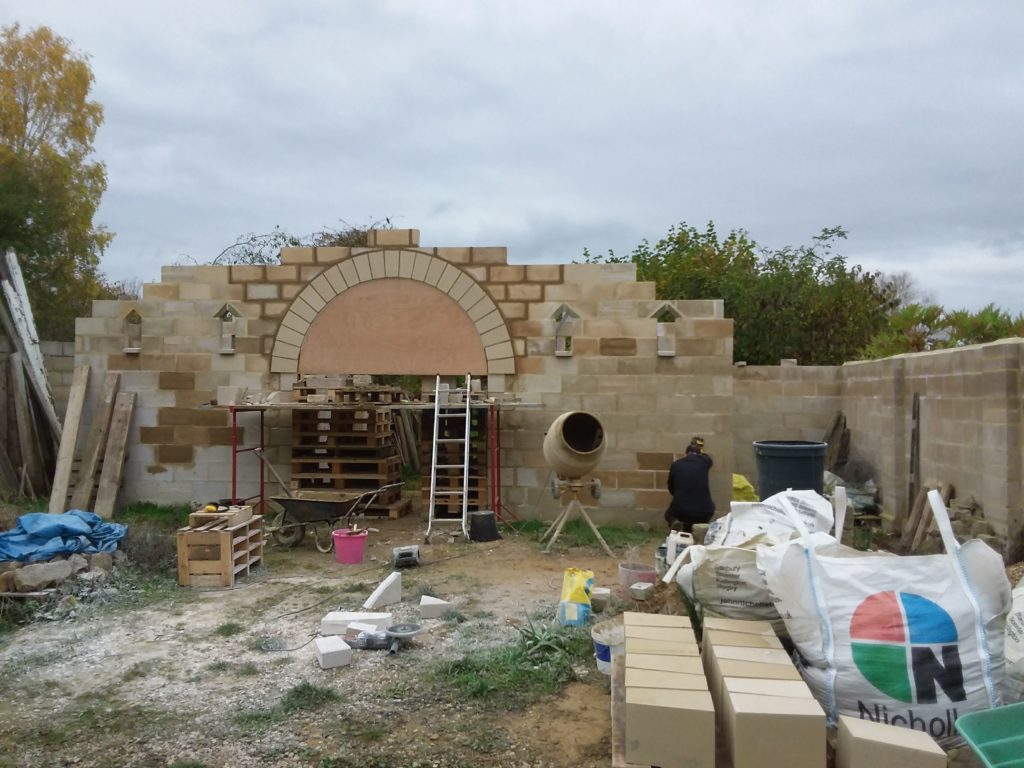
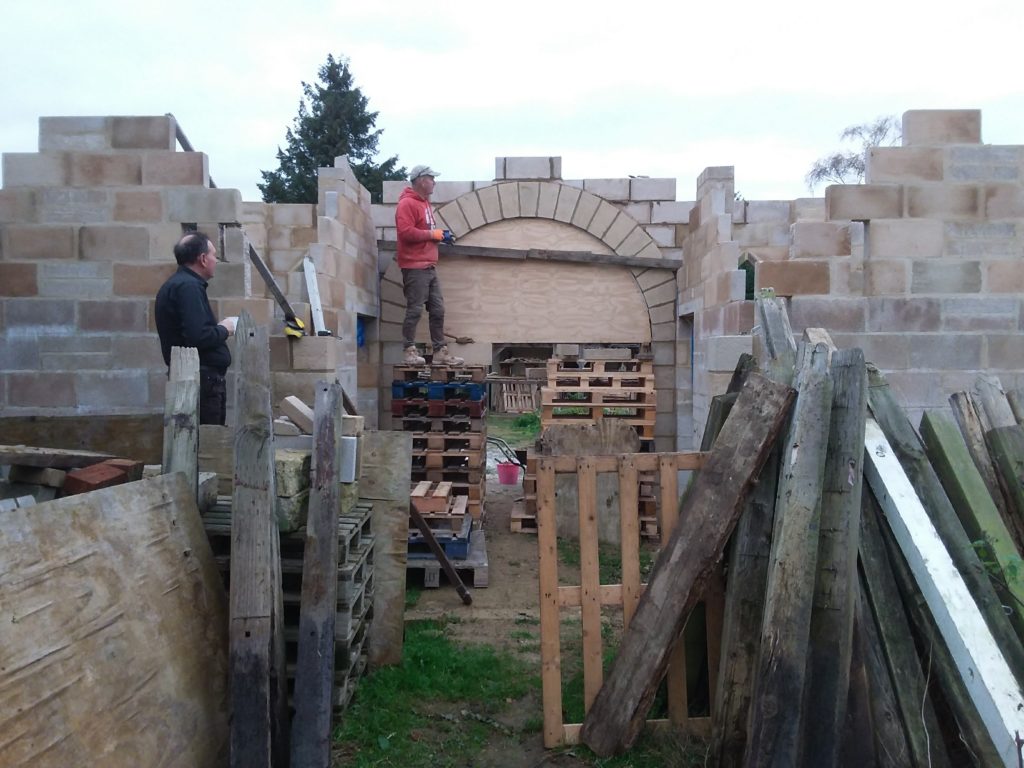
Now the blockwork of the Roman gatehouse is complete, Al is working on the roof – and also finishing the upper sections of the blockwork, which will be hard to work on when the roof is on. Jobs include rendering the blocks to make them prettier and adding concrete to stop pigeons (which will inevitable get in) from roosting at the top of walls. To make life easy, and for safety when working at height, Al has built an extremely natty mezzanine floor out of pallets and some timbers rescued from an old pergola. This gives us a fabulous temporary view from the “battlements”!
Experimental! Here is a panorama picture, which was very easy to take with my shiny Google Pixel 4a camera but it has proven surprisingly difficult to find a satisfactory panorama plugin for WordPress. The panorama below uses Panorama Viewer which seems to be the best available. It doesn’t work in the post preview as seen on the main Rumwoldstow page; you have to visit the post URL. And it starts a little zoomed out, giving ugly black arcs above or below the image; seems to be caused by the addition of up / down scrolling which can’t be turned off. If you zoom in a touch with mouse scroll or the nice visible buttons, it’s not too bad. But really, it’s 2022, how is there not a working plugin to view a panorama taken on a Google camera?
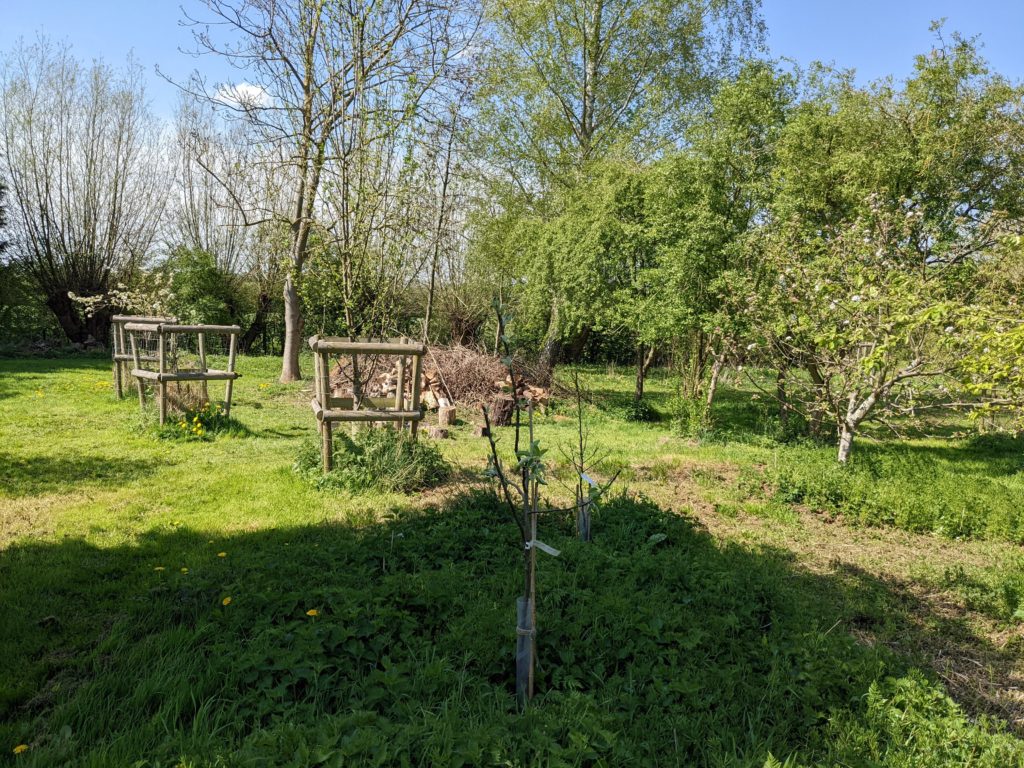
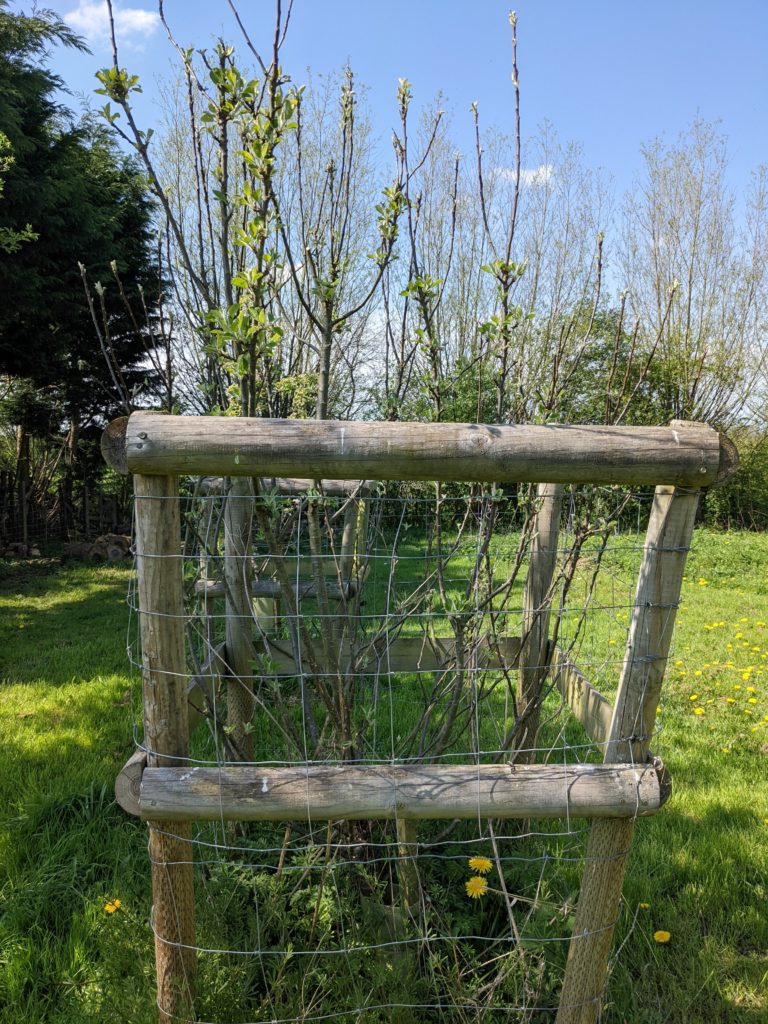
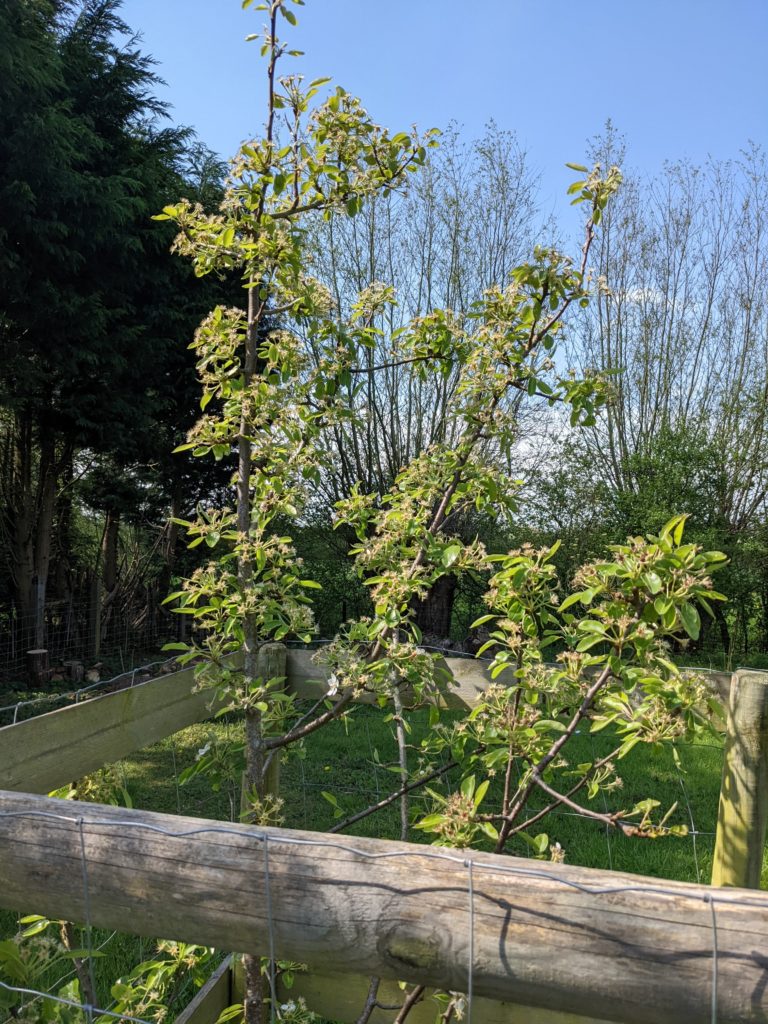
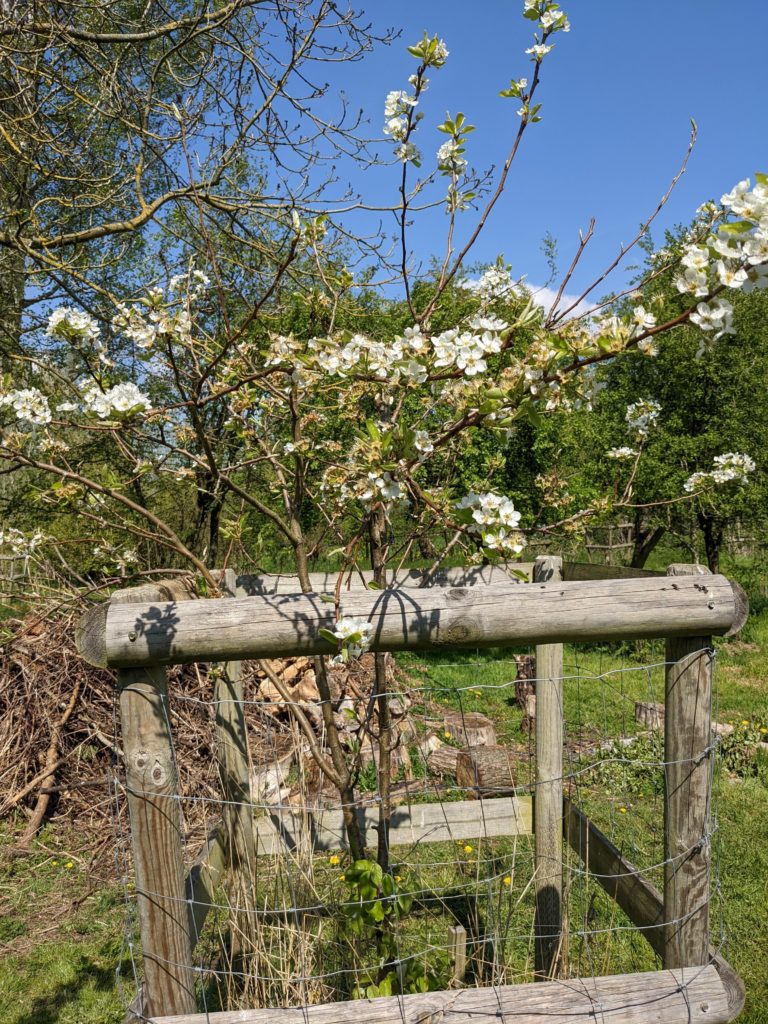
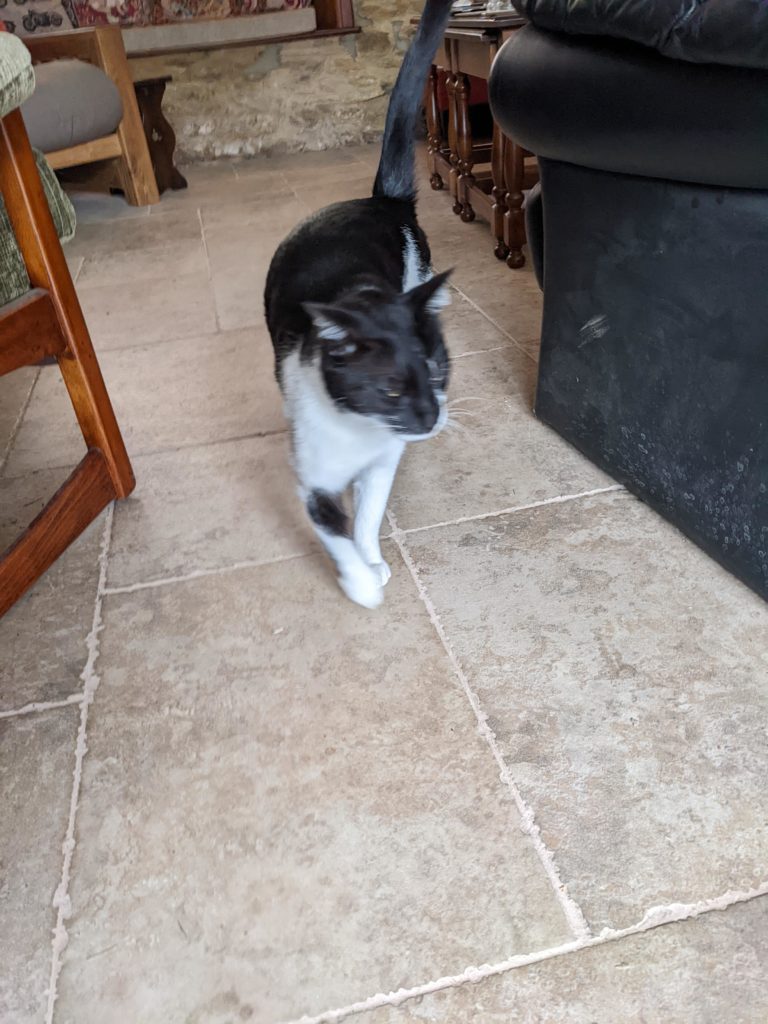
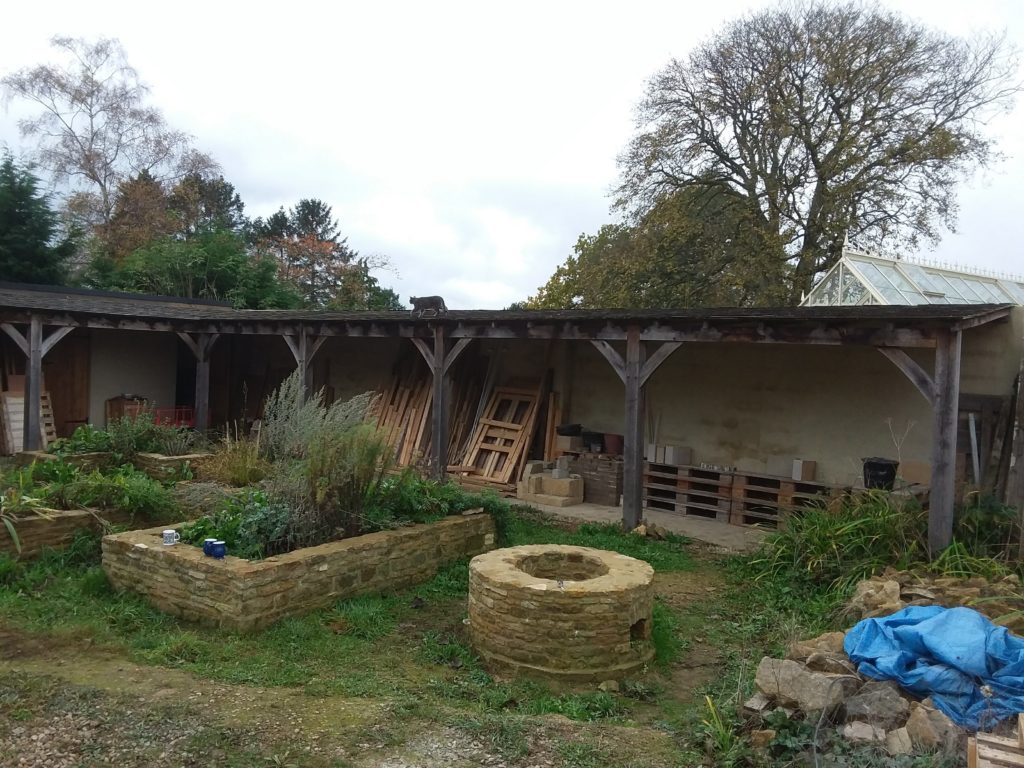
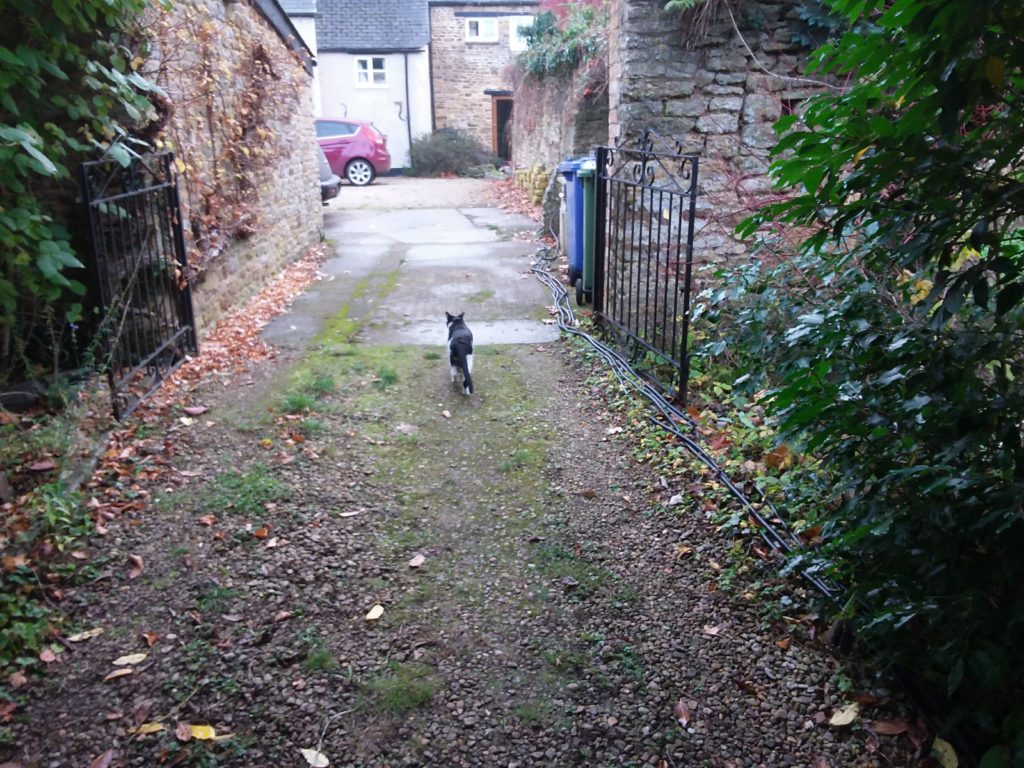
To finish up, here are some photos of the orchard where pear trees are in flower, and a bonus of Tinky the very cheeky local cat who knows he owns this end of the village.
Despite giving us some very tasty little apples last year, the Hambledon Deux Ans doesn’t look like flowerinig this year, although it appears healthyThe Louis Bonne of Jersey pear seems to be trying to make up for itAs does the Uvedale St Germain pear!Tinky is a cheeky wee beggarAl hard at work applying timber preservative to the wall plate
For several years, I’ve been planning a mantle to go over my Anglo-Saxon nun outfits (working day and posh) so that I don’t have to wear my Viking shawl with them. As with pretty much all early mediaeval English outfits, we have very little material evidence and manuscript illustrations are a main source. In these, women often appear to be wearing an overgarment which allows them to raise their hands, the folds draping elegantly in front and behind. It appears that the front is shorter than the back.
The mantle has been variously reconstructed as a poncho and a cope. The Regia Anglorum kit guide shows a nice comparison of different overgarments as seen in manuscripts, but states definitively that the garment was closed, and cone-shaped like an ecclesiatical cope. I don’t think we can be sure of that, and I recently met with a very lovely lady who showed me her interpretation as a circular cloak with an open edge, which has the superb advantage that you don’t have to put it on or take it off over your head when wearing a wimple. She draped it so that the open edge was not particularly noticeable and its elegance and practicality won me over. A small brooch of classic Anglo-Saxon design will fasten the loose edge.
I had already bought a nice piece of grey wool, but it was not large enough for a circular mantle. So I have repurposed that as a semicircular cloak for my “working nun” outfit, a nice plain wool but to wear a semicircular cloak instead of a plain rectangle is definitely showing off! And I bought some lovely light-weight blue wool fabric recently, this time buying four metres to be sure of having enough for the circle. Some friends helped me measure it and I decided on a 120 cm length, to fall just below the knee, to be constructed of sections in a manner not unlike a planked shield.
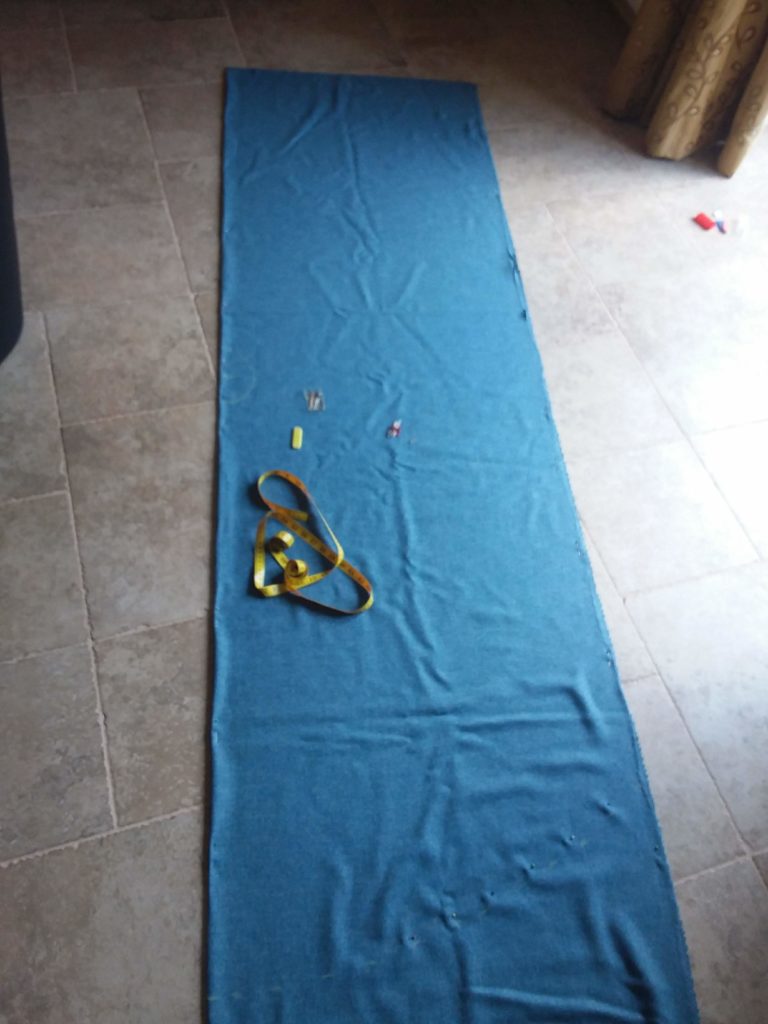
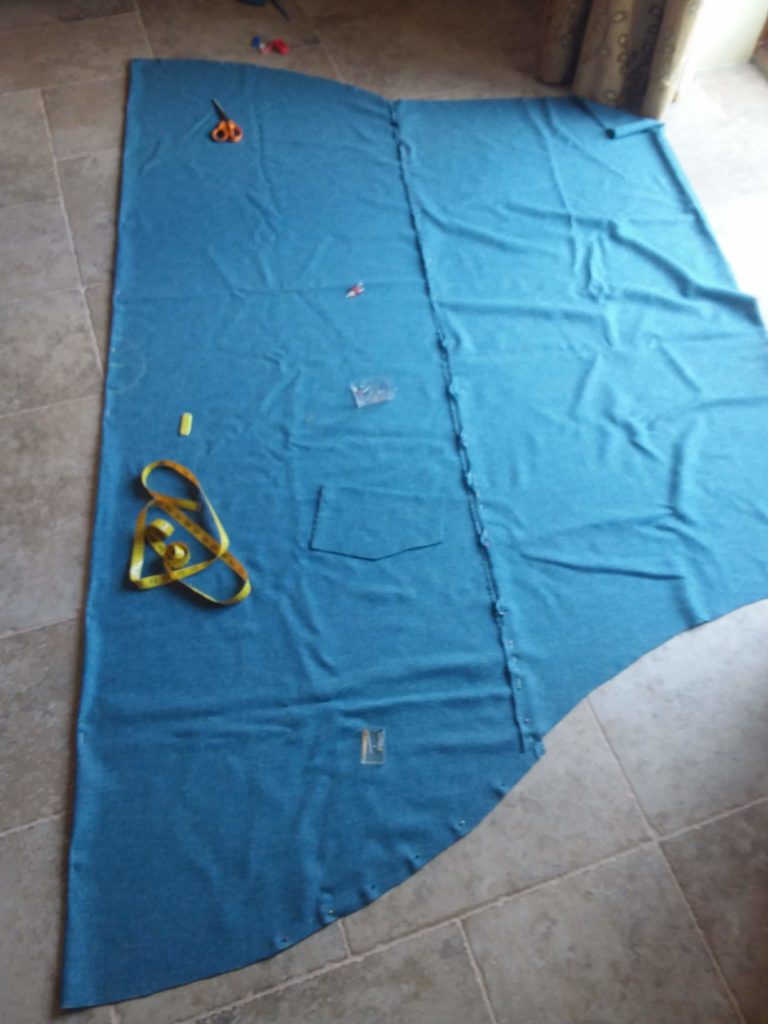
Today I settled down to cut it out, with Al helping me to manage the tape measure and scribe the circle. I added 1cm to the length for hemming; really I should have done my maths first! See below.
Fabric folded in half lengthways and marked for as much circle as possible either side
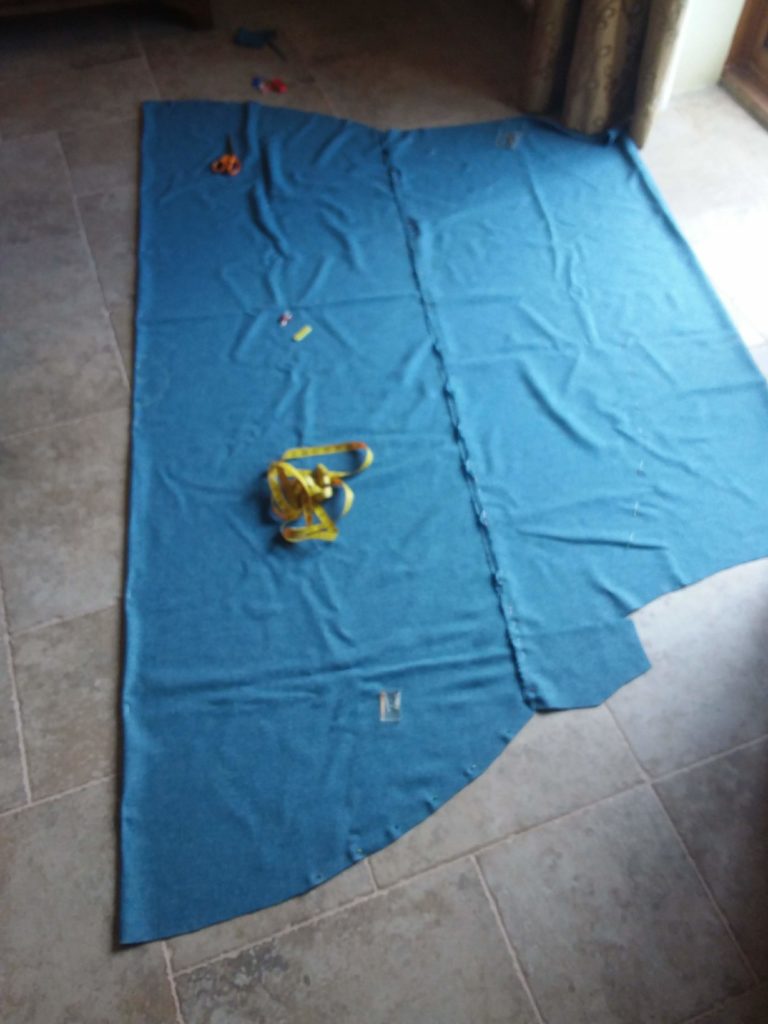
Excellent! Thought I…I can cut two segments from the remainder and match selvedge to selvedge to save hemming. I’ve got lots of cloth!
Well, dang!
And…when I pinned the spare cloth to the selvege, I found that I was 2cm short. That 1cm seam allowance was the mischief!
Fortunately the leftover piece from the start of the fabric is just barely big enough to piece in the necessary part, while still using selvedge. Phew, that was close! I have to comfort myself with the knowledge that Anglo-Saxons faced the same problems and used the same solutions. I did it on purpose to be more authentic, honest guv!
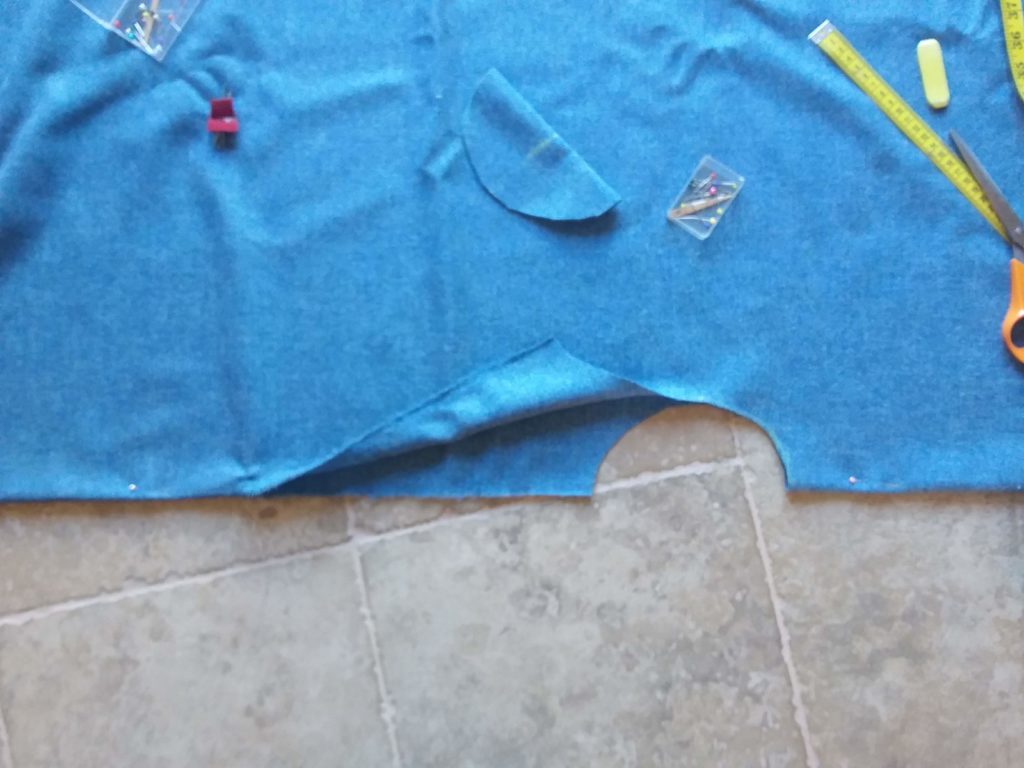
Finally, I cut a small neckhole (it’ll expand with hemming) and tore the fabric (to get a straight edge) down to the hemline to make an opening. Hurrah! My pieces are ready to sew, and A Project has been transformed into a simple job.Quite a long job, as the amount of hemming is significant, but straightforward. After that, I’ll design some embroidery for the neckline. Probably. Unless I’m fed up with sewing by then.
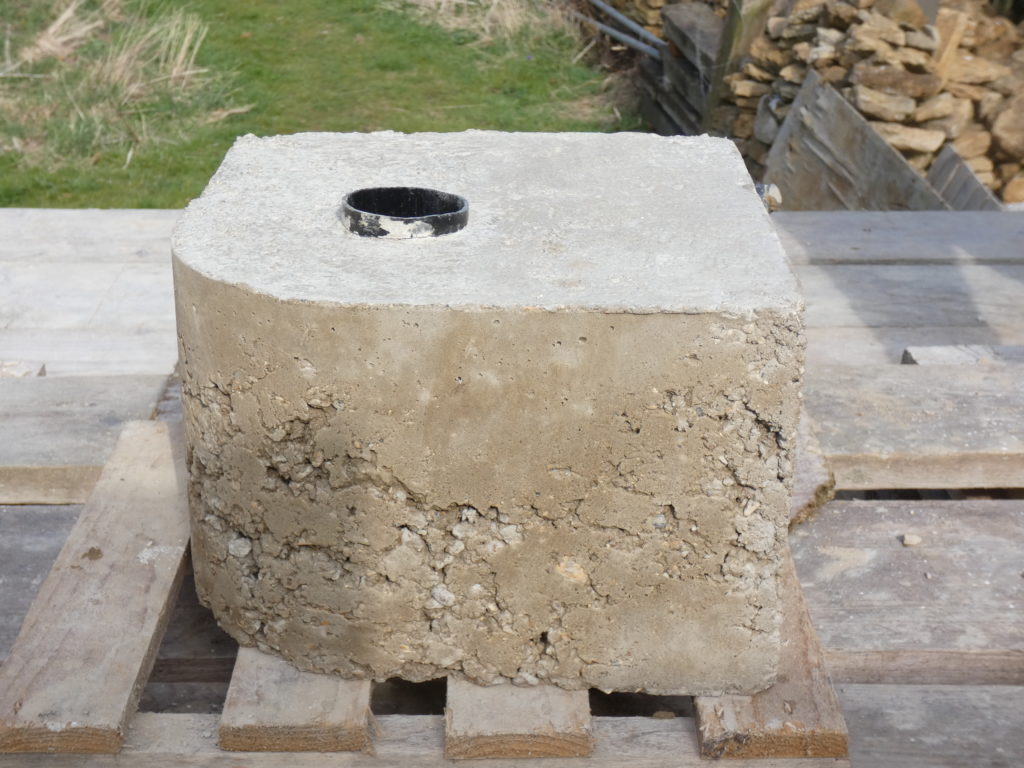
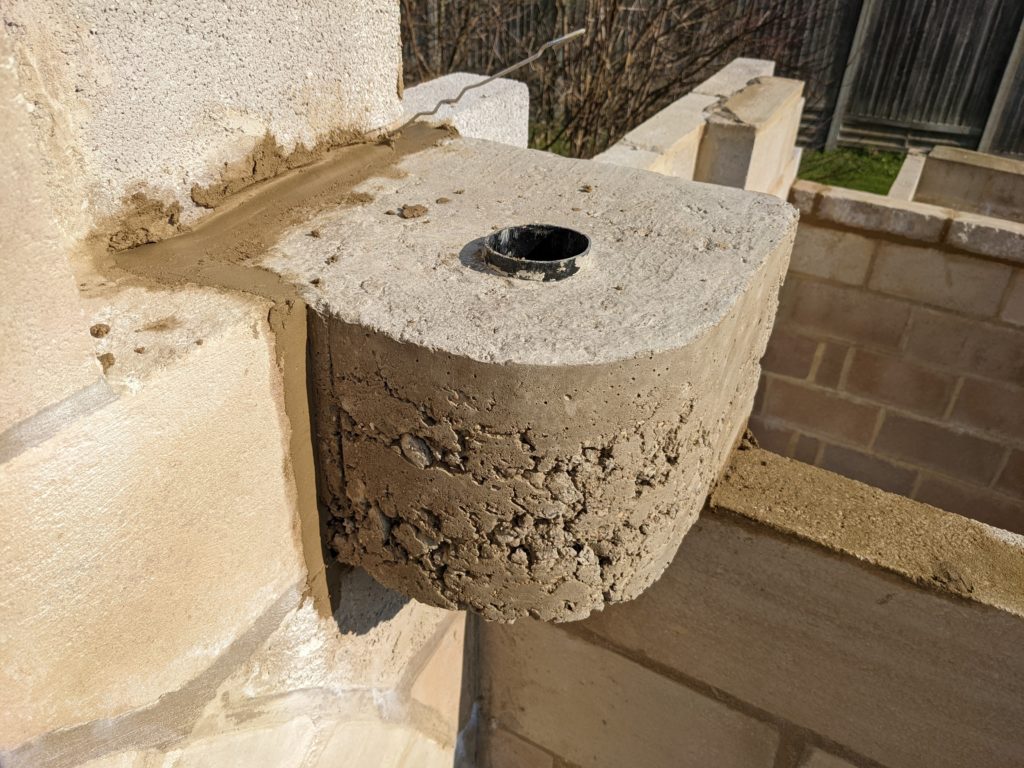
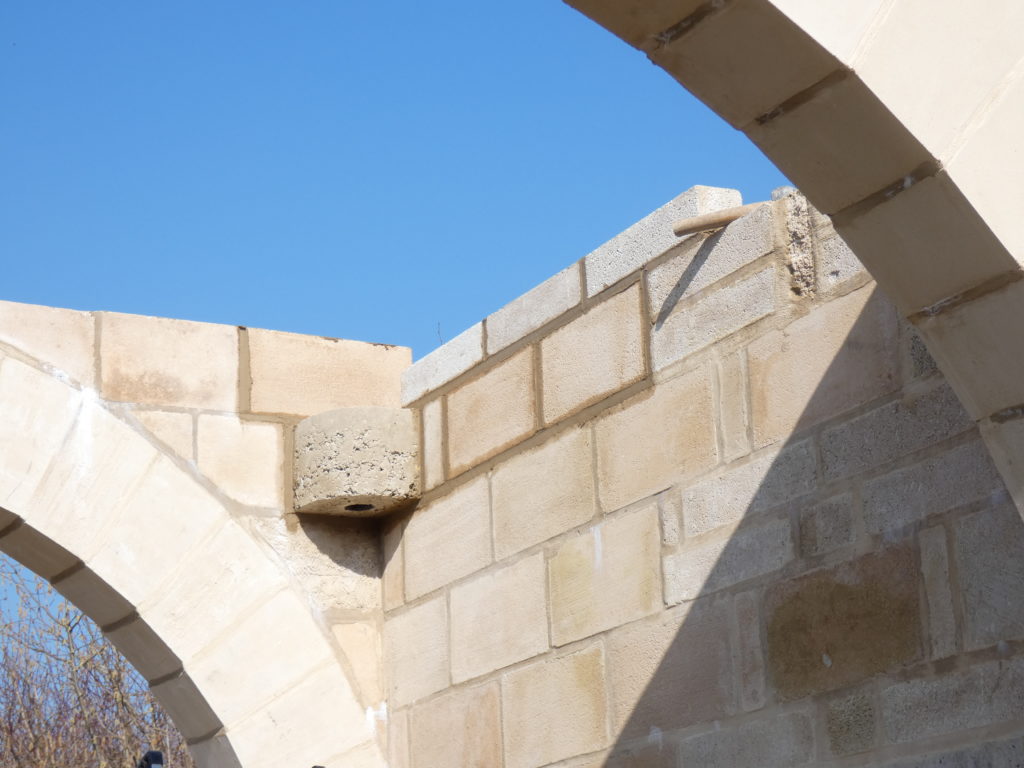
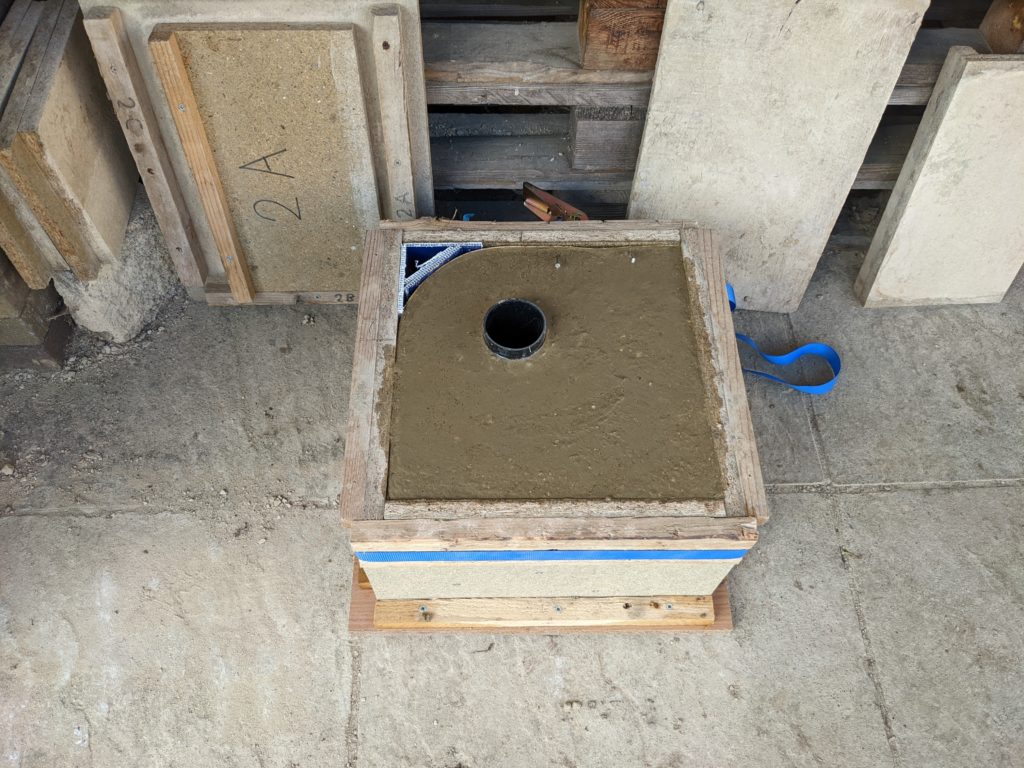
I think we’ve been working on the Roman gatehouse for 2 years now? Yes I could check, that’s why I have a blog, but I can’t be bothered just now. A point of some anxiety has been how to construct the blocks to hold the top of the gate pivot posts. Just as the arches had to be right, the gates also need to look right and move in the right way. Al finally worked out a plan, possibly prompted by the near arrival of Chris the stonemason, and cast the first of the two incredibly important blocks! I keep wanting to call them corbels, but corbels are meant to hold things up, whereas these blocks are for holding something in place below them. Anybody know what they are called? There must be a technical name for them apart from “big stone with a hole in to hold the gate pivot in place”.
The first metaphorical milestone, fresh out of its mould
Al made a rectangular mould with think plywood scavenged from a pallet to form the curve, and a bit of plastic drain pipe to leave the hole for the pivot post. This will remain in place and will be undetectable unless some irritating person goes up there on a ladder with a torch determined to find fault. And none of you would do that would you?
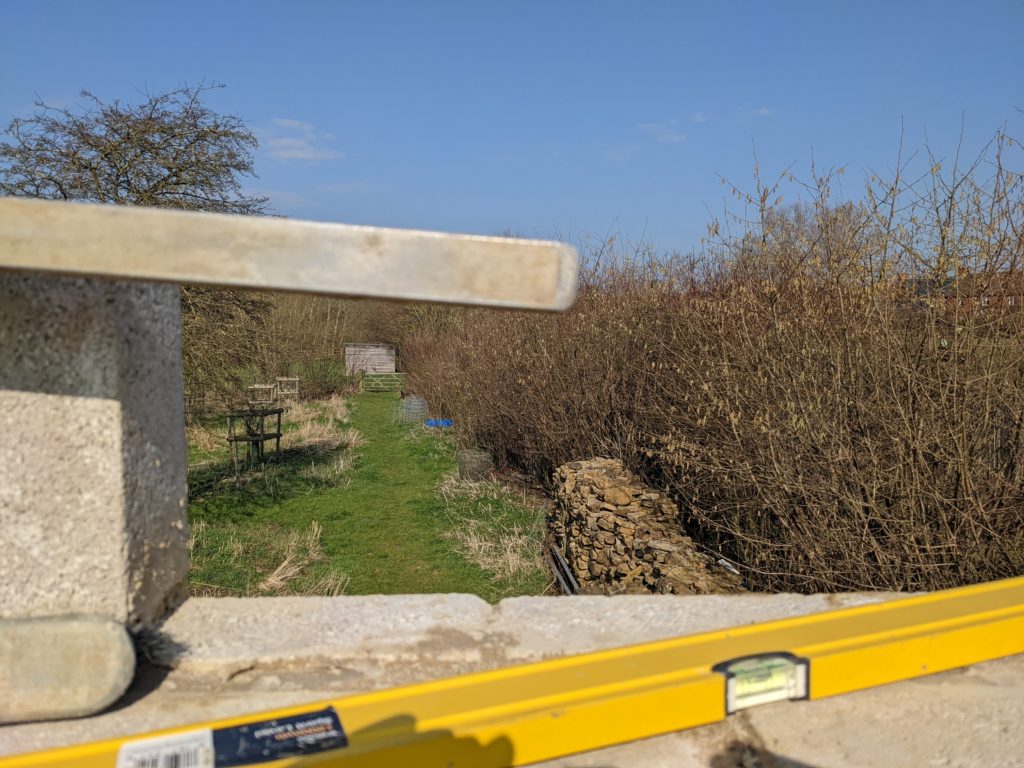
The hole needs to be verticalReally, absolutely vertical!And there it is!Obviously I had to climb up Pallet Mountain for a closer lookThe block from aboveand Al from aboveView from the battlements, to the south…The north…and the south-eastThe back of the not-corbel, from inside a guard roomProud builders, Al and ChrisLater in the day, with a course of blocks over itThe second block, just cast!Honestly, I’d just done a load of pruning and tidying up. It was much worse before.
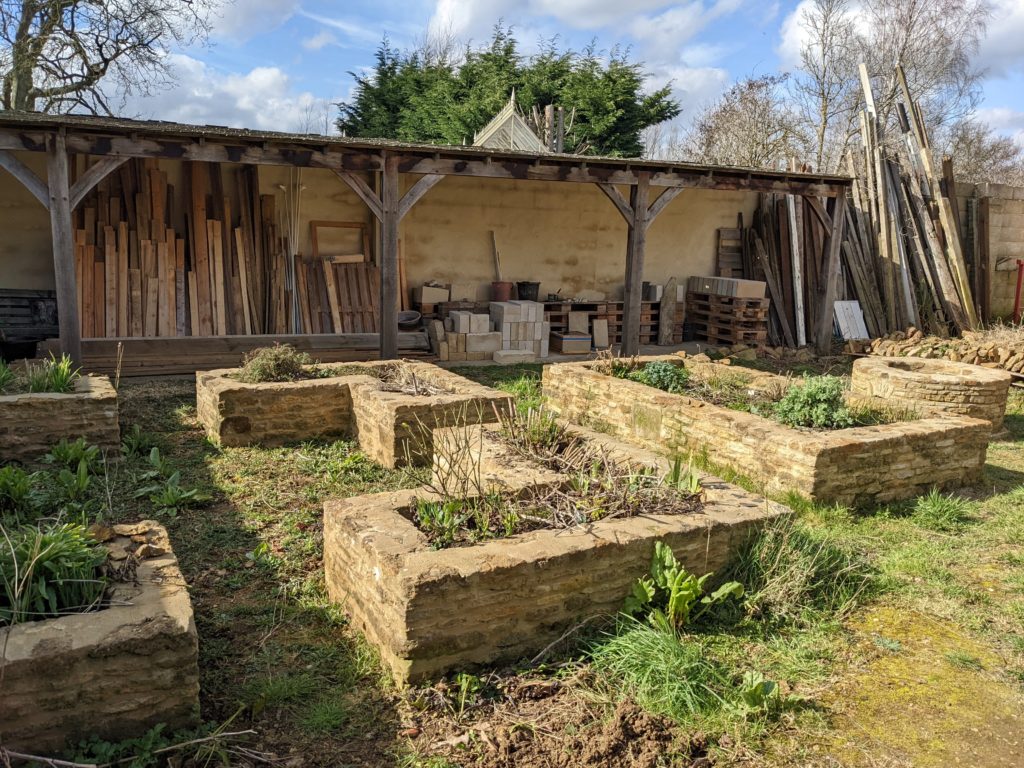
I took advantage of the spring sunshine to cut back the wormwood, southernwood, costmary and some other plants. And to observe how well traditional plants self-seed where you don’t want them…
Of course I now feel that we ought to have a real milestone. Out along Green Street perhaps?
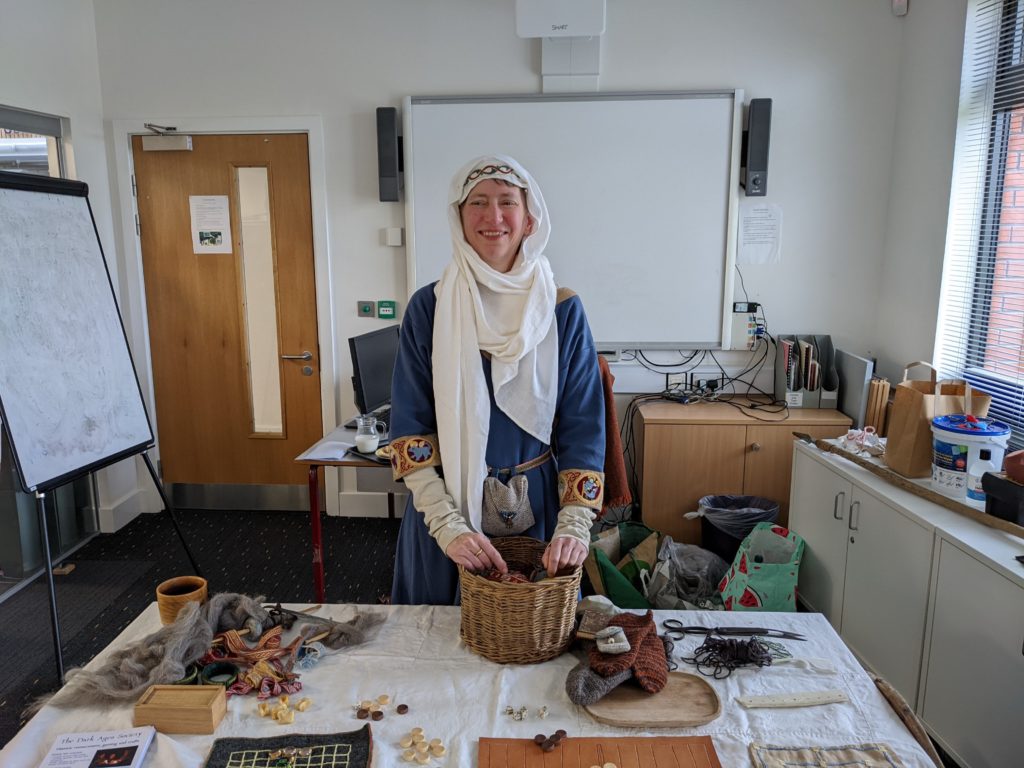
Last Saturday I put on my posh frock and visited Towcester Library in my persona as Cyneswithe, abbess of Rumwoldstow. My main audience was pre-school children who love to spend their Saturday mornings in the library, so I had put some thought into possible activities, which included feel replica items in a bag and describe them before pulling them out and explaining them – which I think is a great idea but we didn’t have enough kids at any one time for that so I’ll hold it in reserve. Instead, I talked a little about how Towcester was near the border of two sets of immigrant communities, one of longer standing (Anglo-Saxons in Towcester) and one newer (Vikings at Northampton), told them a version of Thor’s Fishing trip, let them see a spear and shield, and showed them weaving, board games and everyday things. Oh, plus paper plates on which to draw their own shield.
Most popular were spear and shield, board games, and drawing. The tablut and nine men’s morris sets did well. Tabula didn’t appeal. Towcester Library is super and the people there are all lovely and enthusiastic. I look forward to a return visit!
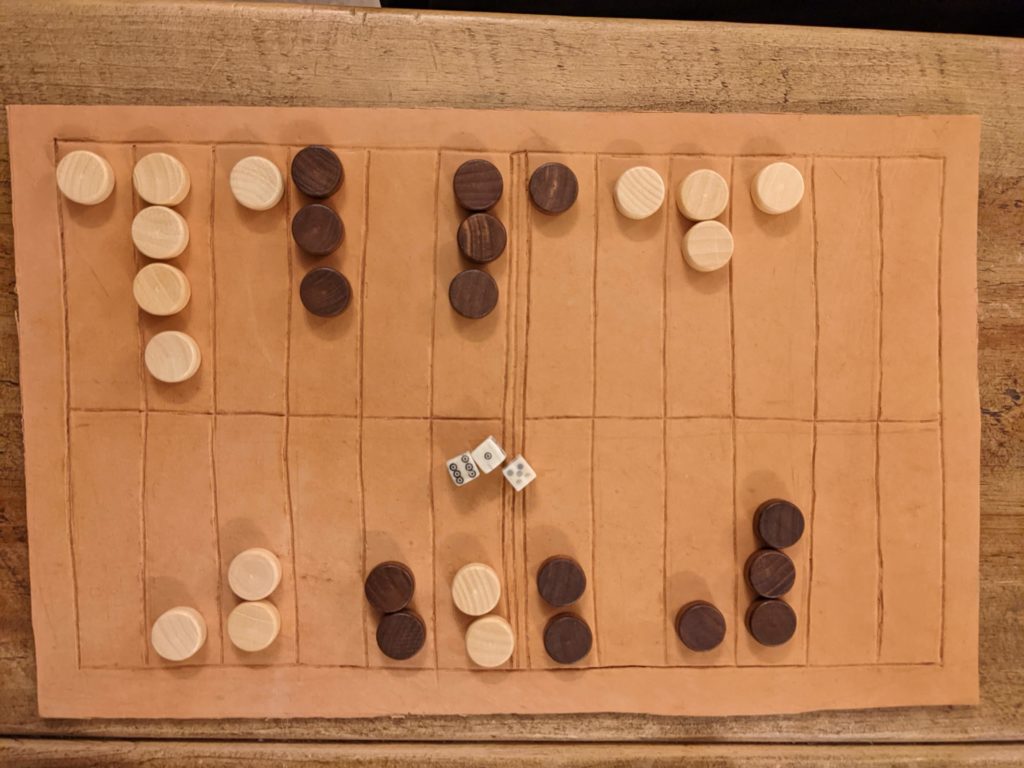
I completed my super simple tabula board this weekend. It’s tooled leather, which I know isn’t right, it should be wood. But I will explain this to the public, and it’s portable, and uses authentic material and techniques, and I was able to actually make it in the time available! It is wonky as anything, which is deliberate in that I think a ruled look is not right. It’s a thickish bit of leather which I soaked in cold water, then I used a large flat-bladed screwdriver and a mallet to hammer in the lines, going over them with the edge of my weaving sword to smooth them out. I’ll wax the leather once it’s dry.
The dice are bone and I bought them at the re-enactors’ market; the counters are wood from Hoyles’ games in Oxford. One day, I mean to plane down my yew wood planks, assemble them with a carved border, and make a posh proper wooden board. But today is not that day. And I can now play all the mediaeval tabula games which I researched on something more suitable.
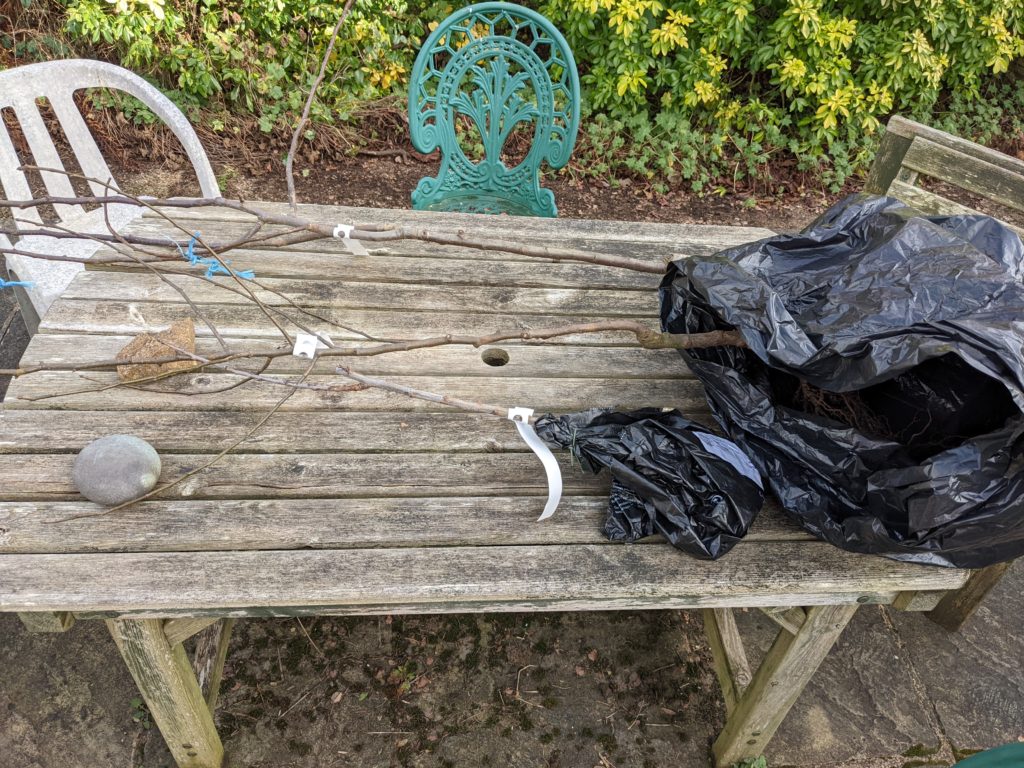
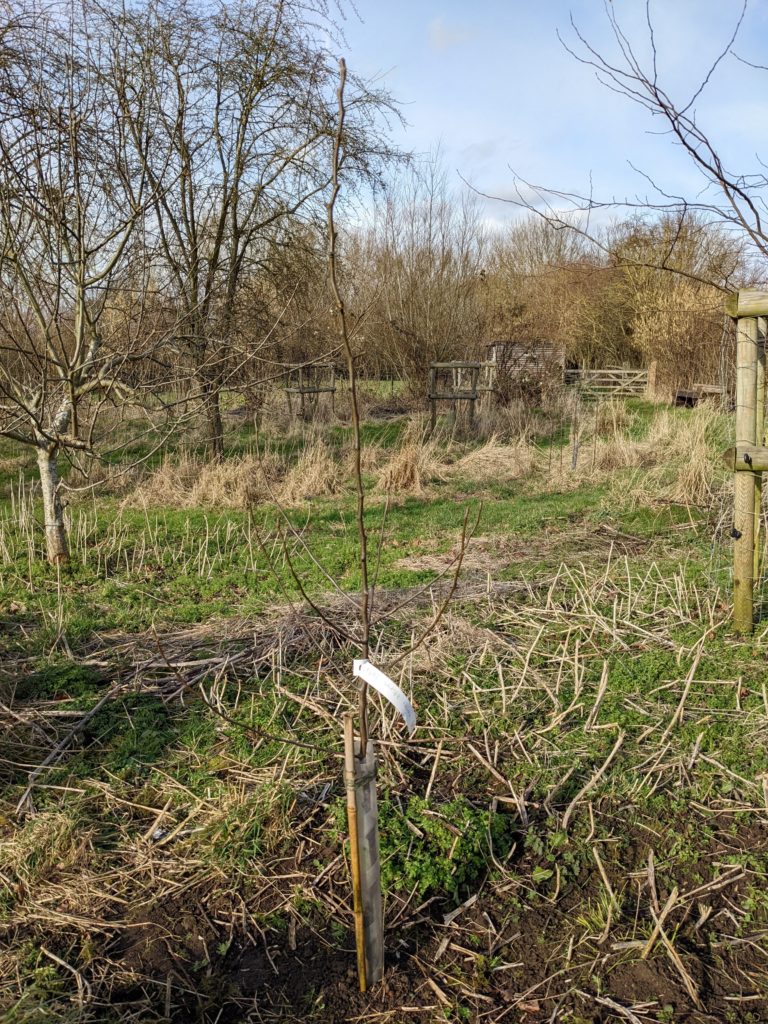
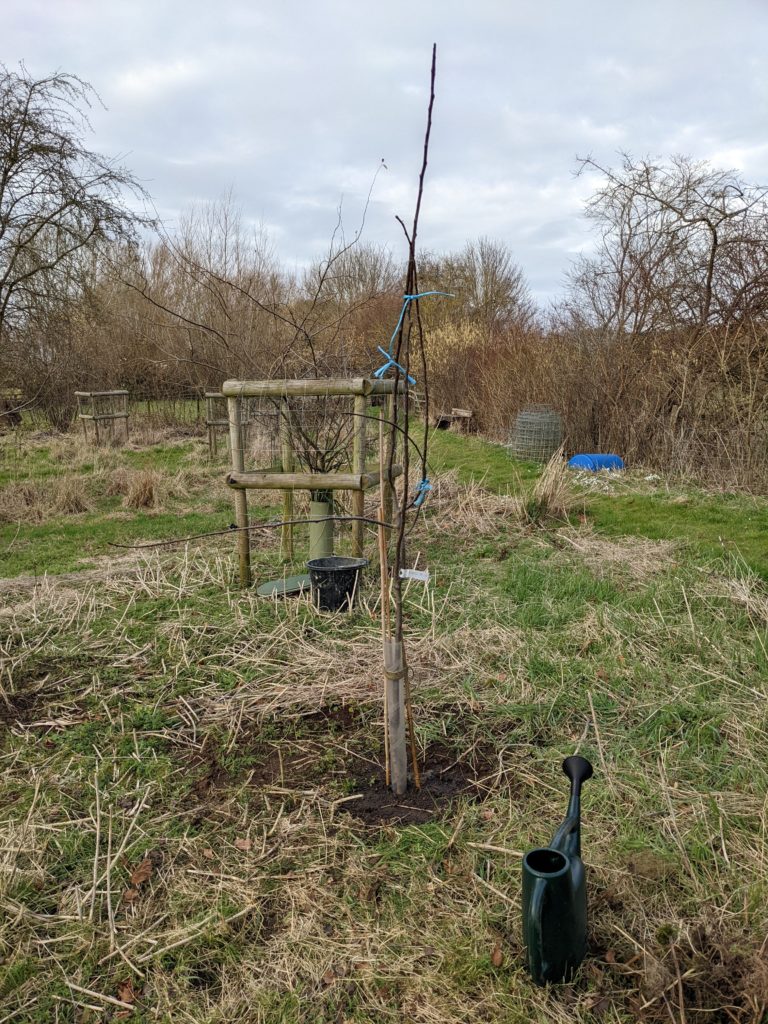
The tree specialist in the next village sold me three new fruit trees for the orchard. They had to sit in the shed with their lower appendages swathed in bubble wrap for two days until we had time to get out and plant them. What have we got?
Pear: Winter Nelis. This is a heritage variety known from the early 19th century and its pears are apparently not a super pretty fruit, but sweet with a good flavour. And they’re said to keep into January. On the down side the tree prefers a sheltered spot and our orchard is quite exposed with the chilly meadow to the west.
Pear: Jargonelle. First recorded in 1629 but thought to be older, so a great pear for our early mediaeval orchard. It’s an early pear but to my surprise, our existing Louise Bonne and the new Winter Nelis are apparently all suitable pollination partners. The tree man knows his stuff!
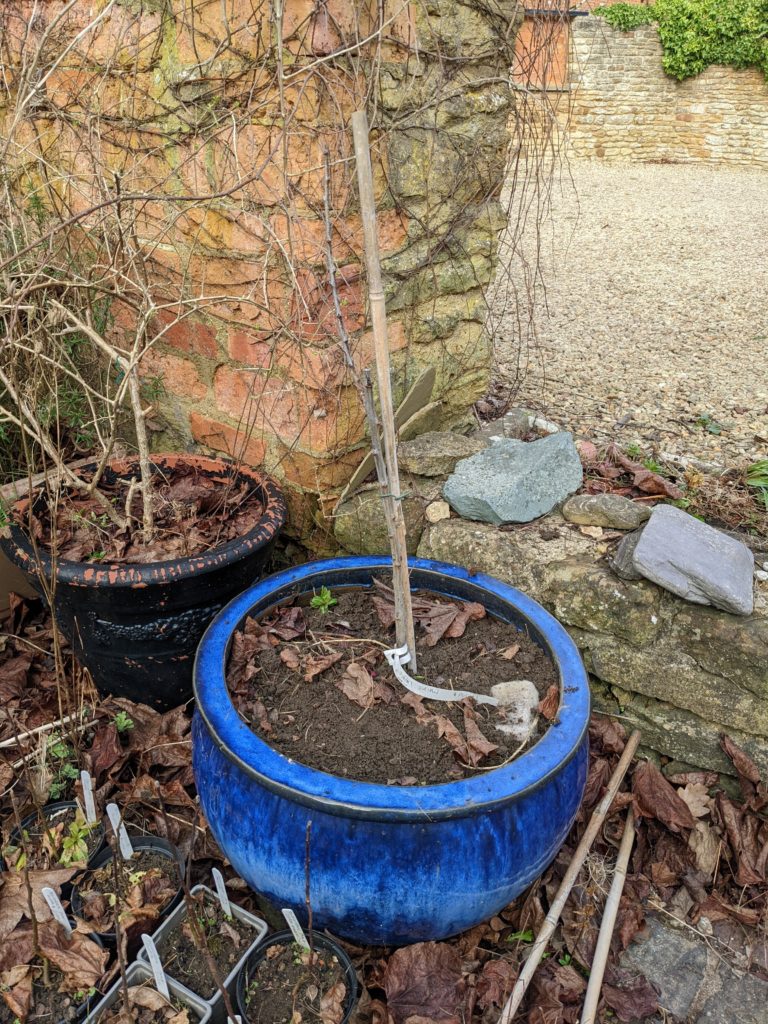
Plum: St Julien. I found very little on t’internet about the St Julien as a tree in its own right, as it is so widely used as a rootstock. But the tree man said it produces a tasty green plum, and is actually one of the earliest cultivars around, so a great fit for us – and unusual, which is part of our thing. One forum post suggested the fruit is best dried, but another described the fruit as complex, sweet when perfectly ripe but potentially acidic. I am excited to let this little tree develop naturally and do its thing, whatever it turns out to be!
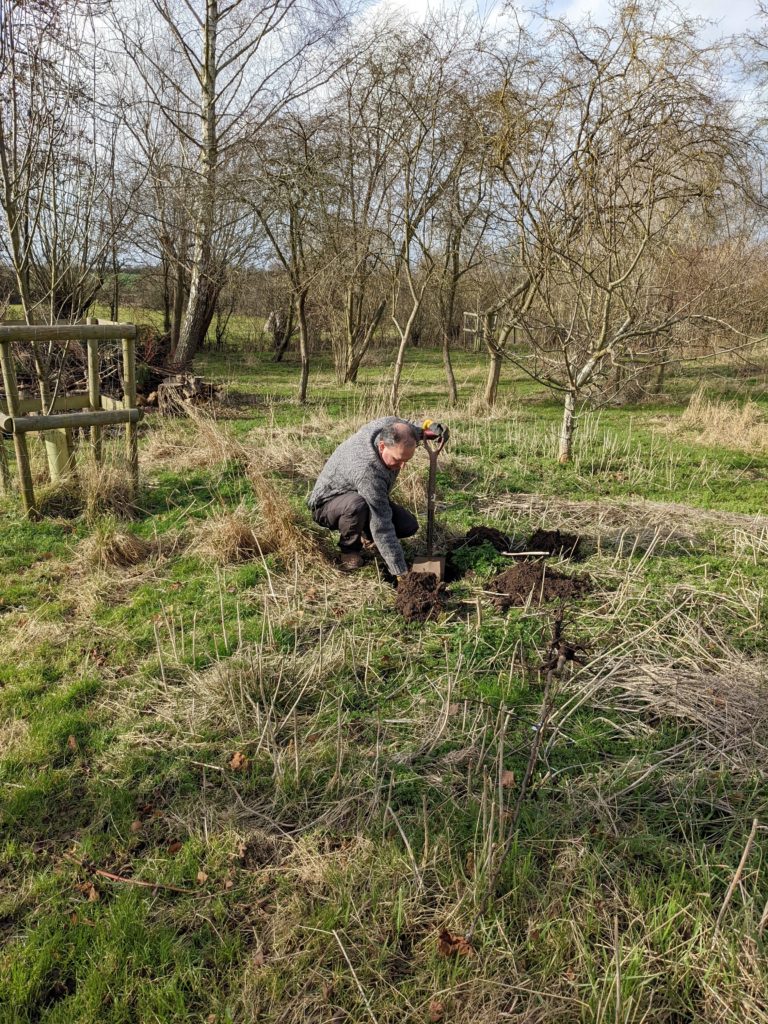
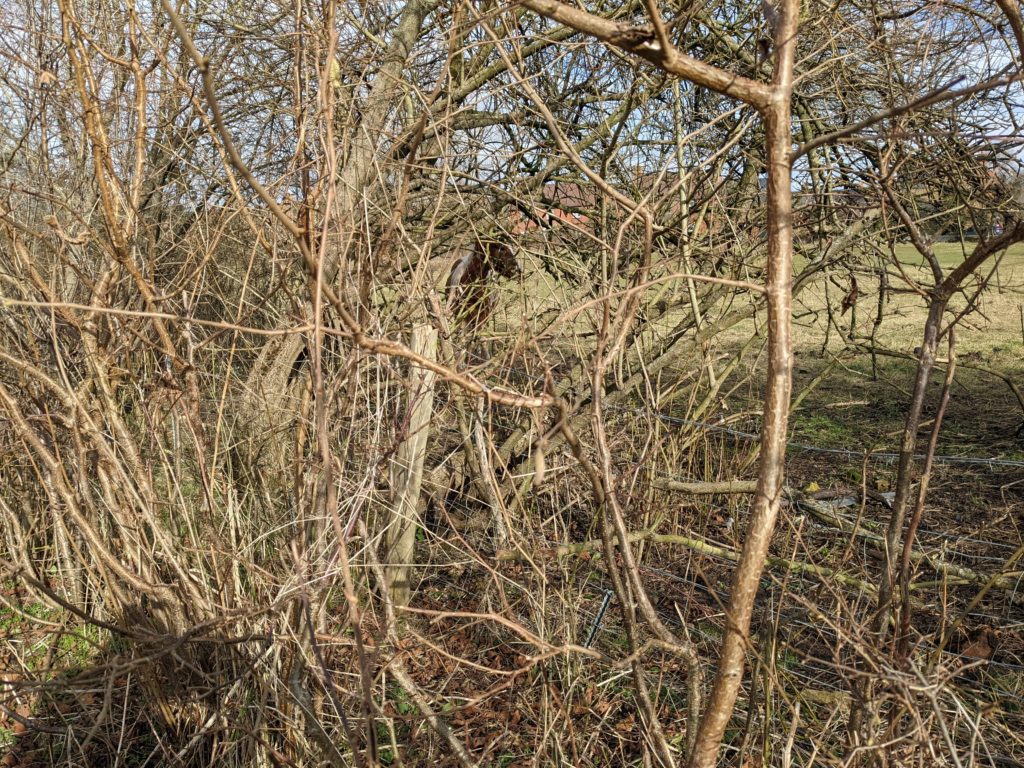
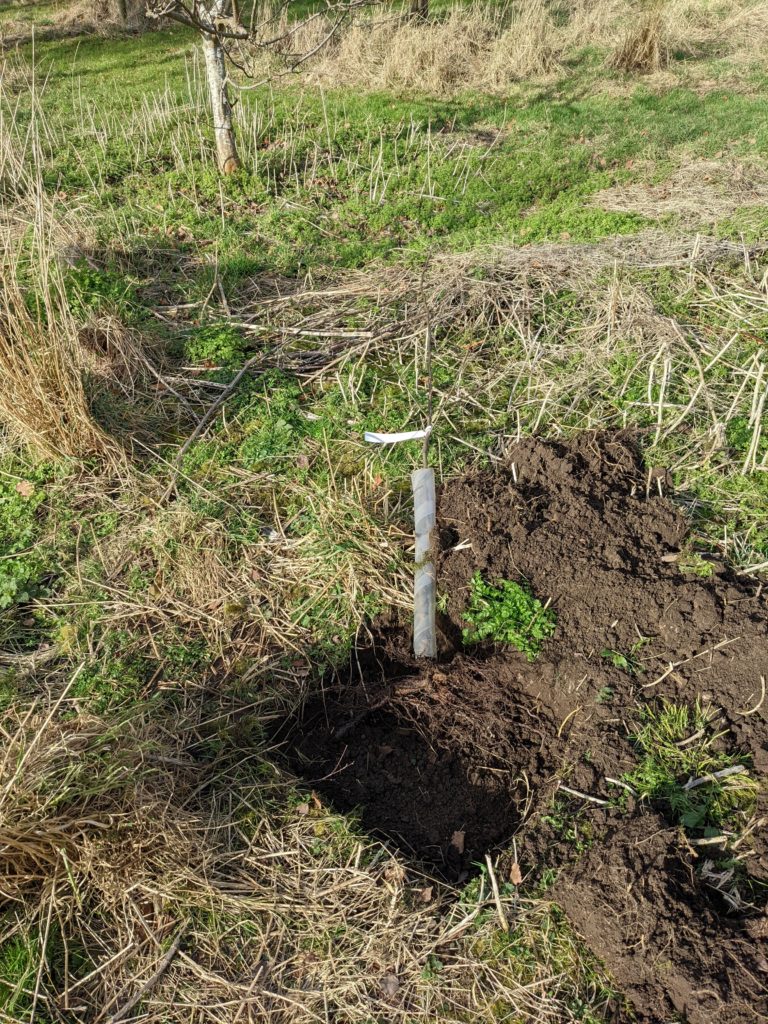
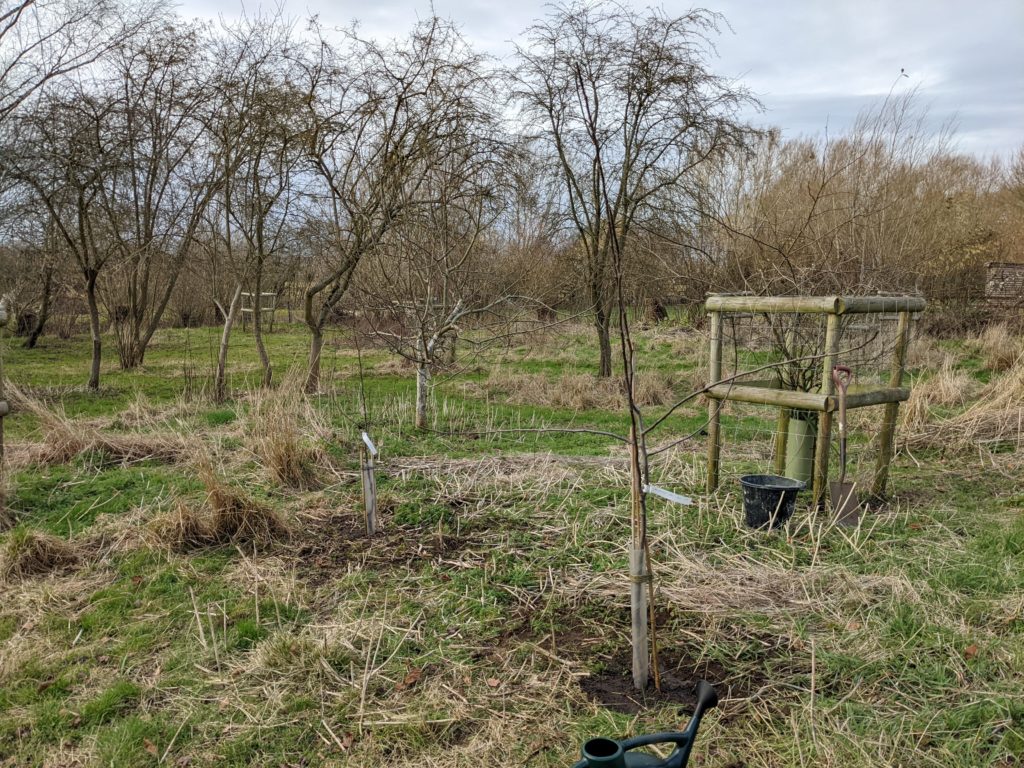
The trees as they were delivered!Al digging a hole for the Winter NelisThe neighbours’ pony taking an interestIs that a very small grave? No, it’s a hole ready for my tree!And here is my Winter Nelis all planted!The Jargonelle in placeBoth new trees!
The Jargonelle and Winter Nelis are quite close together, and to the quince and the Hambledon Deux Ans apple, but the I couldn’t choose between these two and had to have them both, and they needed to be planted further from the place where they diseased Victoria plum was removed last year, which restricted my options somewhat. I will need to keep them relatively small but that will make it easier to pick the fruit. Anyway, more trees for the win!
The St Julian, free to grow its own canopy
Finally, the St Julien plum is so small that I decided to stick it in a pot for a year or two to gain some height, otherwise we’ll lose the poor thing in the undergrowth. This pot had dwarf beans last year which didn’t do well and anyway are an annual, so there was a handy pot with soil and no plants. I might try beans around the side this year and hope for a better harvest. They actually did better in 2019 even though the sheep got out and had a munch at them before exploring the road (and then retreating swiftly when they saw the cars).
Yup, I’m going on and on and on about the arches. But they’ve been a long time coming and we love them. Suck it up.
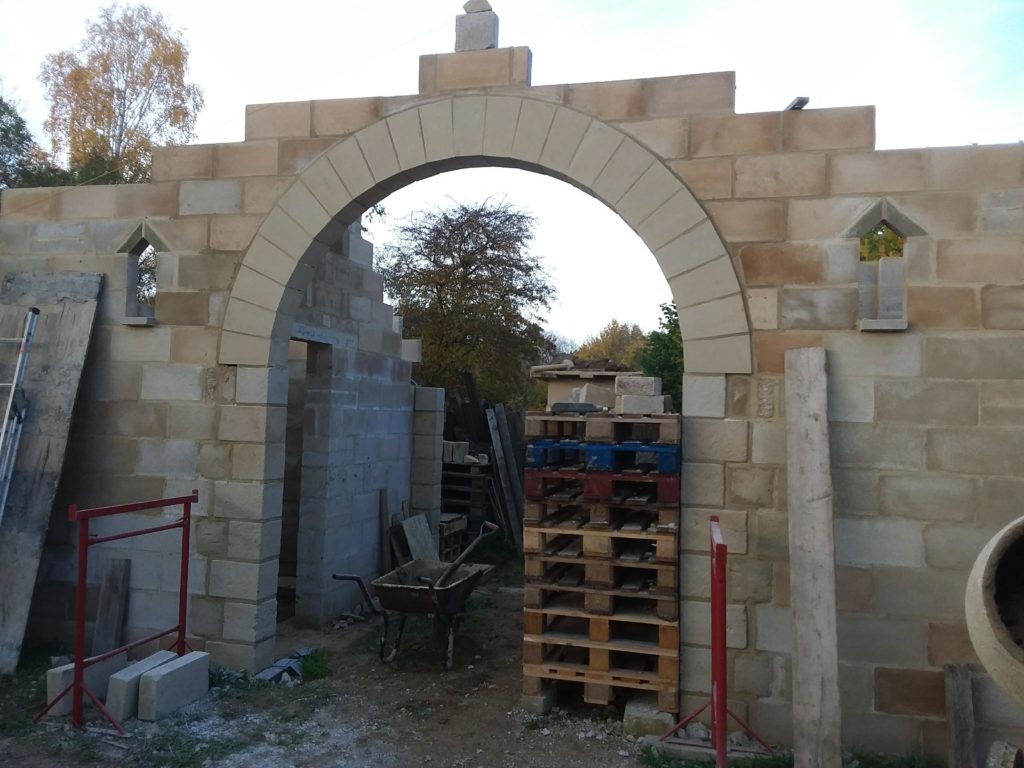
My first daylight view of the arch after the former was taken downView from the north. The pallet pile will stay in place until the walls are done, so a bit of care is required going in and out.
The former has been reset and the outer arch of the gatehouse is under way.
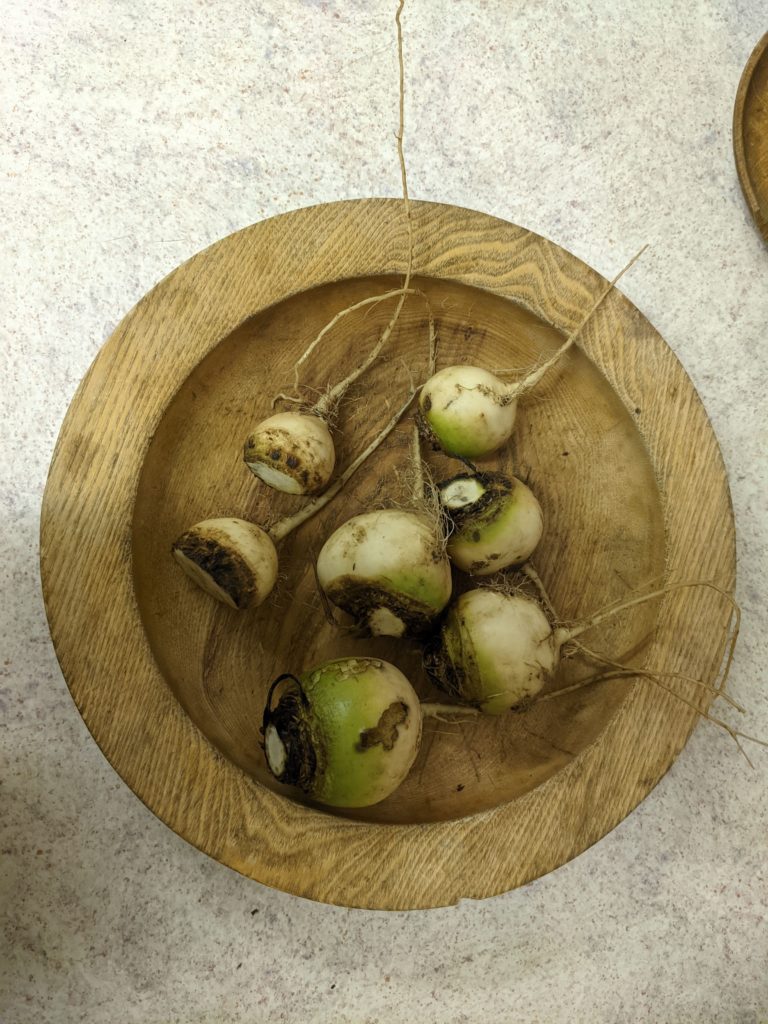
The former is not going anywhere despite the forecast strong windsI love the curves of the shadow cast by the inner archAl and Chris covered the arch with sheeting to help keep the frost off while the cement curesBonus white beetroot from Rumwoldstow garden. Taste better than they look.
Having built the arch, the next step was to build up the wall around it, which involved lots of fiddly jigsaw-type cutting and fitting of blocks.
Coating the wall blocks with coloured render so they look more like stone and less like breeze blocksA local cat, unfriendly, who hangs around all the time but we don’t know its nameTinky, a friendly and vocal local cat. But today he wanted to go about his business.Tea, an essential ingredient for all building works